
Tech News
Universities Bring Back Handwritten Exams Over Fear of AI
Universities in the United States have returned to handwritten exams after years of digital assignments, due to the widespread use of generative AI. Neal Stephenson explains in his essay how handwriting engages the brain more, and which fountain pen or rollerball works best for writing a lot without tiring your hand.
Tech News
Neal Stephenson Handwrote for 25 Years and Never Felt Hand Pain
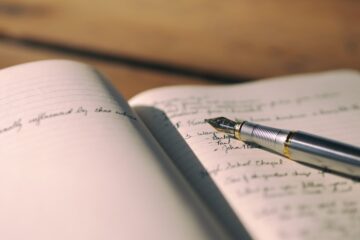
Neal Stephenson has spent 25 years composing his novels with a fountain pen on paper and never felt the classic writer’s cramp. His recent essay explains which instrument to use, which paper to avoid, and why the right amount of friction is key, just as schools return to handwritten exams to curb AI use.

Tech News
Learn WebGPU for C++: the 5-language guide to native graphics
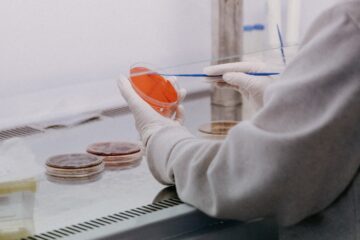
Learn WebGPU for C++ is open source documentation that teaches native 3D graphics programming in C++, using the same API that runs inside browsers. It covers Windows, macOS, and Linux with CMake, and lets you choose between the wgpu-native and Dawn backends. The same native code also compiles to WebAssembly with Emscripten.
Tech News
OverpAId: The Satirical Website That Charges $4,699 to Replace Your CEO
A satirical website called OverpAId promises to replace your CEO with an AI that costs $4,699, a one-time payment, compared to the $18.9 million a year an average S&P 500 chief executive earns. Behind the joke are real figures on the pay ratio between executives and employees, and on how recent tech layoffs hit harder the further down the org chart you go.
Tech News
Free Ink: An Open Ecosystem for E-Readers
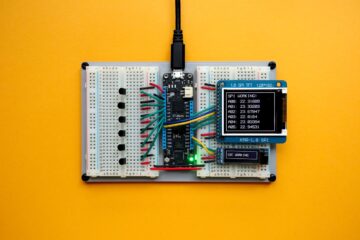
Free Ink presents itself as an open ecosystem for e-readers, aiming to replace the closed firmware of Kindle and Kobo. The project joins already-active alternatives like KOReader and Plato, which show that e-ink hardware can run free software. It has not yet published a complete technical catalog of supported components.

Tech News
Scientists Rediscover a Coral Reef in Benin Lost for 60 Years
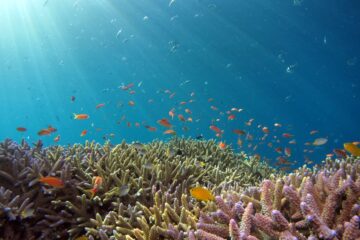
A team of Beninese scientists rediscovered a coral reef believed dead since the 1960s, with eight types of coral and eight fish species at 53 meters deep in the Gulf of Guinea. The finding, funded by a National Geographic grant, opens the door to paleoclimate studies and a possible marine protected area.