⏱️ Reading time: 10 min
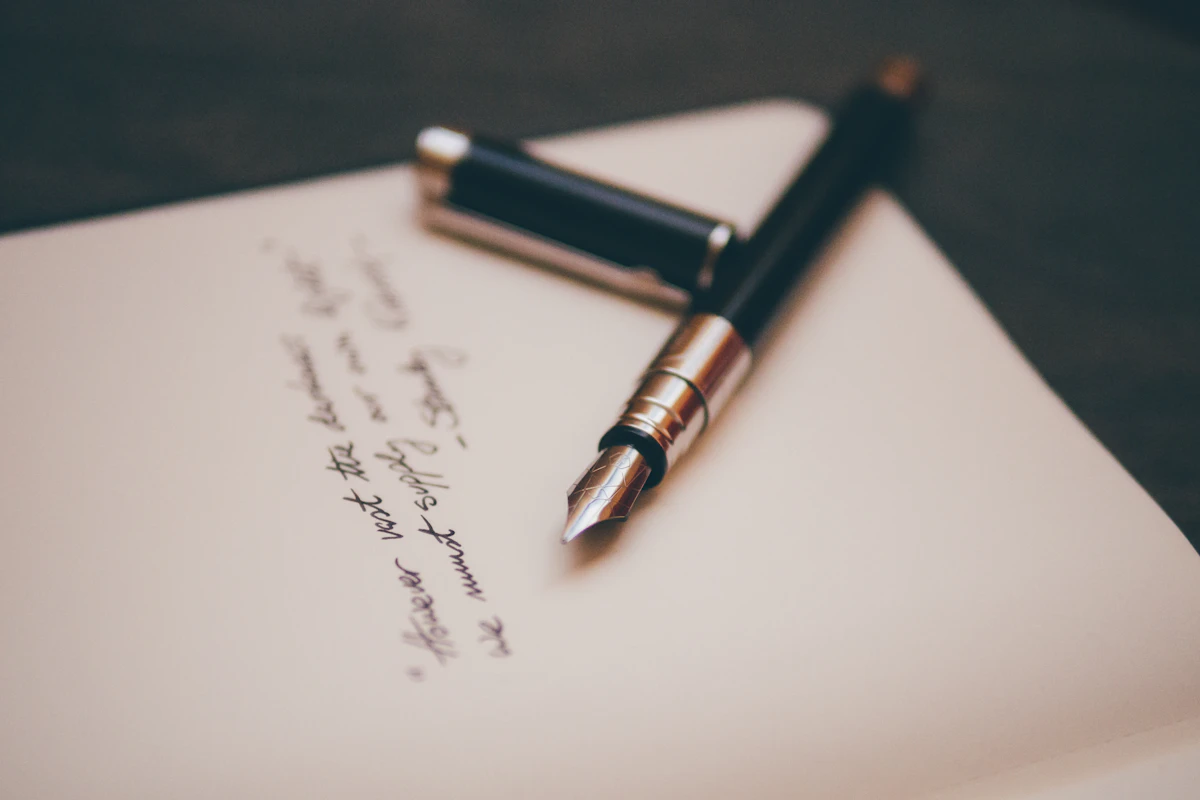
Neal Stephenson has spent 25 years writing every novel with a fountain pen on paper and never, not once, felt the classic writer’s cramp. The author of Snow Crash and The Baroque Cycle published an essay this week explaining why he abandoned the keyboard a quarter century ago and what simple rules make handwriting actually work, without pain or fatigue.
📑 En este artículo
- TL;DR
- Introduction
- What Happened
- Context and History
- Technical Details and Performance
- How to Start Handwriting Today
- Impact and Analysis
- What’s Next
- Frequently Asked Questions
- Does handwriting really improve learning compared to typing?
- Which fountain pen is good to start with without spending much?
- Why does your hand hurt when writing with a pencil but not a fountain pen?
- Can a tablet with a stylus replace paper?
- Why did handwritten exams come back in 2026?
- What paper should you use with a fountain pen?
- References
The topic arrives at a specific moment: schools and universities are returning to handwritten exams in blue books to curb the use of generative AI. The problem is that many students no longer know how to write legibly, and their professors can’t decipher it either.
TL;DR
- Neal Stephenson has been handwriting for 25 years and has never felt the classic writer’s cramp.
- The manuscript for The Baroque Cycle reached a 42-inch stack of handwritten pages.
- The research cited shows that handwriting activates more brain regions than typing.
- Schools and universities have reintroduced handwritten exams in blue books to curb AI use.
- Using a pencil or cheap ballpoint requires more force and tires the hand; a fountain pen glides over its own ink.
- A stylus on glass eliminates the necessary friction and makes the stroke harder to control, not easier.
- The ideal paper needs at least 25% cotton content; cheap printer paper smudges the stroke.
Introduction
For a developer who spends eight or ten hours typing, the idea of going back to paper sounds like a step backward. But Stephenson’s argument isn’t nostalgic: it’s mechanical. When you write by hand you’re solving, in real time, a series of micro-problems (spacing between words, how letters connect, crossing the t, dotting the i) that integrate with what your brain processes at the level of ideas. That integration is exactly what several lines of neuroscience research associate with better retention and comprehension.
Handwriting doesn’t replace the keyboard in the daily work of programming, but as a learning tool (taking notes in a course, understanding a new concept, planning an architecture before touching the editor) it has support worth looking at closely.
What Happened
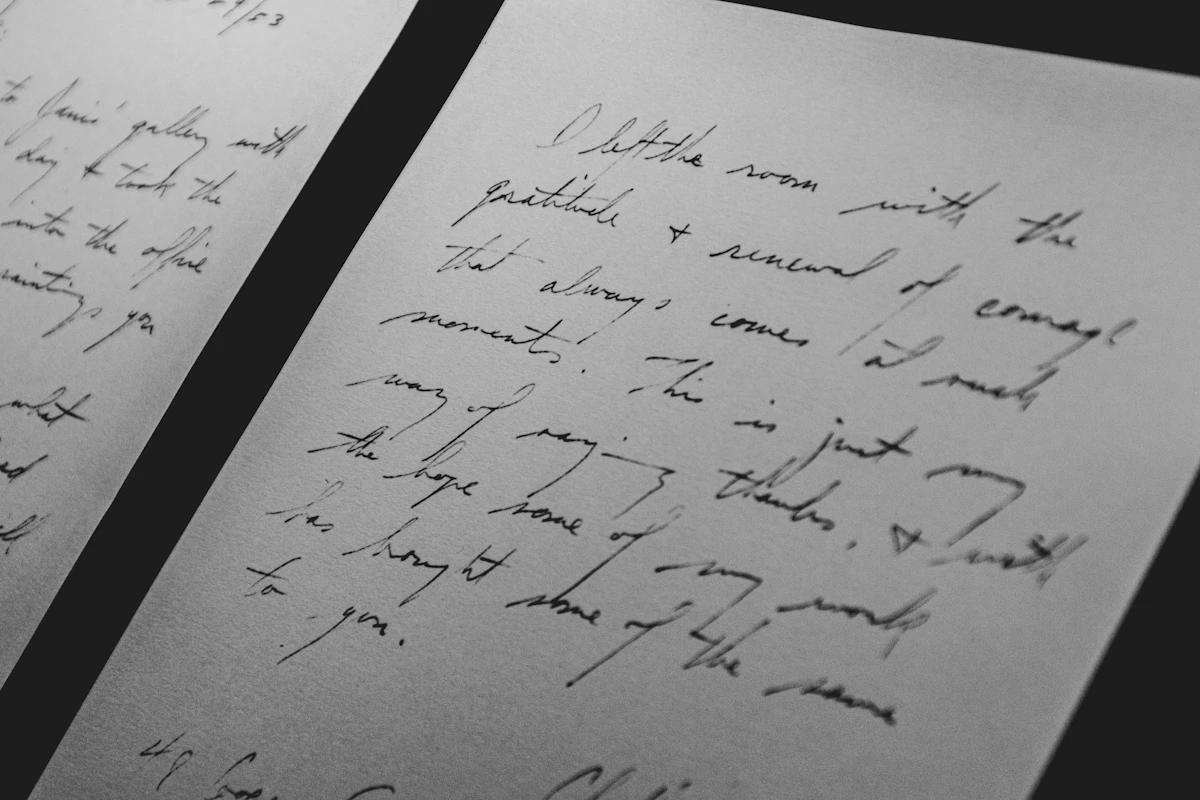
Stephenson explains that about 25 years ago he stopped composing directly on the keyboard and switched to drafting everything with a fountain pen on paper. Since then he’s written thousands of pages that way. The manuscript for The Baroque Cycle, his historical trilogy, formed a 42-inch stack of handwritten pages, which was exhibited at the Museum of Science Fiction in Seattle.
The only exception in 25 years was The Rise and Fall of D.O.D.O., co-written with Nicole Galland by exchanging Word files by email. Every other book since then has been drafted by hand before being typed up.
The essay’s trigger was twofold: on one hand, the evidence circulating about how handwriting engages more brain regions than typing; on the other, the forced return to handwritten exams in universities, after generative AI made any written homework assignment unreliable.
Context and History
Those who remember elementary school tend to associate handwriting with pain: the typical cramped hand after copying a long text. Stephenson argues that this pain isn’t a natural, inevitable effect of handwriting, but the result of using the wrong instrument with more force than necessary. A quarter century of writing several hours a day, without a single sign of that cramp, is his empirical evidence.
At the same time, forums like Reddit are discussing how the massive adoption of AI forced educators to resurrect a practice that had been out of use for years: in-person exams, handwritten in blue books. That created a new problem: students who never properly learned to write by hand, and teachers who can’t read the handwriting they produce.
That tension (AI eroding the reliability of text written at home, and paper as a low-cost, hard-to-fake response) is the context that makes a debate about pen and paper relevant in 2026.
Technical Details and Performance
The essay gives three concrete rules for avoiding fatigue when handwriting, and all three have a physical explanation, not just a matter of personal taste.
Don’t use a pencil or a cheap ballpoint. Both require more force to leave a visible mark. The test is simple: if you flip over a page written with a pencil or an old thick-ink ballpoint, you’ll see the relief of the pressure, sometimes imprinted through several pages below. With a fountain pen that works well, the nib practically glides over the small pool of ink it just deposited. Gel rollerballs, according to the author, come close to a fountain pen on this point.
Don’t use a stylus device on glass. It might seem logical that if less force is better, zero friction would be ideal. Stephenson disputes this: a bit of friction is desirable, because the brain and the fine muscles of the hand use it as a reference to control the stroke. His analogy is soccer: a player who controls the ball on grass knows, through repetition, how much force to apply on each touch. Put him on an air hockey table, with no friction, and he loses control, and every touch requires extra effort to correct. That balance point between fountain pen and paper, honed over a long time by high-volume writers, is known among enthusiasts as tooth.
Use a pen and paper combination that works. Cheap printer paper absorbs ink too quickly and produces thick, blurry strokes; yellow legal pads tend to have the same problem. On the other hand, almost any paper from a regular notebook, or higher-quality printer paper with at least 25% cotton content, works well. Each fountain pen also performs differently depending on the paper, so combinations need to be tested.
| Instrument | Force required | Friction (tooth) | Result according to Stephenson |
|---|---|---|---|
| Pencil or cheap ballpoint | High: leaves a mark on the back of the page | High, from mechanical pressure | Tires the hand quickly, the same effect as in school |
| Fountain pen with good nib | Minimal: the nib glides over freshly laid ink | Optimal, if the paper is right | Hours of writing without fatigue, his choice for 25 years |
| Rollerball or gel pen | Low | Close to a fountain pen’s | Almost as good as a fountain pen, according to the author |
| Stylus on glass (tablet) | Low, but no control | Nearly none: the stroke slides without resistance | More tiring due to the extra effort of controlling the stroke |
flowchart TD
    A["No friction: stylus on glass"] --> B["Hard to control, more effort"]
    C["Optimal friction: fountain pen + paper with tooth"] --> D["Precise control, no fatigue"]
    E["Excessive friction: pencil or cheap ballpoint"] --> F["More force needed, muscle fatigue"]
💭 Key point: fatigue when handwriting doesn’t come from moving the hand, it comes from fighting the wrong friction, whether too much (pencil) or too little (smooth glass).
How to Start Handwriting Today
If you’ve never written with a fountain pen, the entry point doesn’t require spending much. Entry-level models widely recommended by the fountain pen community, like the Pilot Metropolitan, cost little more than a mid-range ballpoint and already have a consistent nib. For paper, brands like Rhodia or Clairefontaine are common references for their good behavior with fountain pen ink.
The routine the essay proposes, applied to a developer’s workflow, is simple: set aside 10 or 15 minutes a day for something you currently do on the keyboard. It could be jotting down a feature’s design decision before coding it, summarizing by hand a technical article you just read, or planning a module’s architecture on paper before opening the editor.
Minimal daily ritual:
1. Pick ONE technical idea for the day (a bug, a design, a new concept).
2. Write it by hand in 5-10 lines, with no prior draft on screen.
3. Only afterward, transfer it to digital text if it needs to be shared.
That last step matters: the idea isn’t to abandon the keyboard, it’s to use paper as the first draft of thought, and the keyboard as the final distribution medium.
💡 Tip: before committing to an expensive pen, try the same paper combination with a gel rollerball: according to Stephenson, the friction result is nearly identical and the entry cost is lower.
Impact and Analysis
For development teams, the clearest practical case is learning new concepts: understanding an algorithm, a protocol, or a paper by writing it by hand instead of just highlighting it in a PDF or pasting it into an AI chat. The integration between fine motor skills and idea processing that Stephenson describes is, essentially, the same mechanism invoked to explain why taking handwritten notes in a technical talk is remembered better than transcribing it word for word on a laptop.
The other impact is more institutional: if exams and written assessments return to paper to sidestep AI, understanding how to write by hand without getting tired stops being a retro curiosity and becomes a practical skill, especially for students in technical fields who haven’t practiced it in years outside of signing documents.
One honest limitation: none of this replaces the keyboard for writing production code, and forcing paper where the keyboard is clearly more efficient (refactors, search and replace, version control) would go against the very logic of the essay, which is about minimizing unnecessary effort.
What’s Next
It’s expected that the tension between digital convenience and cognitive benefit will keep producing hybrid products (tablets with a stylus that try to simulate paper friction) and more educational institutions normalizing handwritten exams as a direct response to generative AI. Stephenson’s own essay, published as a reaction to that context, is a sign that the topic will keep coming up in discussions about productivity and learning in technical communities.
Try it yourself: grab a sheet of paper and a gel pen this week and handwrite a summary of the last technical concept you learned, before typing it up digitally.
Frequently Asked Questions
Does handwriting really improve learning compared to typing?
The research Stephenson cites associates handwriting with greater brain connectivity, because it integrates fine motor control with real-time idea processing, something typing doesn’t demand in the same way.
Which fountain pen is good to start with without spending much?
Widely recommended entry-level models, like the Pilot Metropolitan, are enough to try the method without a large investment; a gel rollerball is an even cheaper alternative.
Why does your hand hurt when writing with a pencil but not a fountain pen?
Because pencils and cheap ballpoints need more pressure to mark the page, while a fountain pen’s nib glides over the freshly deposited ink, requiring much less force.
Can a tablet with a stylus replace paper?
According to the essay, not entirely: smooth glass eliminates the friction needed to control the stroke, which can make writing more tiring, not less.
Why did handwritten exams come back in 2026?
Because generative AI made any written homework assignment unreliable, and handwritten blue books done in person are hard to fake with a language model.
What paper should you use with a fountain pen?
Any standard notebook paper or printer paper with at least 25% cotton content; cheap printer paper and yellow legal pads tend to smudge the stroke.
References
- Neal Stephenson, Writing by Hand is Good for your Brain: the original essay with the instrument and paper rules.
- Wikipedia: Handwriting: general context on the practice and its cognitive role.
- Wikipedia: The Baroque Cycle: the trilogy whose handwritten manuscript formed a 42-inch stack.
📱 Enjoying this content? Follow @programacion on Telegram for daily tech content in Spanish: quick summaries, fresh content every day. @programacion
Imagen destacada: Foto de Aaron Burden en Unsplash
Did it work for you? Got a different error? Say so below: questions get answered and help the next reader.
Leave a comment


0 Comments