⏱️ Reading time: 9 min
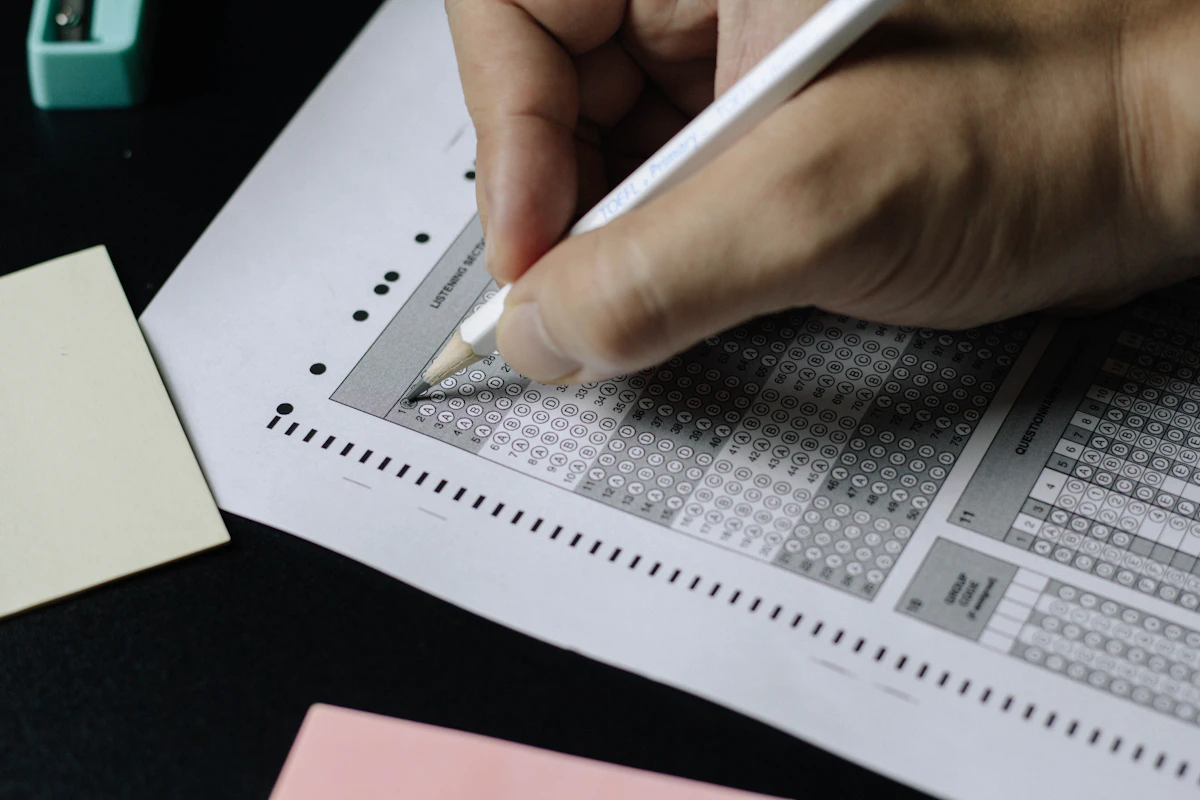
Universities in the United States have resurrected handwritten exams: booklets with no keyboard, no screen, no autocomplete nearby. The reason is direct: take-home assignments and exams stopped measuring what a student actually knows, because ChatGPT and other language models can solve them in seconds.
📑 En este artículo
- TL;DR
- What happened
- Context and history
- Getting started: digitizing your handwritten notes and exams
- Technical details: why handwriting demands more from the brain
- Impact and analysis
- What’s next
- Frequently Asked Questions
- Why did universities go back to handwritten exams?
- Does handwriting actually improve learning?
- What pen should you use to write a lot without tiring your hand?
- Why isn’t it a good idea to take notes with a stylus on a tablet?
- Does this affect developers as well as students?
- How do I digitize notes I took by hand?
- References
Writer Neal Stephenson, author of Snow Crash and Cryptonomicon, described the phenomenon on July 21, 2026, in an essay published on his Substack newsletter, where he also mentions that he has been writing his novels by hand for a quarter century. His personal experience connects directly to something programmers are facing again: the whiteboard in technical interviews, the architecture notebook, the algorithms exam without an AI copilot.
TL;DR
- Universities in the U.S. went back to handwritten exams in booklets, known as blue books, to curb the use of AI in class.
- Neal Stephenson, author of Snow Crash, has been writing his novels by hand with a fountain pen for about 25 years.
- The manuscript of The Baroque Cycle, written entirely by hand, formed a stack 42 inches tall.
- Handwriting forces the brain to coordinate fine motor skills and idea processing in real time.
- Professors report difficulty reading the handwriting of students who never practiced cursive writing.
- Stephenson recommends avoiding pencils and cheap ballpoint pens: they require more force and tire the hand faster.
- The moderate friction of paper against pencil reduces mental effort, something a stylus on glass doesn’t achieve.
What happened
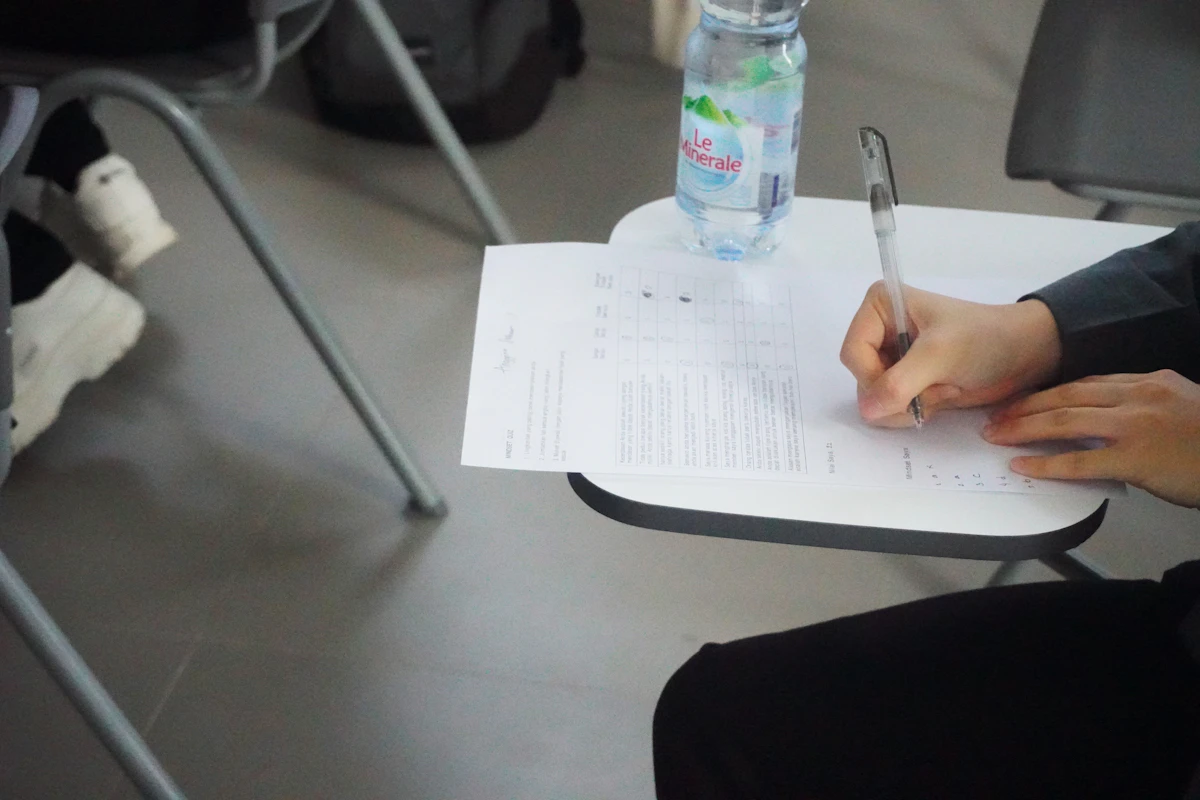
Alongside Stephenson’s essay, the same discussion has been circulating for months on forums like Reddit: university professors have gone back to requiring in-person, handwritten exams, after years of having migrated everything to digital platforms. The goal is simple: cut off access to a language model during the assessment.
The problem is that a good part of a generation of students never practiced cursive writing seriously. The booklets are back, but the handwriting of those filling them out is sometimes nearly illegible, and professors themselves admit they struggle to grade what they receive.
Context and history
Stephenson stopped writing on a keyboard about 25 years ago and switched to composing with a fountain pen on paper. Since then he has written thousands of pages by hand. The manuscript of The Baroque Cycle, stacked up, reached 42 inches tall, and was exhibited at the Museum of Science Fiction in Seattle. The only exception was The Rise and Fall of D.O.D.O., co-written with Nicole Galland by exchanging Word files over email; every other book he has published since then he wrote by hand.
When asked whether he gets hand cramps after so many years, Stephenson says that never, not once in 25 years, has he felt anything resembling what’s known as writer’s cramp. He does remember feeling it as a kid, in school, writing homework with a pencil. The difference, he says, isn’t the number of hours: it’s the tool.
Getting started: digitizing your handwritten notes and exams
Going back to paper doesn’t mean losing text search or cloud backup. An optical character recognition (OCR) tool is enough to convert a photo of a handwritten page into an editable text file.
# Windows (PowerShell, with Chocolatey)
choco install tesseract

# macOS (Homebrew)
brew install tesseract

# Linux (Debian/Ubuntu)
sudo apt install tesseract-ocr tesseract-ocr-spa
The tesseract-ocr-spa package adds the Spanish language model, needed for recognition to work with accents and the ñ. Confirm the installation with tesseract --version and check that the language package is available with tesseract --list-langs, which should list spa among the results.
With Tesseract installed, digitizing a handwritten page takes just a few lines of Python:
import pytesseract
from PIL import Image

imagen = Image.open('notas-clase.jpg')
texto = pytesseract.image_to_string(imagen, lang='spa')

with open('notas-clase.txt', 'w') as archivo:
    archivo.write(texto)

print(f'Extracted {len(texto.split())} words from the handwritten note')
The script opens the image, runs recognition in Spanish, and saves the result to a plain text file. The output won’t be perfect if the handwriting is messy, but it’s enough to make your notes searchable without giving up the habit of writing by hand in class or while studying.
Technical details: why handwriting demands more from the brain
The research Stephenson cites in his essay holds a central idea: handwriting recruits more regions of the brain than typing on a keyboard. Every word requires solving, in real time, the spacing between letters, how they connect to each other, where to cross the bar of the t (sometimes more than one in the same word) and where to place the dot on the i and j, all coordinated with the movement of the hand and the whole arm. That fine motor work integrates, simultaneously, with what happens at a more abstract level: the idea being put into words.
flowchart TD
    A["Idea in the prefrontal cortex"] --> B["Fine motor planning"]
    B --> C["Coordinated hand and arm movement"]
    C --> D["Stroke on paper"]
    D --> E["Visual and tactile feedback"]
    E --> A
Stephenson explains the phenomenon with a soccer analogy: a player who spent years dribbling on grass has internalized the physics of the bounce, knows how far the ball will roll with each touch. If you put that same player on a frictionless air hockey table, they lose control: every touch sends the ball flying, and controlling it takes much more effort, not less. Something similar happens with writing: neither the pencil, which requires too much force, nor the stylus on glass, which offers no resistance at all, achieves the balance that a fountain pen on quality paper does. Those who write a lot call that middle point ‘tooth,’ the right texture of the paper.
💡 Tip: If you’re going to write a lot by hand, avoid pencils and cheap ballpoint pens: they require more pressure and tire your hand sooner. A fountain pen or a gel rollerball glides with much less force.
| Tool | Force required | When to use it | Limitation |
|---|---|---|---|
| Pencil | High | Quick sketches, erasing on the fly | Tires the hand in long sessions |
| Cheap ballpoint pen | High | Occasional use, short notes | Thick, imprecise line, requires pressure |
| Fountain pen | Minimal | Extended writing, full manuscripts | Requires quality paper, liquid ink can smudge |
| Gel rollerball | Minimal | Affordable alternative to a fountain pen | The cartridge runs out faster |
| Stylus on tablet | None | Digital sketches, annotating PDFs | Zero friction tires you out more due to lack of control |
Impact and analysis
For developers, the pattern isn’t new. Whiteboard technical interviews, with no autocomplete or AI copilot, had already been regaining ground before this essay, for the same reason pushing universities toward blue books: to verify that whoever solves the problem understands what they’re doing, not that an assistant solved it for them.
The discussion isn’t anti-technology. Stephenson himself clarifies that he isn’t a neuroscience expert, and that his argument rests on what other researchers have documented about brain activity while handwriting, not on a nostalgic stance against the keyboard. The point is more specific: when an assessment needs to measure real understanding, the friction of writing by hand, without autocomplete or suggestions, regains value.
The phenomenon also connects with another trend documented in the tech ecosystem: growing distrust of content generated entirely by AI, from corporate reports to production code. A handwritten exam doesn’t prove that a student will code better without assistance, but it does prove something more basic and more urgent for a university: that they understood the topic well enough to explain it in their own handwriting, under time pressure and without looking up the answer elsewhere.
📌 Note: A stylus on glass eliminates almost all friction, and that also tires you out: the hand needs a minimal amount of resistance to control the stroke, just as a soccer player needs some roughness on the grass to control the ball.
What’s next
More universities are expected to shift their assessment policies toward in-person, handwritten exams in the coming semesters, especially in subjects where take-home work became easy to solve with a language model. At the same time, demand will grow for tools like Tesseract and other OCR engines, so that this return to paper doesn’t mean losing text search or digital backup of notes.
Try it yourself: install Tesseract with the command for your operating system and digitize the next page you write by hand in under a minute.
Frequently Asked Questions
Why did universities go back to handwritten exams?
Because the widespread use of generative AI in take-home assignments and exams stopped guaranteeing that the grade reflected what the student actually knew. The handwritten booklet, known as a blue book, forces students to complete the exam without access to a language model.
Does handwriting actually improve learning?
According to the research Neal Stephenson cites in his essay, handwriting recruits more regions of the brain than typing on a keyboard, because it requires solving, in real time, the spacing of words, the connection between letters, and the coordination of the entire arm, while the brain processes the idea at a more abstract level.
What pen should you use to write a lot without tiring your hand?
A fountain pen that writes well, or failing that, a gel rollerball. Both need much less force than a pencil or a cheap ballpoint pen, which leave a visible mark on the page underneath because of the pressure they require.
Why isn’t it a good idea to take notes with a stylus on a tablet?
Because it eliminates almost all the friction between the tip and the surface. That lack of resistance forces the hand to make an extra effort to control the stroke, similar to kicking a ball on a frictionless surface: it takes more effort, not less.
Does this affect developers as well as students?
Yes. Whiteboard technical interviews, with no autocomplete or AI copilot, have regained ground for the same reason blue books have: to verify that whoever solves the problem understands what they’re doing.
How do I digitize notes I took by hand?
With an optical character recognition tool like Tesseract, which converts a photo of a handwritten page into editable text in seconds, as shown in the “Getting Started” section of this article.
References
- Neal Stephenson on Substack: the original essay where the author shares his 25 years of experience writing by hand.
- Wikipedia: Blue book (education): history and use of the exam booklet in United States universities.
- pytesseract on GitHub: the Python library used in this article to digitize handwritten notes.
📱 Do you like this content? Follow @programacion on Telegram for daily tech content in Spanish: quick summaries, fresh content every day.
Imagen destacada: Foto de Alicia Christin Gerald en Unsplash
Did it work for you? Got a different error? Say so below: questions get answered and help the next reader.
Leave a comment


0 Comments