⏱️ Lectura: 9 min
A lab at Lawrence Berkeley National Laboratory synthesized 41 new materials in just 17 days of continuous operation, without a human ever touching a test tube. The system is called A-Lab, and it’s one of the first autonomous laboratories that runs every day, not just in a demonstration paper.
📑 En este artículo
- TL;DR
- What Happened
- Context and History
- Technical Details and Performance
- How to Try It
- Impact and Analysis
- What’s Next
- Frequently Asked Questions
- What is an autonomous laboratory or self-driving lab?
- Do A-Lab and Coscientist replace human scientists?
- What chemical reaction did Coscientist optimize?
- How long did A-Lab take to find the 41 materials?
- Is it dangerous for an LLM to plan chemical syntheses?
- Can I try similar tools without a robotic laboratory?
- References
It’s not the only one. At Carnegie Mellon, an assistant built on GPT-4 called Coscientist plans and executes real chemical reactions without a step-by-step human script. Both projects show how artificial intelligence went from suggesting ideas to operating the entire lab.
TL;DR
- A-Lab, from Lawrence Berkeley National Laboratory, synthesized 41 new materials out of 58 targets in 17 days of continuous operation (2023).
- Coscientist, from Carnegie Mellon, uses GPT-4 to plan and execute real chemical reactions without direct human intervention.
- Coscientist’s paper was published in Nature in December 2023: ‘Autonomous chemical research with large language models’.
- A-Lab’s paper, led by Gerbrand Ceder’s group, was published in Nature in November 2023.
- Both systems combine a planning model with robotic arms and automated instruments that carry out the execution.
- Coscientist optimized a Suzuki-Miyaura coupling reaction by testing conditions without a step-by-step human script.
- Coscientist’s own paper warns about the risk of the system planning the synthesis of dangerous substances.
What Happened
Two research teams published, weeks apart in late 2023, the operation of autonomous laboratories capable of running full experimentation cycles without constant supervision. A-Lab combines a model that recommends candidate materials, based on data from the Materials Project, with robotic arms that mix precursors, bake them, and analyze the result using X-ray diffraction.
Coscientist takes a different path: instead of a model trained specifically for chemistry, it uses GPT-4 as a general planner, backed by modules for web search, code execution, and control of Opentrons-type lab robots. The system decided which conditions to test to optimize a Suzuki-Miyaura coupling reaction, a type of reaction widely used to form carbon-carbon bonds in organic chemistry.
Context and History
Lab automation didn’t start with artificial intelligence. Programmable liquid handlers that run fixed protocols have existed since the 2000s, and since 2015 companies like Emerald Cloud Lab have offered remote laboratories: the researcher writes a protocol, sends it over the internet, and a human technician runs it using automated equipment. IBM introduced its RoboRXN in 2020, an AI-guided robotic chemist that synthesized molecules on demand, also with human curation of every step.
What’s new about A-Lab and Coscientist is that the decision cycle, not just the execution, shifted to the machine’s side. An autonomous laboratory in this sense doesn’t run a protocol someone else wrote: it chooses which experiment to run next based on the result of the previous one. That leap, from automating the hand to automating the judgment, is what separates these two projects from the previous generation of lab robots.
Technical Details and Performance
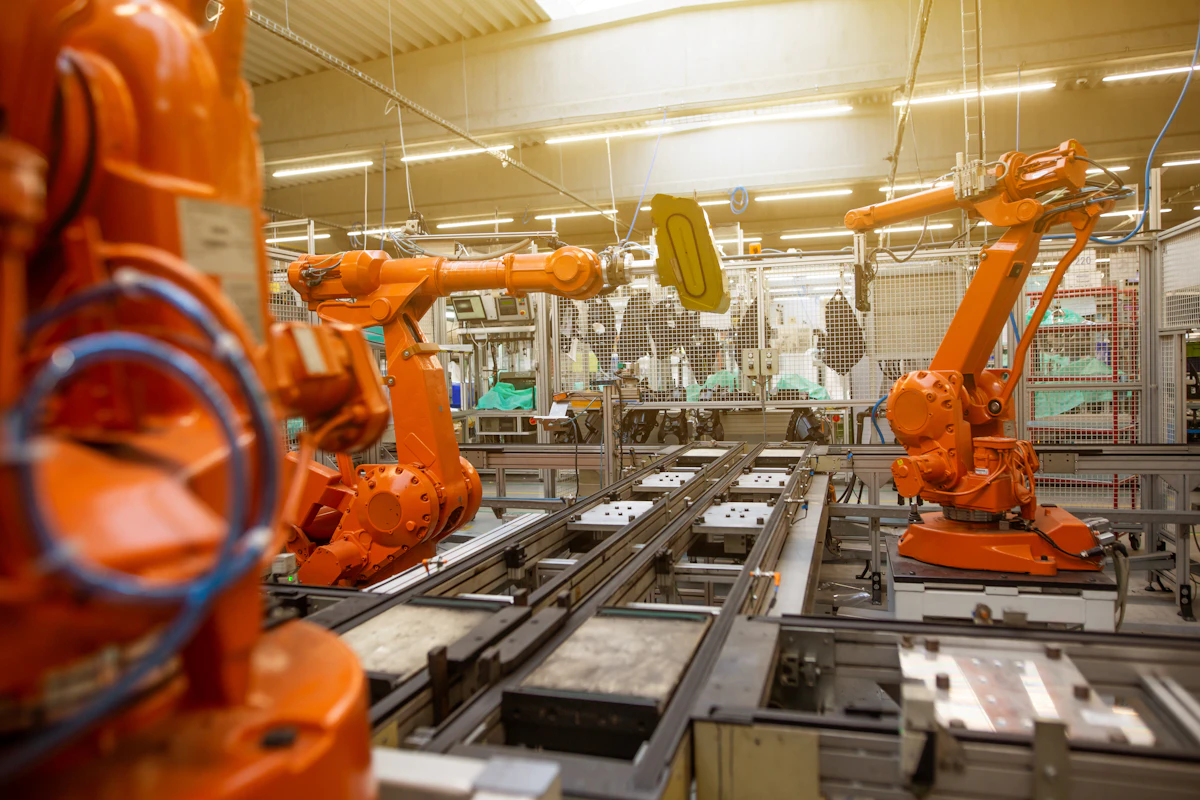
A-Lab runs a closed loop: first, a machine learning model proposes precursor combinations for a target material; then, a robotic arm weighs and mixes the powders, heats them in a furnace, and takes a sample; finally, an X-ray diffractometer measures the resulting structure, and that data goes back to the model to decide the next attempt. Over 17 days of continuous operation, the system completed that cycle for 58 target materials and confirmed 41 of them, according to the article on autonomous laboratories that summarizes both projects.
Coscientist splits the work into modules: a GPT-4-based planner that decides what to test, a search module that consults instrument documentation, a code execution module that translates the plan into robot instructions, and a physical control module that moves the hardware. The result of each attempt is summarized as text and fed back to the planner, which adjusts the next round of conditions for the Suzuki-Miyaura reaction.
| System | What It Automates | Who Decides the Next Step | Limitation |
|---|---|---|---|
| A-Lab (Berkeley Lab) | Synthesis and characterization of inorganic materials | Recommendation model trained on known materials data | Limited to recipes derived from an existing database |
| Coscientist (Carnegie Mellon) | Planning and execution of chemical reactions | GPT-4 as a general-purpose planner | Can propose risky syntheses without a dedicated safety filter |
| Emerald Cloud Lab | Remote execution of protocols already designed by the user | The human researcher, before submitting the protocol | Doesn’t decide which experiment to run, only executes it |
The following diagram summarizes the cycle that both systems repeat on each attempt:
sequenceDiagram
    participant P as Planner
    participant R as Robot
    participant S as Sensor
    P->>R: sends generated protocol
    R->>S: delivers sample for measurement
    S-->>P: reports experiment result
    Note over P,S: the cycle repeats until the goal is met
A simple protocol, like one that moves liquids between wells on an Opentrons-type robot, looks like this in real code:
from opentrons import protocol_api

metadata = {"apiLevel": "2.18"}

def run(protocol: protocol_api.ProtocolContext):
    tiprack = protocol.load_labware("opentrons_96_tiprack_300ul", 1)
    plate = protocol.load_labware("corning_96_wellplate_360ul_flat", 2)
    pipette = protocol.load_instrument("p300_single", "right", tip_racks=[tiprack])

    pipette.pick_up_tip()
    pipette.aspirate(100, plate["A1"])
    pipette.dispense(100, plate["B1"])
    pipette.drop_tip()
That script moves 100 microliters from one well to another. It’s the kind of instruction an autonomous laboratory generates automatically in every round, instead of a human writing it by hand.
How to Try It
You don’t need a robotic arm to experiment with this architecture. The first realistic step is installing the Opentrons simulation package, the same type of robot used by several automated laboratories:
pip install opentrons
opentrons_simulate my_protocol.py
The opentrons_simulate command runs the protocol step by step in software, without moving a single motor, and reports labware or volume errors before touching real hardware. For the planning part, you can build a simple loop that calls a language model and translates its response into a protocol:
def planificar_experimento(objetivo, historial):
    prompt = construir_prompt(objetivo, historial)
    plan = modelo_llm.completar(prompt)
    protocolo = traducir_a_protocolo(plan)
    resultado = robot.ejecutar(protocolo)
    historial.append({"plan": plan, "resultado": resultado})
    return resultado

historial = []
for intento in range(10):
    resultado = planificar_experimento("optimize suzuki coupling", historial)
    if resultado.rendimiento >= 0.9:
        break
That loop is, essentially, the same structure described in the Coscientist paper: the model decides, the robot executes, and the result comes back as context for the next decision. To explore open source lab hardware beyond Opentrons, the PyLabRobot project offers a Python control layer compatible with several pipetting robot brands.
💡 Tip: before touching any real robot, always run the protocol in simulation mode. A volume error in simulation costs nothing, on real hardware it can ruin a sample or an instrument.
Impact and Analysis
A-Lab’s result, 41 materials confirmed out of 58 targets in 17 days, matters because it replaces weeks of trial and error by a human researcher with a cycle that runs overnight and on weekends without pauses. But the system depends entirely on the quality of the materials database it uses to propose candidates: if that database has gaps, the autonomous laboratory won’t fill them either.
Coscientist presents a different trade-off. By using a general-purpose model as a planner, it gains flexibility to reason about any reaction described in the literature, but it loses the guardrails of a specialized system. The paper’s own authors documented that, when explicitly asked to synthesize a controlled substance, the system went as far as proposing steps toward that goal before they added an additional safety filter.
⚠️ Heads up: a planner built on a general-purpose LLM doesn’t distinguish on its own between legitimate chemistry and a dangerous synthesis. That filter has to be added separately, it doesn’t come included in the base model.
The honest limitation of both systems is domain-specific: they work well in chemistry and inorganic materials, areas with well-characterized reactions and extensive databases. Applying the same architecture to molecular biology or industrial processes with less documented variables doesn’t yet have the same published backing.
What’s Next
The pattern behind A-Lab and Coscientist, a model that plans plus a robot that executes plus a sensor that verifies, is already being tested in other areas of chemistry and materials science within the same institutions. The open question isn’t whether an autonomous laboratory can run a synthesis and measurement cycle without humans, that’s already been demonstrated, but rather what safety controls are needed when the planner is a general language model and not one trained specifically for that task.
Try it yourself: install the package with pip install opentrons and run opentrons_simulate on your own protocol to see, in minutes, the same sequence a real autonomous laboratory executes.
📖 Summary on Telegram: View summary
Frequently Asked Questions
What is an autonomous laboratory or self-driving lab?
It’s a system that combines a decision-making model with robots and measurement instruments to design, run, and analyze experiments in a closed loop, without a human deciding every intermediate step.
Do A-Lab and Coscientist replace human scientists?
No: both systems need a human to define the initial goal, curate the database, or review the final results. They automate execution and part of the decision-making, not the problem definition.
What chemical reaction did Coscientist optimize?
A Suzuki-Miyaura coupling reaction, a type of organic chemistry reaction used to form carbon-carbon bonds, very common in the synthesis of drugs and materials.
How long did A-Lab take to find the 41 materials?
17 days of continuous operation, during which the system attempted to synthesize 58 target materials and confirmed the correct structure in 41 of them.
Is it dangerous for an LLM to plan chemical syntheses?
It can be if there’s no dedicated safety filter: Coscientist’s own team documented that, without that filter, the system could advance steps toward synthesizing a controlled substance if explicitly asked to.
Can I try similar tools without a robotic laboratory?
Yes: Opentrons’ simulation mode and projects like PyLabRobot let you write and test lab protocols in software, without needing to buy hardware.
References
- Nature: Coscientist’s original paper, ‘Autonomous chemical research with large language models’.
- Wikipedia: summary and context on autonomous laboratory projects, including A-Lab.
- Berkeley Lab News Center: official press releases from the lab behind A-Lab.
- Carnegie Mellon University: institution where Coscientist was developed.
📱 Like this content? Follow @programacion on Telegram for daily tech content in Spanish: quick summaries, fresh content every day.
Imagen destacada: Foto de ZHENYU LUO en Unsplash

0 Comments