⏱️ Reading time: 10 min
On November 9, 2026, Google launched its fourth TPU of the year: a milestone the company had never reached within a single chip generation. The announcement, published on the official Google blog, adds TPU 8tx and TPU 8i Max to the TPU 8t and TPU 8i systems the company unveiled in April at Google Cloud Next. The two new systems aren’t different chips: they’re specialized configurations of the same eighth-generation silicon, built to address two concrete problems in agentic AI: protecting sensitive data during inference and sustaining context windows of millions of tokens.
📑 En este artículo
- TL;DR
- What TPU 8i Max Is
- What Happened
- Context and History of the TPU
- Technical Details: How TPU 8tx and the Massive-Context Accelerator Work
- Impact and Analysis
- What’s Next
- Frequently Asked Questions
- What is TPU 8i Max and how is it different from TPU 8i?
- What makes TPU 8tx different from the rest of the family?
- Are TPU 8tx and the massive-context accelerator new chips or just different configurations?
- How many customers already use Google’s TPUs?
- When will TPU 8tx and the new massive-context system be available?
- References
TL;DR
- Google unveiled TPU 8tx and TPU 8i Max on November 9, 2026, as part of its eighth-generation TPU lineup.
- TPU 8tx adds confidential in-memory encryption for processing regulated data during inference.
- The 8i Max system delivers the highest compute density per rack in the lineup and context windows of millions of tokens.
- It’s the fourth TPU Google has launched in 2026, following TPU 8t and TPU 8i, unveiled in April at Cloud Next.
- Nearly 100 customers already use Google’s TPUs, including frontier labs, trading firms, and universities.
What TPU 8i Max Is
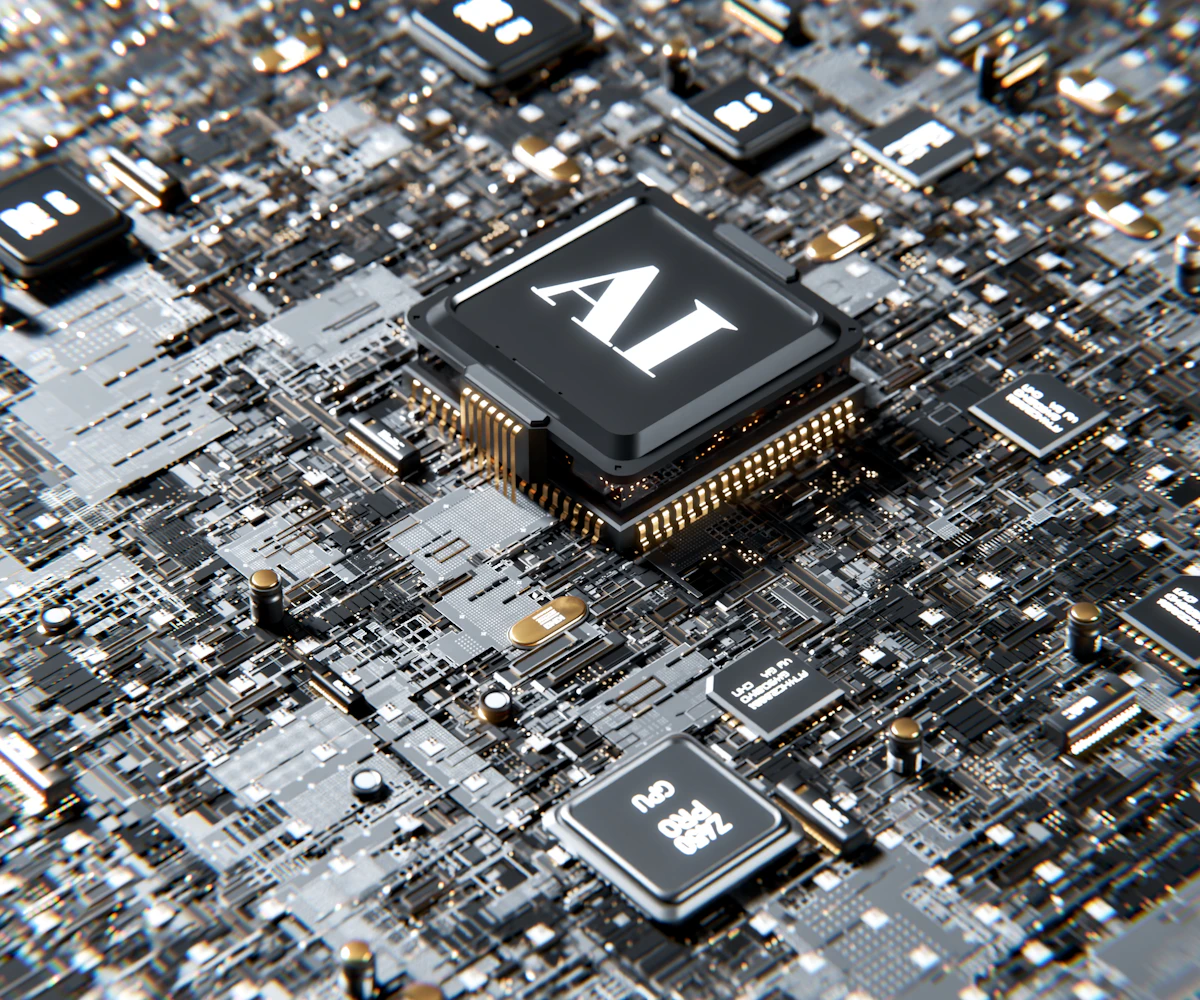
TPU 8i Max is Google Cloud’s new inference system within its eighth-generation TPU lineup, designed for context windows of millions of tokens and the highest compute density per rack in the line, built for agents that reason over extensive histories.
The system builds on the same design as TPU 8i, conceived as the generation’s reasoning engine, but multiplies the memory and interconnect bandwidth available per chip so an agent can keep conversation histories, documents, or intermediate results spanning millions of tokens in active memory without interrupting the inference flow.
What Happened
The announcement came from Amin Vahdat, senior vice president and head of AI and infrastructure technology at Google, who described the launch as expanding the eighth-generation TPU portfolio with two additional systems. Google had already unveiled TPU 8t and TPU 8i in April 2026 at Google Cloud Next, as that generation’s training and inference base.
TPU 8tx arrives to solve a security problem: it allows sensitive information to be processed, even while in use in memory, without exposing it in plaintext. It’s built for governments and regulated companies that run proprietary models and autonomous agents alongside their most critical data. The massive-context accelerator, on the other hand, tackles the other end of the agentic problem: agents that need to remember and reason over contexts of millions of tokens, which demands far more memory and interconnect bandwidth than a standard inference chip provides.
Google clarified in the announcement itself that neither one is a new chip. The company draws a distinction between designing a chip (the layout of billions of transistors in a manufacturing process that spans several years) and designing a system (how that chip is packaged together with networking, memory, and storage). TPU 8tx and TPU 8i Max are new system configurations built on the same eighth-generation silicon, not chip redesigns.
Context and History of the TPU
Google designed its first TPU more than a decade ago to solve internal speech recognition and machine translation problems. Eight generations later, the lineup has gone from training and running inference for Google’s own Gemini models to being sold as infrastructure on Google Cloud, and this year it added a fourth use case: letting companies install TPUs directly in their own data centers.
That trajectory has turned TPUs into a growing business: Google says it has nearly 100 customers, including frontier labs, trading firms, retail chains, and universities. In April, at Cloud Next, the company unveiled TPU 8t and TPU 8i as the eighth generation’s two base systems: 8t for large-scale training and 8i for real-time inference. According to Google, that pair delivers up to 2.7 times better training performance and 80% better price-performance on inference compared to the previous TPU generation.
📌 Note: Google stresses the distinction between chip and system: TPU 8tx and TPU 8i Max reuse the same 8t/8i silicon, but change how it’s packaged with networking, memory, and security around the chip.
That speed isn’t a coincidence: Google says that since its first TPU, it has bet on modularity, treating each system as a set of parts (packaging, high-speed memory, optical networking, security) that can be recombined without waiting for a new chip manufacturing cycle. That bet, the company says, is what lets it deliver specialized supercomputers in months rather than years, and explains why it was able to announce four TPU systems in a single year, 2026.
TPUs have always been designed alongside Google DeepMind, but the company says it now receives a growing number of requests from external organizations: businesses asking for accelerators capable of reasoning over massive context windows, and heavily regulated customers asking for specialized encryption for specific workloads. TPU 8tx and the massive-context accelerator respond directly to those two demands.
Technical Details: How TPU 8tx and the Massive-Context Accelerator Work
The mechanism behind TPU 8tx is called confidential computing. On a conventional server, data is encrypted while stored on disk or traveling over the network, but it has to be decrypted in RAM for the processor to use it: that moment, data sitting in memory in plaintext, is the exposure window an attacker with physical or hypervisor-level access could exploit. TPU 8tx adds hardware-level encryption for that window, so that not even an operator with access to the machine can read the data while the model processes it. The cost of that design is extra compute dedicated to real-time encryption and decryption, which is why Google also positions TPU 8tx for small-scale training rather than for training full foundation models.
The new TPU for million-token context windows tackles a different bottleneck: chip-to-chip communication. A large model doesn’t live on a single chip, it’s spread across dozens or hundreds of them, and every inference step requires syncing data across all of them. Google says TPU 8i, this family’s base system, already cuts that chip-to-chip communication latency in half compared to the previous generation. This high-density variant pushes that design to more compute per rack, which makes it possible to sustain context windows of millions of tokens without chip-to-chip synchronization becoming the limiting factor.
flowchart TD
A["TPU 8t: large-scale training"] --> P["8th-generation TPU portfolio"]
B["TPU 8i: real-time reasoning"] --> P
C["TPU 8tx: confidential inference"] --> P
D["TPU 8i Max: massive context"] --> P| System | Focus | When to Use It | Limitation |
|---|---|---|---|
| TPU 8t | Large-scale training | Foundation models from scratch | Not built for production inference |
| TPU 8i | Real-time inference | Agents that reason with low latency | Limited memory and bandwidth for extreme contexts |
| TPU 8tx | Confidential inference | Regulated data and small-scale training | Doesn’t replace TPU 8t for large-scale training |
| TPU 8i Max | Massive context and high density | Agents with histories of millions of tokens | Google hasn’t published pricing or a general availability date |
There’s no direct way to verify from the outside whether a workload is using TPU 8tx’s confidential encryption: Google didn’t publish a command, dashboard, or public Google Cloud metric to audit it in the announcement, unlike a software flag that does expose its status via CLI or console. For now, that guarantee depends on the documentation Google Cloud publishes once the system becomes available to customers.
Impact and Analysis
The announcement arrives amid an AI infrastructure race where Nvidia still dominates the accelerator market, but Google has been pushing TPU as its own alternative for cloud customers and, increasingly, for those who want to install the hardware in their own data center. Adding four TPU systems in a single year is, above all, a signal that Google wants to cover every stage of a model’s life cycle (training, inference, security, and long context) with a specific piece of hardware instead of a single generic TPU.
The security piece matters particularly for enterprise adoption of autonomous agents: an agent working with financial, medical, or government data needs guarantees that the data isn’t exposed even during processing, something that until now depended more on software (enclaves, confidential VMs) than on dedicated AI hardware. And the massive-context piece responds to a shift in usage patterns: agents no longer just answer a single isolated question, they sustain conversations and work histories that can accumulate millions of tokens before finishing a task.
The risk for customers is fragmentation: four systems in the same generation means four distinct provisioning decisions, and Google still hasn’t published a comparative pricing guide between them. For teams just starting to move AI workloads to TPU, choosing between 8t, 8i, 8tx, and the massive-context accelerator first requires understanding their workload’s real bottleneck: training, inference latency, regulatory compliance, or context size.
What’s Next
Google tied the announcement to its recent support for PyTorch on TPU, with the stated goal of making the hardware easier to adopt for any developer already working with that framework instead of JAX. The company said it will keep publishing open-source software tools and automation so Google Cloud customers and organizations running TPU in their own data centers can deploy the new systems without rewriting their stack.
What the announcement doesn’t confirm yet is the exact general availability date or the pricing for TPU 8tx and the massive-context accelerator: Google pointed to a video event and to Google Cloud’s infrastructure section for anyone wanting more technical detail, but it didn’t publish a pricing table on the blog. Until that happens, the real interest from regulated customers and massive-context agents will be the signal to watch.
If you manage AI workloads in the cloud, check the TPU catalog in the Google Cloud console today to confirm whether TPU 8tx or TPU 8i Max already show up as enabled for your project.
Frequently Asked Questions
What is TPU 8i Max and how is it different from TPU 8i?
TPU 8i Max is a configuration of the TPU 8i system optimized for the highest compute density per rack in the family and for sustaining context windows of millions of tokens, something the standard TPU 8i isn’t built to sustain at the same level.
What makes TPU 8tx different from the rest of the family?
TPU 8tx adds hardware-level encryption for data in memory during inference, built for regulated customers and small-scale training, while the rest of the family prioritizes pure training or inference performance.
Are TPU 8tx and the massive-context accelerator new chips or just different configurations?
Neither is a new chip. Google describes them as new systems, that is, new ways of packaging the same eighth-generation silicon together with networking, memory, and security, not a redesign of the chip itself.
How many customers already use Google’s TPUs?
Google says it has nearly 100 TPU customers, including frontier labs, trading firms, retail chains, and universities, according to the company’s own announcement.
When will TPU 8tx and the new massive-context system be available?
Google didn’t publish a general availability date or pricing for TPU 8tx or the massive-context accelerator in the announcement; it pointed to its video event and the Google Cloud website for more details.
References
- Google Blog: official announcement of TPU 8tx and TPU 8i Max, with performance and customer details.
- Google Cloud: official TPU product page on Google Cloud.
- Wikipedia: history and general architecture of Google’s TPUs.
- PyTorch: machine learning framework Google mentioned as part of its software support for TPU.
📱 Do you like this content? Follow @programacion on Telegram for daily tech content in Spanish: quick summaries, fresh content every day.
Featured image: Foto de Adarsh Chauhan en Unsplash
Did it work for you? Got a different error? Say so below: questions get answered and help the next reader.
Leave a comment


0 Comments