⏱️ Lectura: 9 min
September 1, 2026 is the date a literary contest chose as its breaking point: from today on, its organizers imagine, AI progress freezes, but GPU manufacturing never stops. That’s the core premise of GPU World, a short story contest with $100,000 in prizes that seeks to imagine what 2040 would look like with billions of AI chips distributed among all of humanity.
📑 En este artículo
The GPU World contest is organized by a group linked to Paradigm and the community of technical essayists around Gwern Branwen, and it calls on writers from any country to imagine that ‘mundane’ future: neither a superintelligence utopia nor a scarcity dystopia, just the simple question of what changes when compute stops being a scarce resource.
TL;DR
- GPU World awards $100,000 in prizes for stories about a future with abundant AI in 2040.
- First prize: $40,000. Second: $20,000. Third prize: $12,000. Plus 7 finalist prizes of $4,000 each.
- The judging panel includes Neal Stephenson, Gwern Branwen, and Matt Huang, of Paradigm.
- Premise: AI progress stops on September 1, 2026, but GPU manufacturing continues.
- Submissions opened in August 2026 and close on October 31, 2026 at 11:59 pm Pacific time.
- Stories must be between 1,000 and 5,000 words, in Markdown or PDF format.
- Fiction or nonfiction is accepted, under a CC BY-NC license, with one submission per person.
- Winners are announced in December 2026 and published on gpuworld.org, paradigm.xyz, and gwern.net.
Introduction
The quote that opens the GPU World call is from William Gibson: ‘The future is already here, it’s just not evenly distributed.’ The organizers take that phrase literally: today, only a fraction of humanity has constant access to a frontier language model, because the number of GPUs capable of efficiently serving those models remains, globally speaking, minuscule compared to the planet’s 8 billion people.
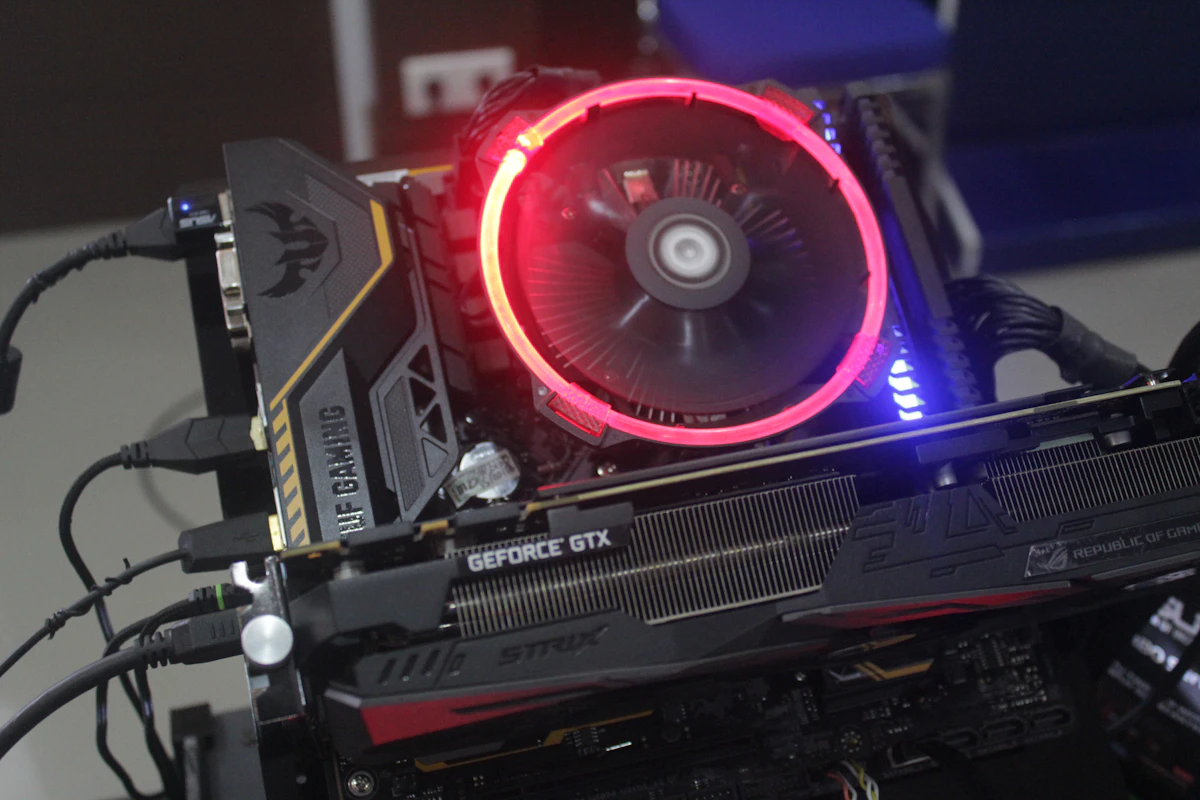
Only a few million GPUs with the capacity needed to serve frontier models at scale are manufactured each year. The contest poses a simple question: if that production keeps scaling, without AI itself necessarily getting smarter, what would the world look like once every person effectively has the equivalent of a dedicated B300 GPU running a model like today’s?
What happened
GPU World‘s organizers opened submissions in August 2026 for their short story contest, fiction or nonfiction, about a future with abundant AI compute, with a total prize pool of $100,000. The call sets up a deliberately ‘boring’ scenario: frontier progress stops on September 1, 2026 (models keep getting cheaper and faster, but stop making capability leaps), while GPU manufacturing continues at its current pace for 14 more years.
Under that assumption, by 2040 there could be the equivalent of 8 billion GPUs in use, one for every person alive today. The contest asks writers to imagine that routine world: will there be constant AI surveillance? Infinitely patient tutors that revolutionize education? Expert-level doctors available 24 hours a day to anyone with an internet connection? What happens in regions that are already falling behind on every tech wave?
Context: who’s behind it and why now
The GPU World judging panel combines literature, technical essay writing, and venture investing. Neal Stephenson, author of Snow Crash and Cryptonomicon, has spent three decades writing about the social effects of technology before they happen. Gwern Branwen is an independent essayist known for long, well-documented analyses of AI, behavioral genetics, and statistics, published on gwern.net. Matt Huang is co-founder of Paradigm, the investment firm that is also among the outlets where the winning stories will be published.
The call arrives at a moment when compute scarcity is, literally, the talk of the industry: frontier GPU manufacturing capacity remains the bottleneck that determines how many people can use an AI model constantly rather than in limited quotas. GPU World doesn’t debate whether that will change (it assumes it will, if only from industrial inertia) but rather what it means once it fully does.
Prizes, judges, and rules of the GPU World contest
The total prize pool of $100,000 is split across ten prizes. Here’s the breakdown:
| Category | Amount | Number |
|---|---|---|
| First prize | $40,000 | 1 |
| Second prize | $20,000 | 1 |
| Third prize | $12,000 | 1 |
| Finalist prizes | $4,000 each | 7 |
The ten highest-scoring entries from the preliminary round move on to the judging committee (Stephenson, Branwen, and Huang), who choose the three main winners. Those three stories are published on gpuworld.org, paradigm.xyz, and gwern.net.
The submission rules are specific:
- Eligibility: open to anyone, one submission per participant.
- Genre: fiction or nonfiction.
- Length: between 1,000 and 5,000 words.
- Format: Markdown or PDF.
- License: entries must be published under CC BY-NC or a more permissive license, so they can be republished.
- Use of AI: allowed, but discouraged. The organizers warn that using an LLM tends to reduce the originality and quality of the writing, and that the flaws become more noticeable when reading many generated texts in a row. They ask entrants to disclose AI use in their submission.
⚠️ Heads up: GPU World’s own organizers warn that AI-generated text without human editing tends to stand out when read in a batch, which lowers its chances of winning against a hand-crafted piece.
flowchart TD
A["Submissions: August to Oct 31, 2026"] --> B["Preliminary round: top 10 entries"]
B --> C["Judging committee"]
C --> D["3 winners plus 7 finalists"]
D --> E["Published on gpuworld.org, paradigm.xyz, and gwern.net"]
subgraph December 2026
D
E
end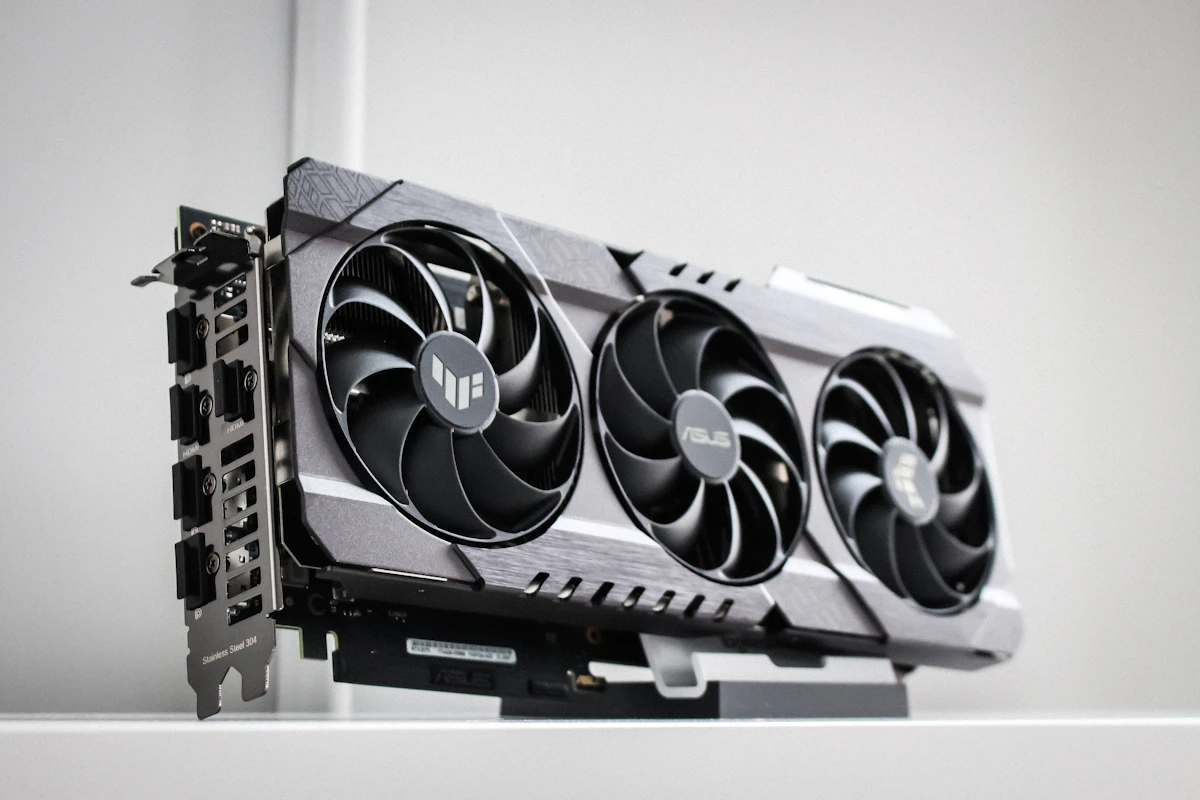
How to enter GPU World
The submission process is simple and doesn’t require any technical tools, but it helps to break it down into concrete steps:
- Write a fiction or nonfiction story of between 1,000 and 5,000 words about the proposed scenario: AI progress frozen since September 1, 2026, but with 8 billion GPUs available by 2040.
- Save it in Markdown (
.md) or PDF. - Verify that the text can be licensed under CC BY-NC, or a more open license, without conflicting with prior publications.
- If you used an LLM for assistance, note it so you can disclose it on the submission form.
- Submit your entry before 11:59 pm Pacific time on October 31, 2026, through the form on gpuworld.org.
There’s no entry fee or geographic restriction: the contest is global, so a developer in Buenos Aires, Bogota, Mexico City, or Santiago competes on equal footing with someone in San Francisco.
Impact and what it means for the tech community
GPU World isn’t a paper or a product: it’s an exercise in collective forecasting about something the tech industry discusses every day in terms of infrastructure (how many GPUs exist, how much it costs to train them, how much it costs to serve them) but rarely in terms of what happens once that bottleneck disappears. For a developer community used to reading about new models, benchmarks, and prices per million tokens, the contest flips the question: instead of ‘which model is better?’, it asks ‘what happens when everyone, in any country, has unlimited access to the same level of model?’.
It’s also a signal of where part of the AI investment ecosystem is looking: Paradigm, Matt Huang’s firm, is known mainly for investing in crypto and blockchain infrastructure, not literature. That it’s funding a fiction contest about the future of AI suggests that, for some investors, thinking through long-term social scenarios is already part of their due diligence on what to invest in.
💭 Key point: the contest explicitly assumes the Singularity doesn’t happen. The question isn’t how smart AI becomes, but what changes when today’s already-proven compute becomes cheap and ubiquitous.
What’s next
Submissions for GPU World remain open until October 31, 2026. An initial filter narrows the total entries received down to ten finalists, who move on to the judging committee. The three winning stories are announced in December 2026 and published simultaneously on gpuworld.org, paradigm.xyz, and gwern.net, alongside the seven $4,000 prizes awarded to the remaining finalists.
For the Spanish-speaking ecosystem, the contest is a rare opportunity: it doesn’t require an academic resume, prior publication, or any connection to the tech world, just a well-written story in English (the language the contest is conducted in) about a future with AI compute distributed evenly.
📖 Summary on Telegram: View summary
If this scenario interests you, the most direct way to explore it is to open the full call on gpuworld.org, read the original rules, and start sketching out your story before the deadline closes on October 31, 2026.
Frequently Asked Questions
What exactly is GPU World?
It’s a short story contest, fiction or nonfiction, that awards a total of $100,000 to those who imagine what 2040 would look like with AI GPUs distributed among all of humanity, under the assumption that frontier progress stops in September 2026.
Who can enter?
Anyone, from any country, with one submission per participant. You don’t need to be a programmer or have prior publications.
Can you use artificial intelligence to write the story?
Yes, it’s allowed, but the organizers discourage it because, as they explain, it tends to lower the originality and quality of the writing, and they ask entrants to disclose its use.
When does the contest close and when are winners announced?
Submissions close on October 31, 2026 at 11:59 pm Pacific time. Winners are announced in December 2026.
Where are the winning stories published?
The three winning stories are published on gpuworld.org, paradigm.xyz, and gwern.net.
What license must the submitted texts have?
CC BY-NC at minimum, or a more open license, so the organizers can republish them.
References
- GPU World: official contest page, with full rules, timeline, and submission form.
- gwern.net: site of essayist Gwern Branwen, a member of the contest’s judging committee.
- Paradigm: investment firm co-founded by Matt Huang, another of the judges, and one of the outlets where the winning stories will be published.
- Neal Stephenson: biographical profile of the writer, chair of GPU World’s judging committee.
📱 Enjoying this content? Follow @programacion on Telegram for daily tech content in Spanish: quick summaries, fresh content every day. @programacion
Imagen destacada: Foto de Random Thinking en Unsplash



0 Comments