⏱️ Lectura: 11 min
The Trump administration is putting a price on not building clean energy: $1.2 billion. That’s the amount the German company RWE accepted from the US Department of the Interior in exchange for abandoning its offshore wind projects.
📑 En este artículo
- TL;DR
- What happened: RWE abandons offshore wind in the US
- Context and history
- Technical details and performance
- How to start tracking the energy data yourself
- Impact and analysis
- What’s next
- Frequently Asked Questions
- What is RWE?
- Why does the Trump administration pay to cancel wind projects instead of just denying the permit?
- What happens to the jobs and contracts that already existed around these wind projects?
- How much do the three deals of this kind signed in 2026 add up to?
- Does this affect electricity prices for AI data centers in the US?
- Is RWE completely withdrawing from the US renewable energy market?
- References
RWE is giving up its leases off the coasts of California, Louisiana, and the New York Bight, and redirecting the money to gas: $900 million will go to a liquefied natural gas (LNG) export terminal in Louisiana, according to the BBC.
TL;DR
- The US Department of the Interior paid $1.2 billion (£892m) to RWE to cancel its offshore wind projects.
- RWE is giving up its leases off California, Louisiana, and the New York Bight.
- $900 million of the payment will go to a liquefied natural gas (LNG) terminal in Louisiana.
- RWE plans to invest close to €17 billion in the US over the next six years.
- It’s the third similar deal in 2026: TotalEnergies (March) and Duke Energy ($129 million) came before it.
- Interior Secretary Doug Burgum defended the deal as a bet on energy security without subsidies.
- Trump called wind turbines ‘big and ugly’ and said no country with windmills wins.
What happened: RWE abandons offshore wind in the US
The US Department of the Interior (DOI) and RWE, Germany’s largest electric utility, closed a deal that ends three offshore wind projects the company had in development off the US coast. RWE confirmed it is giving up its leases in California, Louisiana, and the New York Bight, the stretch of sea between New Jersey and Long Island where several European companies were planning wind farms.
‘After careful consideration, it was determined that there is no viable path to permitting these projects in the United States for the foreseeable future,’ the company said in a statement cited by the BBC. In exchange for giving up those leases, RWE receives $1.2 billion (£892 million) from the US government.
The money won’t sit idle. RWE has already announced it will reinvest the full amount in conventional gas projects, with $900 million earmarked for an LNG export terminal in Louisiana. Interior Secretary Doug Burgum praised the deal: ‘Americans deserve an energy system built on common sense, not one dependent on costly subsidies.’ He added that the administration welcomes RWE’s voluntary investment in projects that, in his view, strengthen the country’s energy security.
RWE’s full US investment commitment is larger: the company said it will invest roughly €17 billion (about $19.6 billion) in the country over the next six years to ‘grow its generation capacity,’ though it did not specify how much of that will go to onshore renewables versus gas.
flowchart TD
A["US Department of the Interior"] --> B["Negotiates with RWE"]
B --> C["RWE gives up wind leases"]
C --> D["California"]
C --> E["Louisiana"]
C --> F["New York Bight"]
B --> G["Payment of $1.2 billion to RWE"]
G --> H["LNG terminal in Louisiana, $900M"]
G --> I["Other conventional gas projects"]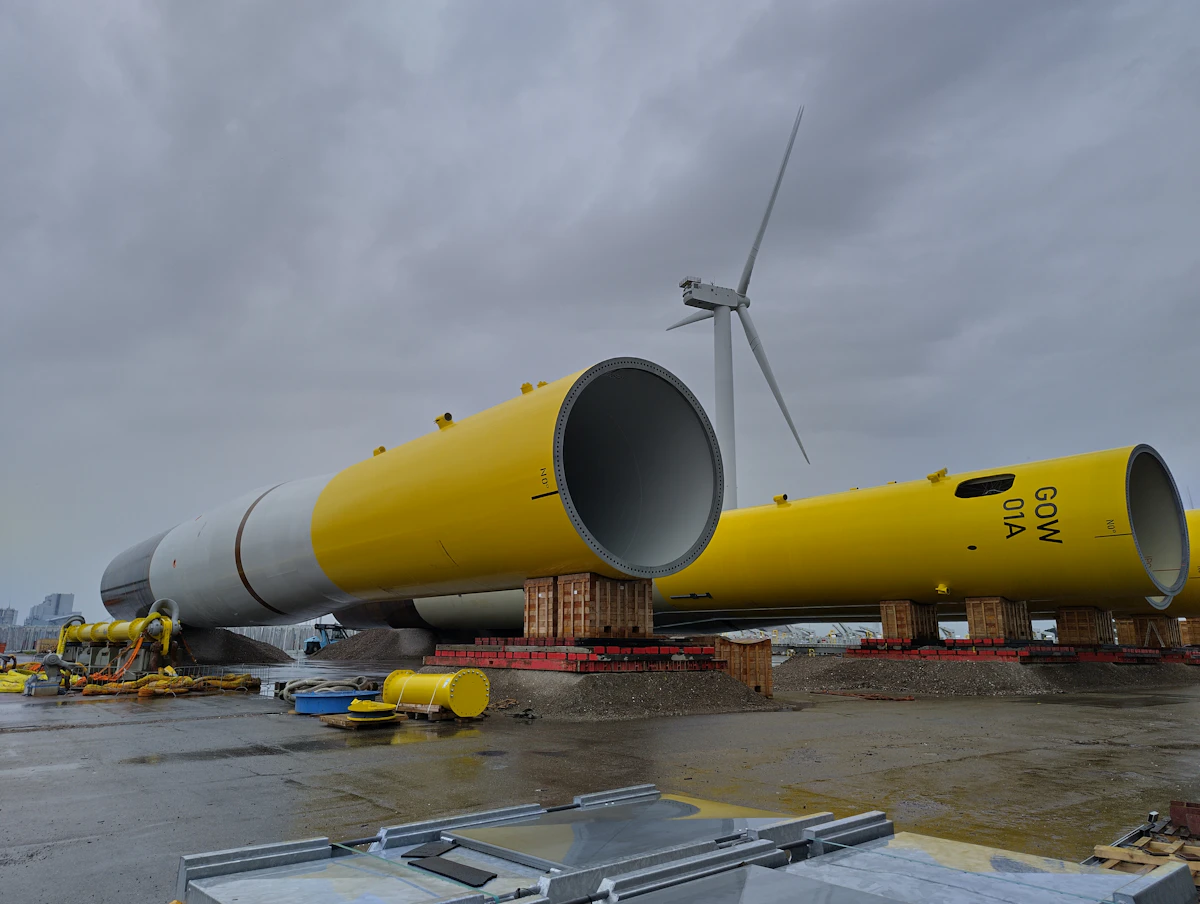
Context and history
Trump’s stance against wind energy is not new. Days after returning to the White House, he said ‘we’re not going to do the wind thing’ and described wind turbines as ‘big, ugly windmills’ that are dangerous for wildlife. This week he went further, stating that ‘any country with windmills is a loser.’
The RWE deal is not the first of its kind. In March 2026, the DOI reached a similar agreement with France’s TotalEnergies to end its offshore wind projects in the US. In exchange, TotalEnergies agreed to redirect its investment toward an LNG plant in Texas and toward developing conventional upstream oil in the Gulf of Mexico.
Last month, the administration signed a similar agreement with Charlotte-based Duke Energy for $129 million (£96 million), in exchange for the company canceling its offshore wind lease in the Carolina Long Bay area. The pattern repeats: cash payment, cancellation of the wind lease, and redirection toward gas or oil.
📌 Note: In less than six months, the DOI closed three deals of this kind: TotalEnergies (March), Duke Energy (July), and now RWE, all following the same pay-to-cancel scheme.
Technical details and performance
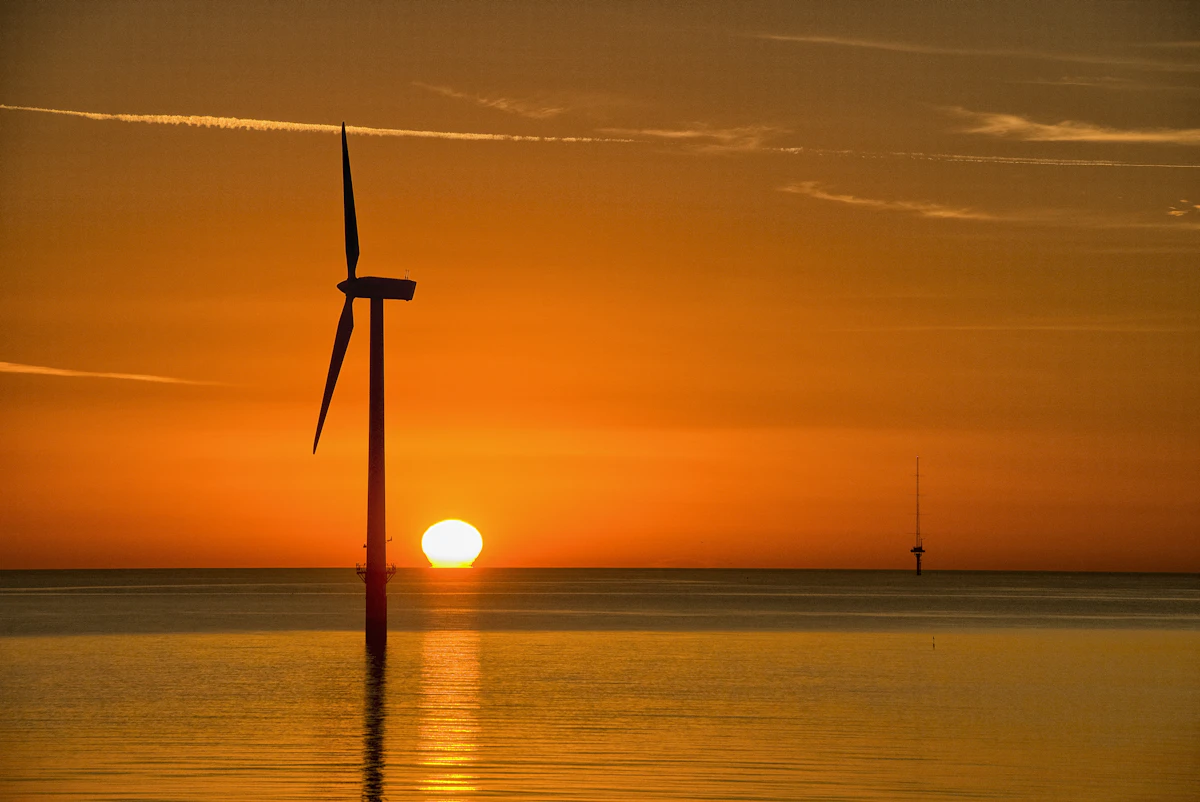
An offshore wind project in the US isn’t canceled for a single technical reason: it requires a lease from the Bureau of Ocean Energy Management (BOEM), environmental impact studies, Coast Guard permits, and in some cases coordination with shipping lanes and military radar. Each layer adds years to the timeline before the first turbine goes up.
An LNG terminal, by contrast, has a different technology chain: natural gas is cooled to -162°C until it liquefies, shrinking its volume about 600 times, then loaded onto LNG carriers and regasified at its destination. The terminal RWE will finance in Louisiana falls into that category: liquefaction and export infrastructure, not direct power generation within the US.
To compare generation technologies, the industry uses the capacity factor: the actual energy generated divided by what the plant would generate if it operated at maximum capacity 24 hours a year. Offshore wind typically has higher capacity factors than onshore wind because ocean winds are steadier, but the exact figure depends on the site and on data published by operators or the EIA (US Energy Information Administration).
Anyone who wants to verify the actual status of US offshore wind projects, active, canceled, or under review, can check BOEM’s public lease registry at BOEM, the agency that manages leases on the continental shelf.
How to start tracking the energy data yourself
If you code and want to follow this kind of energy policy shift with data instead of headlines, the EIA’s public API exposes historical electricity generation series by source and by state, for free.
curl "https://api.eia.gov/v2/electricity/electric-power-operational-data/data/?frequency=annual&data[0]=generation&facets[fueltypeid][]=WND&facets[stateid][]=CA&api_key=YOUR_API_KEY"This call requests annual wind generation (fueltypeid=WND) in California. Change stateid to LA (Louisiana) or NY (New York) to compare with the regions where RWE had its projects. The result is JSON and can be plotted directly with pandas.
import requests

API_KEY = "YOUR_API_KEY"
BASE_URL = "https://api.eia.gov/v2/electricity/electric-power-operational-data/data/"

def generation_by_source(state, source, start_year=2020):
    params = {
        "frequency": "annual",
        "data[0]": "generation",
        "facets[fueltypeid][]": source,
        "facets[stateid][]": state,
        "start": start_year,
        "api_key": API_KEY,
    }
    response = requests.get(BASE_URL, params=params)
    response.raise_for_status()
    return response.json()["response"]["data"]

wind_louisiana = generation_by_source("LA", "WND")
gas_louisiana = generation_by_source("LA", "NG")

for record in wind_louisiana:
    print(record["period"], record["generation"], "MWh wind")
This script pulls the historical generation series for wind (WND) and natural gas (NG) in Louisiana, the state where the new LNG terminal is going. Run it before and after RWE’s project comes online to measure the actual change in the state’s energy mix.
# Illustrative example: replace these values with real EIA data
def capacity_factor(generation_mwh, installed_capacity_mw, hours=8760):
    theoretical_capacity_mwh = installed_capacity_mw * hours
    return generation_mwh / theoretical_capacity_mwh

lng_gas = capacity_factor(generation_mwh=700_000, installed_capacity_mw=150)
offshore_wind = capacity_factor(generation_mwh=1_500_000, installed_capacity_mw=400)

print(f"Gas: {lng_gas:.1%}")
print(f"Offshore wind: {offshore_wind:.1%}")
The values in this example are illustrative: for a real analysis, replace them with the generation and installed capacity data the EIA API returns for your state.
| Company | Date | Payment received | Canceled wind project | Investment redirection |
|---|---|---|---|---|
| TotalEnergies | March 2026 | Not publicly specified | Offshore wind projects in the US | LNG terminal in Texas and oil in the Gulf of Mexico |
| Duke Energy | July 2026 | $129 million (£96m) | Wind lease in Carolina Long Bay | Not specified in the statement |
| RWE | August 2026 | $1.2 billion (£892m) | California, Louisiana, and New York Bight | $900 million to LNG terminal in Louisiana |
Impact and analysis
The message for the global offshore wind industry is direct: in the US, under this administration, a project with permits in process can become a stranded asset overnight. RWE, TotalEnergies, and Duke Energy have already accepted this and got paid to walk away. Other companies with active leases in the New York Bight are now under the same pressure.
For the tech industry, the underlying context matters more than it seems at first glance. Data centers training and running inference for AI models need long-term power contracts, and offshore wind was one of the few sources the US could scale quickly near the East Coast, close to the large data center hubs in Virginia and New Jersey. If that option closes off, the immediate alternative is natural gas, with its own infrastructure chain and its own construction timelines.
⚠️ Watch out: A change of administration in the US doesn’t automatically reverse these deals: the wind leases already canceled by RWE, TotalEnergies, and Duke Energy don’t become available again just because the government changes. Starting an offshore wind project from scratch, with new permits, takes years.
RWE keeps other lines of business in the US, such as onshore solar and battery storage, which weren’t mentioned in the deal with the DOI and which, unlike offshore wind, don’t depend on federal leases in territorial waters.
What’s next
Neither the DOI nor RWE detailed what will happen to the leases the company is returning. In previous deals, like the one with TotalEnergies, the areas were left without an assigned developer, pending a future bidding round or a policy change.
Construction of the LNG terminal in Louisiana, the largest piece of RWE’s new plan, still has no confirmed start date for operations in the statement. It’s worth following the company’s upcoming filings and DOI updates to find out when construction begins.
The pattern of recent months (payment, cancellation, redirection to gas) suggests this won’t be the last deal of its kind while the Trump administration keeps this policy in place. It’s worth watching whether other developers with projects in the New York Bight receive similar offers in the coming months.
📖 Summary on Telegram: See summary
Try it yourself: go to the EIA’s public API, request wind and gas generation data for Louisiana with your own free API key, and compare the state’s energy mix before and after this deal.
Frequently Asked Questions
What is RWE?
RWE is Germany’s largest electric utility, with conventional and renewable generation operations in Europe and the United States. It trades on the Frankfurt Stock Exchange and is one of the world’s largest offshore wind developers.
Why does the Trump administration pay to cancel wind projects instead of just denying the permit?
The payment avoids lengthy litigation: RWE, TotalEnergies, and Duke Energy had already invested in studies, partial permits, and supplier contracts. A negotiated payment closes the project without a lawsuit and gives the company capital to reinvest elsewhere in the US.
What happens to the jobs and contracts that already existed around these wind projects?
Neither the BBC nor RWE’s statement detail the impact on direct employment. The company said it is redirecting its investment toward gas within the same country, which suggests some of the capital and staff could be reassigned to the new LNG projects.
How much do the three deals of this kind signed in 2026 add up to?
Only two of the three payments are public: $129 million to Duke Energy and $1.2 billion to RWE. The amount of the deal with TotalEnergies, signed in March, was not made public in available reports.
Does this affect electricity prices for AI data centers in the US?
The statement doesn’t include final consumer price figures. What changes is the mix of sources available in the medium term: less offshore wind near the East Coast and more natural gas, whose availability can be tracked with public EIA data.
Is RWE completely withdrawing from the US renewable energy market?
No. The deal with the DOI covers specifically the offshore wind projects in California, Louisiana, and the New York Bight. RWE did not announce it is shutting down its other renewable business lines in the country.
References
- BBC News: original report on the $1.2 billion deal between the DOI and RWE.
- U.S. Department of the Interior: federal agency that negotiated and signed the deal with RWE.
- RWE: official website of the German company, with its US investment statements.
- U.S. Energy Information Administration (EIA): public API with electricity generation data by source and state.
- Wikipedia: Wind power in the United States: general context on the development of wind energy in the country.
📱 Enjoy this content? Follow @programacion on Telegram for daily tech content in Spanish: quick summaries, fresh content every day. @programacion
Imagen destacada: Foto de Ryan Fleischer en Unsplash



0 Comments