⏱️ Reading time: 11 min
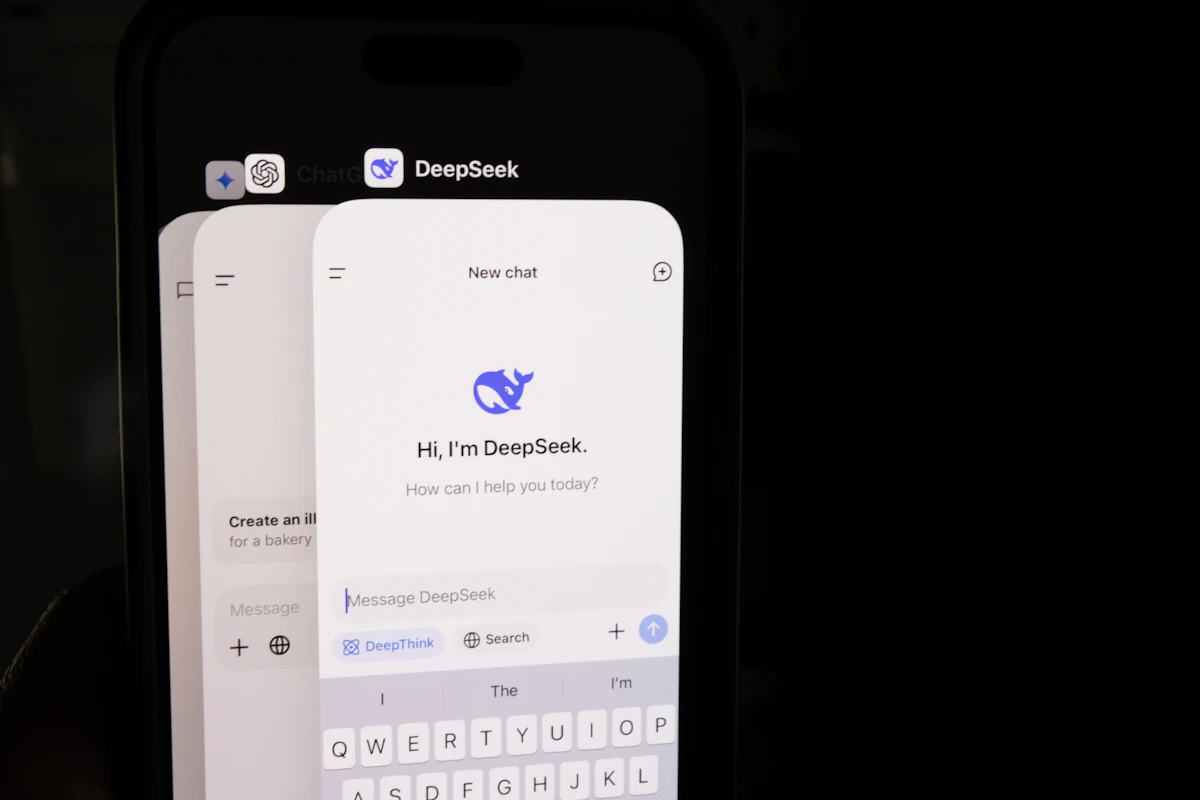
A developer tested DeepSeek 4.1 Flash for a month across a dozen real projects and reached a conclusion that’s uncomfortable for the industry: mid-session, without looking at the model name, he can’t tell whether he’s talking to DeepSeek or to an Opus model. The reason isn’t magic or marketing. It’s a combination of cache architecture and pricing that changes which model makes sense for each task.
📑 En este artículo
- TL;DR
- What Is DeepSeek 4.1 Flash?
- Why Cost Matters in Development
- How the Cost Advantage Works: the KV Cache
- Practical Examples
- Getting Started
- Real-World Use Cases
- Common Mistakes and Best Practices
- Comparison with Alternatives
- Going Deeper
- Frequently Asked Questions
- Does DeepSeek 4.1 Flash completely replace a frontier model?
- How much does a long session with DeepSeek Flash cost?
- What is the KV cache, and why did DeepSeek Flash change it?
- Is it worth self-hosting DeepSeek’s Flash series?
- Is the Chinese Flash model compatible with tools built on the OpenAI API?
- Which development tasks perform better with a frontier model than with DeepSeek Flash?
- References
This article explains, using the publicly available data, when to choose DeepSeek 4.1 Flash over a frontier model based on cost and performance in development tasks, and in which cases the frontier model still wins.
TL;DR
- DeepSeek 4.1 Flash costs orders of magnitude less than a frontier model and performs just as well on everyday coding tasks.
- A KV cache 437 times smaller than its V1’s keeps long sessions under 1 dollar.
- Reserving a frontier model only for the final review of a PR still catches errors that Flash lets slip through.
- The $10-a-month OpenCode Go plan makes using DeepSeek Flash practically unlimited.
- Self-hosting DeepSeek 4.1 Flash is possible, but the real savings only show up with the managed API.
What Is DeepSeek 4.1 Flash?
DeepSeek 4.1 Flash is a language model from the DeepSeek family optimized for cost and speed in software development tasks, designed as a cheap alternative to closed frontier models. It handles the same type of work (generating code, planning changes, running exploratory tasks) at a fraction of the price per token.
There’s no “Pro” version of 4.1, and according to someone who uses it daily, that doesn’t matter: it behaves like a frontier model in most everyday tasks, even though it isn’t one in the strict sense of maximum capability as declared by its maker.
Why Cost Matters in Development
The price difference between DeepSeek Flash and a frontier model isn’t a minor nuance, it’s several orders of magnitude. The author of the original report describes his OpenCode Go subscription, which costs $10 a month, as practically unlimited for the volume of work he runs with DeepSeek Flash. Sessions that last most of a workday rarely cost more than a dollar.
That margin changes the calculation of which tasks are worth automating. Reorganizing a project’s files, once unthinkable because of token costs, now costs $0.003 instead of $1 with a frontier model, according to the same source. The difference isn’t just about money: it enables running exploratory tasks, interface monkey testing, or code reorganization without it feeling like an expense you have to justify to anyone.
For a team paying per token in production, the scale of the equation changes, but the principle holds. If a task doesn’t need a frontier model’s finer reasoning, paying frontier prices for it is waste. Cost stops being a hard ceiling and becomes just another variable that decides which model to use, not whether to use AI at all.
How the Cost Advantage Works: the KV Cache
When a model generates text token by token, it keeps a history in GPU memory called the KV cache (key-value cache): the intermediate attention calculations that avoid recomputing the entire conversation at every step. The longer the session, the bigger that cache, and keeping it in GPU memory is one of the highest costs of running long coding sessions with an agent.
According to the same report, DeepSeek cut its KV cache size by roughly 437 times compared to its own V1 model. That figure largely explains why a full day-long session with DeepSeek Flash costs cents instead of dollars: less memory held per session means the provider can serve more simultaneous sessions with the same hardware, and passes that savings on to the per-token price.
The effect isn’t confined to a single lab. The same source notes that this kind of cache optimization also gave Opus 5.5 a quiet efficiency boost, suggesting it’s an industry-wide trend rather than one provider’s exclusive advantage.
Practical Examples
A minimal call to the DeepSeek API, compatible with OpenAI’s format, is enough to confirm the key works before integrating it into a real workflow:
curl https://api.deepseek.com/chat/completions \
  -H "Content-Type: application/json" \
  -H "Authorization: Bearer $DEEPSEEK_API_KEY" \
  -d '{
    "model": "deepseek-chat",
    "messages": [{"role": "user", "content": "Say hello in one word"}]
  }'
The response is a JSON object with the generated message and the token count used:
{"choices":[{"message":{"role":"assistant","content":"Hello."}}],"usage":{"prompt_tokens":12,"completion_tokens":2,"total_tokens":14}}The next step is a real development task, like refactoring a function to make it pure:
curl https://api.deepseek.com/chat/completions \
  -H "Content-Type: application/json" \
  -H "Authorization: Bearer $DEEPSEEK_API_KEY" \
  -d '{
    "model": "deepseek-chat",
    "messages": [{"role": "user", "content": "Refactor this JavaScript function to make it pure: function addItem(cart, item) { cart.push(item); return cart; }"}]
  }'
The response’s content field contains the corrected code:
{"choices":[{"message":{"content":"function addItem(cart, item) {\n return [...cart, item];\n}"}}]}The workflow described in the original report combines Flash for execution with a frontier model only to audit what’s critical:
sequenceDiagram
    participant D as Developer
    participant F as DeepSeek Flash
    participant O as Frontier
    D->>F: coding task
    F-->>D: result and diffs
    D->>O: final PR review
    O-->>D: list of critical fixes
    Note over D,F: most iterations stay here
Getting Started
Before trying DeepSeek 4.1 Flash, you need three things: an account on the DeepSeek platform, an API key, and an HTTP client (curl comes included on macOS and most Linux distributions; on Windows it’s available in PowerShell since Windows 10).
- Create an account and generate an API key from the DeepSeek platform.
- Export the key as an environment variable in your terminal:
On Windows PowerShell, the same variable is set withexport DEEPSEEK_API_KEY="sk-..."$env:DEEPSEEK_API_KEY="sk-...". - Try the minimal call from the previous section to confirm it responds.
- If you’re already using an OpenAI API-compatible client (an SDK, LangChain, an editor with a built-in agent), point its
base_urltohttps://api.deepseek.comand leave the rest of the code unchanged: DeepSeek exposes the same interface.
To confirm the key is active, an HTTP 200 response with content in choices[0].message.content is enough. A 401 indicates an invalid key or no balance loaded.
Real-World Use Cases
The pattern described in the original report is delegating to Flash everything that was previously avoided automating due to cost: interface monkey testing, exploratory tasks, planning, and even complex research. The frontier model comes in afterward, as a one-off second opinion, not as the main engine for every task.
That second opinion isn’t always about seeking more capability: sometimes the value of calling in an Opus or a GLM model is simply having another set of eyes on the same problem, according to the same source, rather than a real difference in quality.
flowchart TD
    A["Development task"] --> B{"Is it exploratory or repetitive?"}
    B -->|"Yes"| C["DeepSeek Flash"]
    B -->|"No"| D{"Does it affect production or security?"}
    D -->|"Yes"| E["Frontier model"]
    D -->|"No"| F["Flash + one-off review"]
Common Mistakes and Best Practices
- Assuming full parity: one user’s subjective experience isn’t a reproducible benchmark; it works as a signal, not as proof.
- Self-hosting to save money: according to the original report, DeepSeek Flash’s economics make self-hosting it unprofitable if the goal is cutting costs; it only makes sense if privacy is the priority.
- Not tracking what fails: without a record of which tasks Flash handles poorly, it’s easy to repeat the same mistake instead of escalating to a frontier model in time.
- Mixing models without a cutoff criterion: defining in advance what type of change requires a frontier model’s review avoids discovering the limit in production.
Comparison with Alternatives
The choice between Flash, a frontier model, and self-hosting depends on what you’re optimizing for: cost, edge-case quality, or data control.
| Option | When to Use It | Advantage | Limitation |
|---|---|---|---|
| DeepSeek Flash (API) | Daily coding tasks, exploration, planning | Extremely low cost, day-long sessions under $1 | No built-in critical review for high-risk cases |
| Frontier model (Opus 5.5 or other) | Final PR review, architecture decisions, critical tasks | Catches edge cases that Flash misses | Much higher price per token |
| Self-hosting DeepSeek Flash | Priority is privacy, not savings | Data never leaves your infrastructure | Doesn’t pay back the investment if the goal is saving money |
Going Deeper
Part of the discussion around distilled Chinese models centers on the origin of their training data: the original report mentions in passing the accusation that DeepSeek trained using Claude outputs, and that Anthropic in turn trained using data from others, without taking sides in that dispute. For most developers, that attribution debate is secondary to the question they can actually answer with their own usage: how much does it cost to solve the task in front of them.
The same report speculates that these cache optimizations will eventually reach self-hosted and local setups, which would narrow the gap with the cloud even further. That’s the author’s projection, not an official DeepSeek announcement with a date or concrete commitment, so it’s best treated as a reasonable hypothesis rather than a confirmed roadmap.
💭 Key takeaway: the figure that explains DeepSeek Flash’s pricing isn’t the model’s size, it’s the size of the memory it occupies while it’s talking with you.
Your next step: take a repetitive task from your backlog, like generating tests for an existing function, and run it with DeepSeek 4.1 Flash first before spending frontier-model budget on it.
Frequently Asked Questions
Does DeepSeek 4.1 Flash completely replace a frontier model?
Not for critical tasks. The most common pattern is running with Flash and reserving the frontier model for the final review of risky changes, where it still catches edge-case errors that Flash lets slip through.
How much does a long session with DeepSeek Flash cost?
According to the original report, sessions that take up most of a workday rarely exceed a dollar, within a $10-a-month subscription plan.
What is the KV cache, and why did DeepSeek Flash change it?
It’s the attention memory a model keeps in GPU during a conversation. DeepSeek cut it by about 437 times compared to its own V1 model, which directly lowers the cost per session.
Is it worth self-hosting DeepSeek’s Flash series?
Only if data privacy is the priority. If the goal is saving money, the original report argues the investment never pays off compared to using the managed API.
Is the Chinese Flash model compatible with tools built on the OpenAI API?
Yes: it exposes the same request and response format, so changing the base_url in existing clients is enough, no need to rewrite the integration.
Which development tasks perform better with a frontier model than with DeepSeek Flash?
Ones involving irreversible architecture decisions or final security reviews, where the cost of a mistake far outweighs the token savings.
References
- dgt.is: the original report on using DeepSeek 4.1 Flash in real projects.
- DeepSeek AI’s GitHub: the lab’s official repositories.
- Wikipedia: general background on DeepSeek and its model family.
- OpenAI API Reference: the API format DeepSeek replicates for client compatibility.
📱 Enjoy this content? Follow @programacion on Telegram for daily tech content in Spanish: quick summaries, fresh content every day.
Featured image: Foto de He Junhui en Unsplash
Did it work for you? Got a different error? Say so below: questions get answered and help the next reader.
Leave a comment


0 Comments