⏱️ Reading time: 9 min
In August 2026, Carnegie Mellon University published a research framework that treats artificial intelligence systems not as passive tools, but as teammates with explicit roles, responsibilities, and coordination protocols.
📑 En este artículo
The proposal arrives at a time when AI agents already carry out tasks autonomously in offices, labs, and factories. The problem the researchers are tackling is concrete: how to design human-AI collaboration so both sides know when to trust, when to step in, and who decides what.
TL;DR
- Carnegie Mellon published a research framework for mixed teams of humans and AI agents in August 2026.
- The framework defines roles, coordination protocols, and calibrated trust levels between the parties.
- It aims to resolve when a human should step in and when the AI agent can act without supervision.
- It builds on earlier concepts from human-robot interaction (HRI) and computer-supported cooperative work (CSCW).
- It proposes collaboration modes: supervised, delegated, and peer-to-peer, depending on the task’s risk level.
- It arrives as autonomous AI agents already carry out real tasks in offices, labs, and factories.
- The framework applies to physical robots as well as to software agents and coding assistants.
Introduction
For years, software design assumed a simple hierarchy: the person decides, the machine executes. Today’s AI agents break that pattern. An agent can plan multiple steps, use tools, and correct its own course without anyone supervising every single action.
That shift leaves a design gap. If the agent no longer waits for line-by-line instructions, someone has to decide exactly when the human steps in. Carnegie Mellon’s framework tries to answer that question with explicit rules instead of informal conventions.
What happened
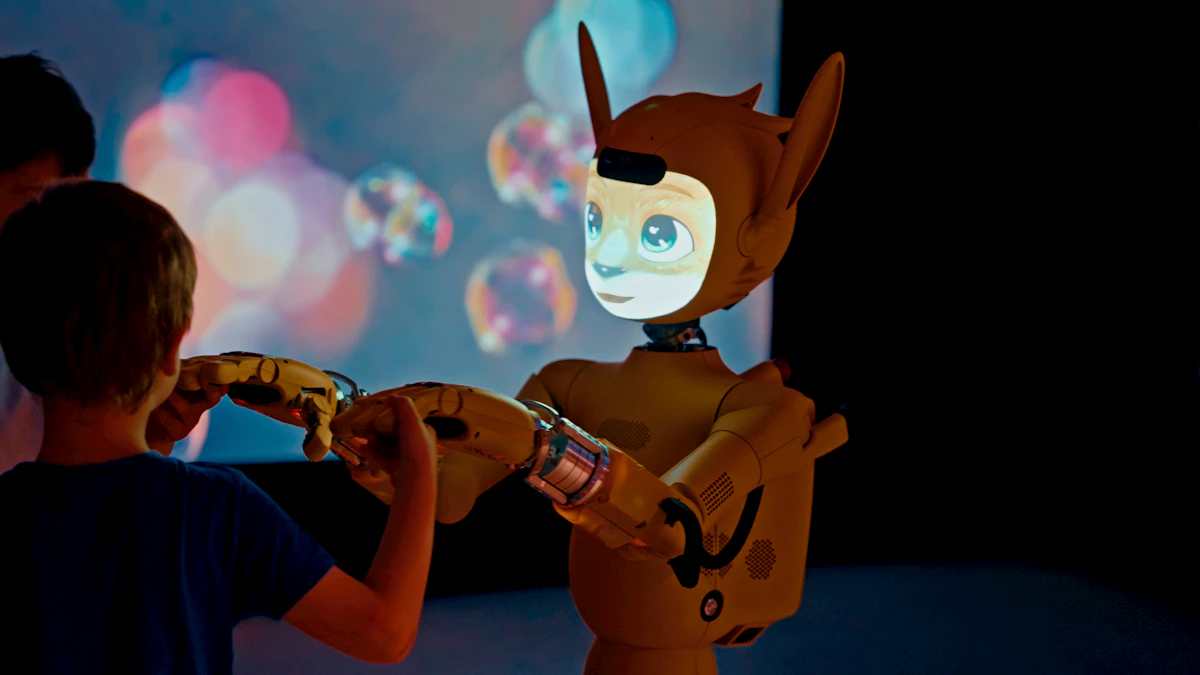
The Carnegie Mellon announcement describes a research program focused on treating AI agents as team members with assigned responsibilities, rather than as a tool that gets invoked and forgotten.
The focus is on three pieces: task-based role assignment, trust calibration (so the human knows how much to rely on the agent in each situation), and coordination protocols that define how decisions are communicated between both parties.
Context and history
The idea of humans and machines working as partners isn’t new. In 1960, J.C.R. Licklider described human-computer symbiosis as a relationship where each side does what it does best: the machine processes and calculates, the person frames the problem and decides.
That principle evolved into two fields that now converge. Human-robot interaction (HRI) studied how to coordinate physical actions between people and robots in factories and space missions. Computer-supported cooperative work (CSCW) studied how human groups coordinate tasks using shared digital tools. Carnegie Mellon’s framework combines both traditions and applies them to AI agents that reason and act autonomously.
Concrete examples of that tradition include collaborative robotic arms (cobots) that share workspace with operators on assembly lines, and the communication protocols NASA designed so that operators on Earth can oversee Mars rovers despite a signal delay of several minutes. In both cases, the design had to define in advance which decisions the machine makes on its own and which ones wait for human confirmation.
Technical details: how human-AI collaboration works
A human-AI collaboration framework needs at least three mechanisms to work in practice: shared mental models, trust calibration, and explicit hand-off points.
The shared mental model is the set of assumptions both sides hold about the state of the task. If the human believes the agent already validated a piece of data and the agent assumed the opposite, the team fails even though each side acted reasonably.
Consider an agent that reviews code before a deployment. If the shared mental model assumes the agent already ran the tests, and the agent assumed that was the CI pipeline’s job, the deployment ships without tests and nobody notices until it fails in production. An explicit shared mental model would have forced someone to state upfront who runs the tests before moving forward.
Trust calibration measures how well the certainty an agent expresses matches its actual success rate. A poorly calibrated agent is dangerous in both directions: if it underestimates its certainty, the human wastes time reviewing correct decisions; if it overestimates it, the human stops reviewing right when it matters most.
💭 Key point: an agent with poorly calibrated trust is as risky as one with no supervision at all: if it overestimates its own certainty, the human stops reviewing its decisions right when it matters most.
Hand-off points define exactly when a task moves from an agent to a human or vice versa. The following view simplifies the cycle this type of framework proposes:
flowchart TD
A["Shared perception"] --> B["Task assignment"]
B --> C["AI agent executes"]
B --> D["Human executes"]
C --> E["Feedback and adjustment"]
D --> E
E --> A
In practice, these three mechanisms translate into different working modes depending on the task’s risk level:
| Mode | When to use it | Advantage | Limitation |
|---|---|---|---|
| Supervised | High-risk or irreversible tasks | Full human control before execution | Doesn’t scale when task volume is high |
| Delegated | Repetitive, low-risk, high-confidence tasks | Speed and lower cognitive load for the human | Errors can go unnoticed if trust is poorly calibrated |
| Peer-to-peer | Ambiguous tasks that require negotiating roles on the fly | Leverages each side’s complementary strengths | Requires more complex communication protocols |
How to start testing it
You don’t need to wait for a Carnegie Mellon product to experiment with these ideas. The simplest pattern is a human approval checkpoint before an agent executes a risky action:
def proponer_accion(agente, estado):
    accion = agente.decidir(estado)
    respuesta = input(f"The agent proposes: {accion}. Approve? [y/n] ")
    if respuesta.lower() == "y":
        return agente.ejecutar(accion)
    return None
This function pauses the agent until a person types “y”. It works for critical decisions, but doesn’t scale if the agent handles hundreds of tasks per hour.
A more realistic step is to delegate based on a confidence threshold and log each decision so it can be audited later:
UMBRAL_CONFIANZA = 0.85

def asignar_tarea(tarea, agente):
    confianza = agente.estimar_confianza(tarea)
    if confianza >= UMBRAL_CONFIANZA:
        resultado = agente.ejecutar(tarea)
        registrar_evento("delegated", tarea, confianza)
    else:
        resultado = escalar_a_humano(tarea, confianza)
        registrar_evento("supervised", tarea, confianza)
    return resultado
This scheme automatically delegates tasks where the agent exceeds the threshold and escalates the rest to a person. To confirm the checkpoint is active, check the registrar_evento log and count how many tasks were marked “supervised” versus “delegated” over a given period.
⚠️ Watch out: delegating by default without an explicit confidence threshold turns any team framework into automation in disguise, without the coordination benefits it promises.

Impact and analysis
The research arrives at a time when AI agents have stopped being single-response assistants. Today they plan sequences of steps, use external tools, and correct their own course without constant intervention. That leap in autonomy is exactly what makes an explicit framework for human oversight necessary, rather than leaving coordination to each team’s improvisation.
The line between a “delegable task” and a “task that needs human review” is decided case by case today, almost always implicitly. A shared framework doesn’t remove that work, but it makes it visible: it forces someone to write down the confidence threshold, the collaboration mode, and the hand-off point before putting the agent to work.
It also changes what it means to audit a system. If every delegated decision is logged with its confidence level and outcome, a team can later review which error patterns show up in delegated tasks and adjust the confidence threshold accordingly, instead of discovering the problem only after it has already caused damage.
The most honest limitation of this kind of proposal is that it doesn’t solve the underlying problem: you still need a reliable estimate of the agent’s confidence. If that estimate is poorly calibrated, no coordination protocol can make up for it.
What’s next
Carnegie Mellon hasn’t yet released a tool or open-source library tied to this framework; the announcement describes a research direction, not a product. The usual path for this kind of academic work is that results get refined in technical papers and tested in field studies with robots or software agents before becoming standard industry practice.
For engineering teams already building autonomous agents, the practical question isn’t whether they’ll need a human-AI coordination mechanism, but when they’ll make it explicit instead of leaving it as an implicit decision made by each developer.
Try it yourself: add a single human approval checkpoint before your agent’s riskiest action and measure how many times it triggers over a week of real use.
Frequently Asked Questions
What does “human-AI teaming” mean?
It’s the design of systems where a person and an AI agent share a task with defined roles, instead of one using the other as a single-step tool.
How is this different from traditional automation?
Traditional automation replaces a human task entirely. Human-AI collaboration keeps both sides active and explicitly defines when each one steps in.
What is trust calibration in this context?
It’s how well the certainty an agent expresses matches its actual success rate. A well-calibrated agent flags it when it’s not sure; a poorly calibrated one doesn’t.
Does this apply only to physical robots?
No. The same principle applies to software agents, coding assistants, and systems that use external tools without constant supervision.
What role does explainability play?
Without the agent being able to show why it reached a decision, the person has no information to decide whether to step in. Explainability is what makes it possible to calibrate trust.
When is a supervised mode better than a delegated one?
When the task is irreversible, high-risk, or the agent doesn’t yet have a known success rate for that specific type of task.
References
- Carnegie Mellon University: original announcement of the research on human-AI teaming.
- Wikipedia: Human-in-the-loop: definition and background on the concept of human oversight in automated systems.
- Wikipedia: Human-computer interaction: historical background of the discipline that studies human-machine interaction.
- arXiv: repository where technical papers on multi-agent systems and human-AI collaboration are typically published.
📱 Enjoy this content? Follow @programacion on Telegram for daily tech content in Spanish: quick summaries, fresh content every day.
Imagen destacada: Foto de Steve A Johnson en Unsplash
Did it work for you? Got a different error? Say so below: questions get answered and help the next reader.
Leave a comment



0 Comments