⏱️ Reading time: 3 min
A dollar donated to Internet Archive this month becomes three. The nonprofit that runs the Wayback Machine and holds much of the internet’s public memory announced a recurring donation campaign for September 2026: every monthly contribution of $25 or more gets a 2:1 match throughout the month.
📑 En este artículo
The news matters because Internet Archive doesn’t outsource its core infrastructure. It builds and maintains its own servers, storage systems, and cooling to preserve 210 petabytes of data: books, web pages, audio, video, and software. Without stable funding, that preservation capacity depends directly on campaigns like this one.
TL;DR
- Internet Archive launched a recurring donation campaign with a 2:1 match in September 2026.
- A $25 monthly contribution becomes $75 of total impact thanks to the match.
- $50 monthly generates $150; $100 monthly generates $300, according to the official announcement.
- The match applies only to the first contribution of a new recurring donation started in September.
- The organization preserves 210 petabytes: books, web pages, audio, video, and software.
- Internet Archive doesn’t charge for access, doesn’t sell user data, and doesn’t show ads.
- The organization’s historical average donation is around $25 monthly.
- The campaign was published on September 1, 2026, on blog.archive.org.
What Happened
Internet Archive confirmed that every new recurring donor who starts a contribution of $25 or more during September 2026 will receive a 2:1 match on their first contribution. In practice, that triples the initial value of each donation.
The organization explained it with concrete examples on its official blog: a $25 monthly contribution unlocks $50 in additional match funds, for a total of $75 in support. A $50 contribution becomes $150, and a $100 contribution reaches $300. The following table summarizes the mechanics:
| Own monthly contribution | 2:1 match | Total generated |
|---|---|---|
| $25 | +$50 | $75 |
| $50 | +$100 | $150 |
| $100 | +$200 | $300 |
The message from Brewster Kahle, digital librarian and founder of Internet Archive, frames the campaign within the organization’s historic mission: “Universal access to all human knowledge is within our reach. Our job is to put the best that our world has to offer within reach of our children”.
The campaign adds to the permanent program called the Monthly Giving Circle, the group of recurring donors that sustains the organization’s operations month after month. According to the blog itself, the average donation at Internet Archive is around $25 monthly, confirming that the threshold chosen for the match isn’t arbitrary: it matches the real behavior of its donors.
Context and History of Internet Archive
Internet Archive was founded in 1996 in San Francisco with a stated goal from the start: archive the internet before it disappeared. Its best-known project, the Wayback Machine, became publicly available in 2001 and today allows users to look up historical versions of billions of web pages.
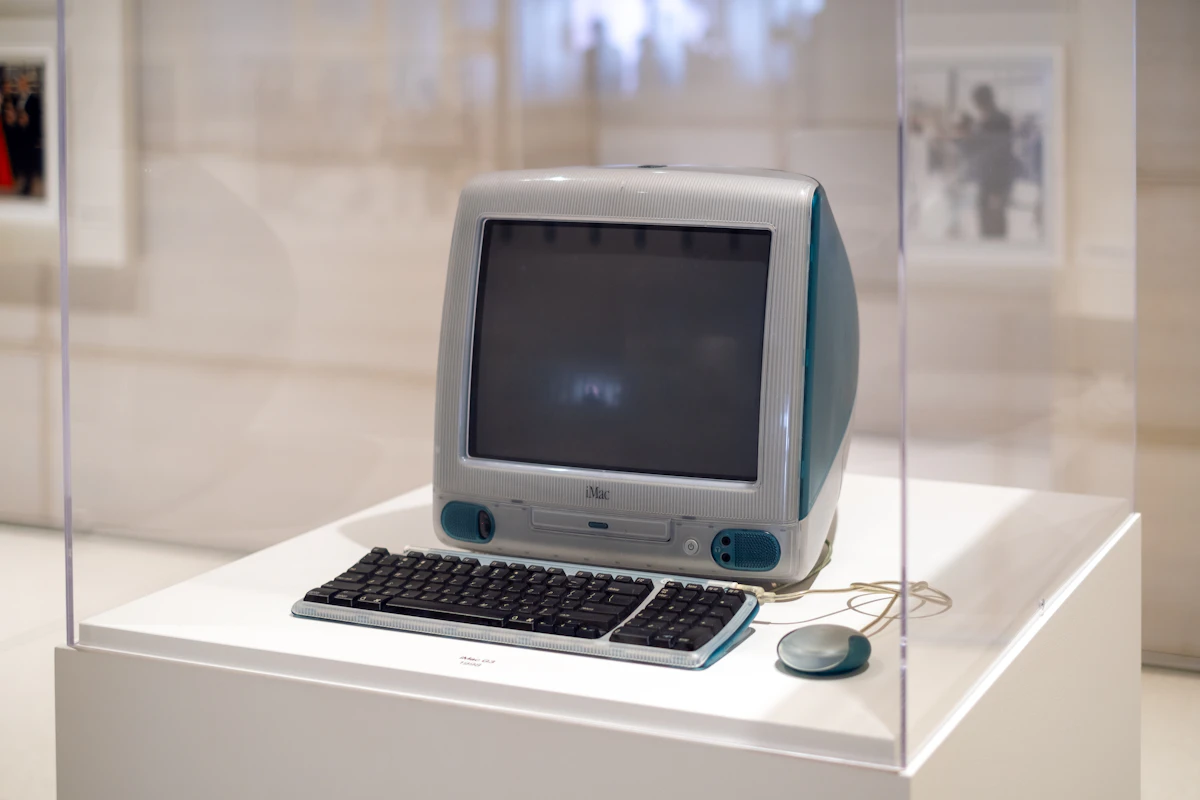
Over three decades, the archive grew far beyond web pages. Today it includes digitized books, audio and music recordings, films, emulatable video games, historical software, and radio and television collections. That whole combined collection adds up, according to the September 2026 announcement, to 210 petabytes of data.
The decision not to delegate that infrastructure to outside providers is, in part, an editorial principle: Internet Archive doesn’t charge for access, doesn’t sell its users’ data, and doesn’t show ads. That model sets it apart from commercial digital libraries, but it also leaves it without the revenue levers those companies have: advertising, premium subscriptions, or sale of aggregated data.
Internet Archive has also gone through periods of legal tension in recent years, mainly over its controlled digital lending program for scanned books, challenged by publishers in U.S. courts. That context explains why the organization keeps pushing for financial stability: every legal dispute front consumes resources that should also be going toward servers and technical staff.
Technical Details and Infrastructure Performance
Keeping 210 petabytes running isn’t just a disk space problem. Every dollar raised gets split across several technical fronts: compute servers, storage arrays, internal networks, power, and cooling for the data centers the organization operates directly.
The following diagram summarizes, in simplified form, how a recurring donation translates into real operational capacity:
flowchart TD
A["Monthly donation"] --> B["2:1 match from Internet Archive"]
B --> C["Infrastructure funds"]
C --> D[("Servers and storage")]
C --> E[("Power and cooling")]
D --> F["Wayback Machine and collections"]
E --> F
Unlike a commercial cloud provider, Internet Archive doesn’t bill for elastic usage: it operates fixed capacity that has to grow at the pace of its collections. That makes operating costs more predictable, but also more sensitive to revenue drops: if donations fall, the organization can’t simply cut capacity without risking the archive’s availability.
That technological autonomy is, according to the organization itself, part of why it can keep access free and ad-free: there are no commercial intermediaries between the user and the data they look up.
How to Get Started: Donate or Use the Archive Today
Joining the Monthly Giving Circle takes a couple of minutes: it’s done from archive.org/donate, choosing a recurring amount of $25 or more before the end of September 2026 to qualify for the 2:1 match.
But you don’t need to donate to make use of the infrastructure behind this campaign. Internet Archive exposes a free public API to query the Wayback Machine without needing credentials. The simplest way is to ask whether a specific URL is already archived:
curl 'http://archive.org/wayback/available?url=example.com'That call returns a JSON with the closest available snapshot for example.com, including its timestamp and the direct URL to the archived snapshot. It’s the same check the site itself runs when it generates the archived page notice.
To explore a domain’s full history, Internet Archive exposes the CDX API, built for listing snapshots with date filters:
const params = new URLSearchParams({
  url: 'example.com',
  output: 'json',
  from: '20200101',
  to: '20261231',
  limit: '5'
});

const res = await fetch(`https://web.archive.org/cdx/search/cdx?${params}`);
const rows = await res.json();

rows.slice(1).forEach(([urlkey, timestamp, original]) => {
  console.log(timestamp, original);
});
That script requests up to five snapshots of example.com captured between 2020 and 2026, and prints the timestamp and original URL of each one. The first row of the response is the column header, which is why the code discards it with slice(1).
💡 Tip: the September 2:1 match applies only to the first contribution of a new recurring donation, not to one-time donations or existing recurring contributions.
Impact and Analysis
The campaign’s design prioritizes recurring donors over one-time contributions, and that choice has clear financial logic: a sustained monthly contribution is easier to plan into an operating budget than a one-off donation, no matter how large. For an organization paying for servers, power, and technical staff every month, predictability matters as much as the total amount raised.
The 2:1 match also works as a psychological incentive: it turns a modest $25 monthly contribution into a stated $75 impact, without the donor having to spend more. It’s a common strategy among nonprofits, but an unusual one in the world of software and internet infrastructure, where most of the services we use daily are funded by advertising, subscriptions, or data sales.
⚠️ Heads up: Internet Archive relies almost entirely on donations to fund infrastructure that would cost a commercial company hundreds of millions of dollars a year in compute and storage.
That dependency is also a structural weak point. Unlike a company with contractually guaranteed recurring revenue, a donation-funded digital library lives campaign to campaign. If a matching campaign falls short of its goal, there’s no backup funding round: the organization adjusts operating spend, which in practice can mean less web crawling capacity, less storage redundancy, or slower response times during traffic spikes.
What’s Next
The 2:1 matching campaign runs throughout September 2026. Every new recurring donation registered during that period at $25 or more monthly will automatically qualify, with no promo code needed and no extra step at checkout on archive.org/donate.
Beyond the campaign month, Internet Archive will keep facing the same structural challenge: its collections grow every year, and with them the cost of storing and serving them. The organization hasn’t announced a change to its funding model, so matching campaigns like this one will predictably keep being a recurring tool to sustain operations.
Try it yourself: run curl 'http://archive.org/wayback/available?url=your-site.com' right now and check whether your own site has already been preserved on the Wayback Machine.
Frequently Asked Questions
What is Internet Archive?
It’s a nonprofit digital library founded in 1996 that preserves web pages, books, audio, video, and software, and runs the Wayback Machine to look up historical versions of the internet.
How does the September 2026 2:1 match work?
Every new recurring donation of $25 monthly or more started in September gets double that amount in additional funds: a $25 contribution generates $75 of total impact.
Does the match apply to one-time donations?
No. According to the official announcement, the 2:1 match applies only to the first contribution of a new monthly recurring donation, not to one-time contributions.
How much storage does Internet Archive use?
The organization reports 210 petabytes of preserved data, spread across web pages, digitized books, audio, video, and historical software.
Does Internet Archive sell my data or show ads?
No. The organization explicitly states it doesn’t charge for access, doesn’t sell user data, and doesn’t show ads on any of its platforms.
Can I use the Wayback Machine without donating?
Yes. The Wayback Machine and its availability API are free and publicly accessible, with no registration or payment required.
References
- Internet Archive Blog: official announcement of the September 2026 2:1 matching campaign.
- archive.org/donate: official page to join the Monthly Giving Circle.
- Wayback Machine: public access to historical snapshots of the internet.
- Wikipedia: history and general context of Internet Archive.
📱 Do you like this content? Follow @programacion on Telegram for daily tech content in Spanish: quick summaries, fresh content every day. @programacion
Imagen destacada: Foto de Valentin Lacoste en Unsplash
Did it work for you? Got a different error? Say so below: questions get answered and help the next reader.
Leave a comment



0 Comments