⏱️ Reading time: 10 min
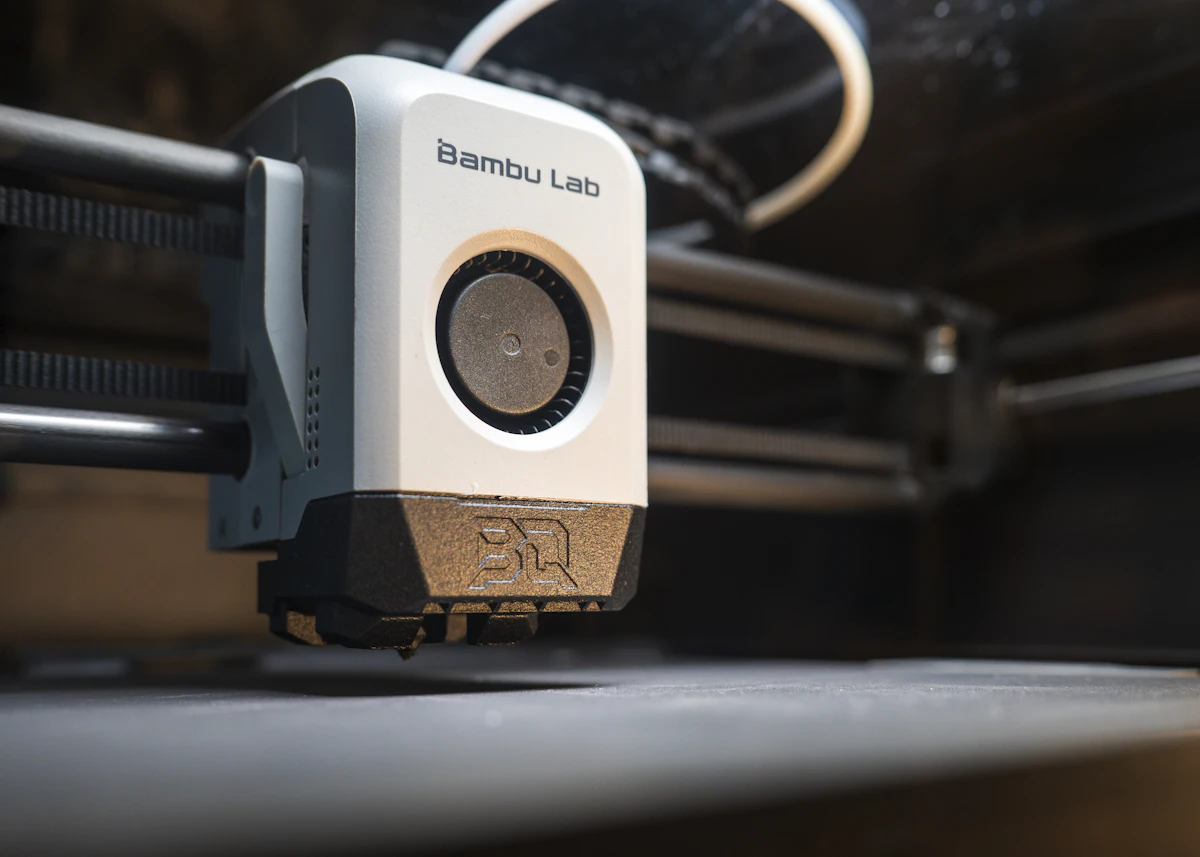
Bambu Lab controls up to 48% of the hobbyist 3D printer market, and according to the Software Freedom Conservancy (SFC), it has been violating the AGPLv3 license of the software running on its machines for months.
📑 En este artículo
- TL;DR
- Introduction
- What happened at FOSSY 2026
- Context and history: from Slic3r to PrusaSlicer and Bambu Lab
- Technical details: what the AGPLv3 requires and how Bambu Lab circumvents it
- How to try the free alternatives
- Impact and analysis
- What’s next
- Frequently Asked Questions
- What is the AGPLv3 and how does it differ from the standard GPL?
- What was Alessandro Ranellucci afraid of when he chose the AGPLv3 for Slic3r?
- What free alternatives exist for printing on a Bambu Lab without using Bambu Studio?
- What percentage of the 3D printer market does Bambu Lab control?
- What is the Software Freedom Conservancy doing about this case?
- Is this the first time a company has violated the AGPLv3 in consumer hardware?
- References
At FOSSY 2026, Bradley Kühn, Karen Sandler, and Denver Gingerich presented the case in detail: the way Bambu Lab circumvents its licensing obligations is, according to Kühn, exactly what the AGPL was written to prevent.
TL;DR
- At FOSSY 2026, Bradley Kühn, Karen Sandler, and Denver Gingerich (SFC) presented an ongoing AGPLv3 violation by Bambu Lab.
- Bambu Lab controlled between 38% and 48% of the hobbyist 3D printer market by 2025, according to different analysts.
- Alessandro Ranellucci chose the AGPLv3 for Slic3r precisely to avoid a “Slic3r as a service” scenario.
- There are about 18 active forks of Slic3r; PrusaSlicer, created by Josef Prusa, is the most well-known and widely used.
- Bambu Lab entered the market during the COVID-19 pandemic and scaled up to dominate the hobbyist segment within a few years.
- The SFC has spent 6 to 8 months actively working with the enthusiast community on free software alternatives.
- Kühn points out that Bambu Lab’s circumvention is exactly the scenario the AGPLv3 was drafted to prevent.
Introduction
The case matters beyond the 3D printing niche. The AGPLv3 has existed since 2007 to close a specific loophole in the classic GPL: software running as a network service, without being distributed as a binary, was not required to offer its source code to the people using it. Bambu Lab, according to the SFC, operates precisely in that blind spot.
Bradley Kühn, a free software activist for more than 30 years, described the current moment as one with more activism opportunities than at any other point in his career. Karen Sandler added that those opportunities are not easy to seize: they require sustained work with a community that, for the most part, had no prior connection to the free software movement.
What happened at FOSSY 2026
During the conference, the SFC team presented the different angles of the investigation. Kühn opened the session by explaining that, over the past six to eight months, the organization shifted from managing reactive crises to managing active community organizing opportunities.
That work included reaching out to an entire community of 3D printing enthusiasts who, until recently, had only a superficial understanding of free software. The SFC engaged them on broader topics: free software, free culture, and free creation, as Kühn recounted in the talk.
Context and history: from Slic3r to PrusaSlicer and Bambu Lab
Hobbyist 3D printing started out as a garage curiosity. Anyone who wanted a printer had to build one, because no assembled devices existed on the market yet. Several of those early builders went on to found the companies that sell 3D printers today, a key element in how the community formed. Like Linux, 3D printing remained a hobby long enough that its culture couldn’t be immediately erased by venture capital.
What’s distinctive about this ecosystem is that the people writing the software to control the printers looked to the free software community before choosing a license. A central piece of that software is the slicer: the program that converts a 3D model into thin layers translated into the language the printer’s hardware understands, something conceptually similar to compiling down to assembly language.
Alessandro Ranellucci, a free software veteran, created that slicer and named it Slic3r. He chose the AGPLv3 deliberately: he wanted to prevent someone from taking his code and offering it as a cloud service without giving anything back to the community, a scenario he himself described as his biggest fear. Today there are around 18 active forks of Slic3r, and the best known is PrusaSlicer, created by Josef Prusa, who built an entire company around the idea of selling printers alongside open blueprints, free software, and free firmware.
At the same time, between 2019 and early 2020, hobbyist printers priced between $500 and $3,000 improved dramatically, especially at the high end. The pandemic drove demand for new hobbies, including 3D printing, and that attracted Bambu Lab, a Chinese company rumored to have ties to the Chinese government, though this remains unconfirmed. Bambu Lab decided to start from scratch, and by 2025 it already controlled between 38% and 48% of the market, according to the analyst consulted.
Technical details: what the AGPLv3 requires and how Bambu Lab circumvents it
Section 13 of the AGPLv3 adds an obligation the standard GPL doesn’t have: if you modify the program and offer it as a network service (even if you never distribute a binary), you still have to offer the corresponding source code to every user who interacts with that service. It’s the clause that closes the software-as-a-service loophole.
💭 Key point: According to Bradley Kühn, the circumvention Bambu Lab employs is precisely the scenario the AGPLv3 was written to prevent: offering modified software as a network service without releasing the corresponding source code.
The following diagram summarizes, in simplified form, which obligation the AGPLv3 triggers when modified firmware runs through a cloud service instead of being distributed as a binary:
sequenceDiagram
    participant U as "User"
    participant B as "Bambu Lab Cloud"
    participant F as "AGPLv3 Firmware"
    U->>B: Sends print job via the cloud
    B-->>F: Runs the modified software
    F-->>U: Must provide the complete source code
    Note over U,F: The AGPLv3 requires providing the source code to every user connected over the network
To understand the landscape, it helps to compare the license and the actual openness of the slicers that dominate the ecosystem today:
| Slicer | License | Source code available | Compatible with Bambu Lab |
|---|---|---|---|
| Slic3r | AGPLv3 | Yes, complete | Limited (original project, no Bambu profiles) |
| PrusaSlicer | AGPLv3 (fork of Slic3r) | Yes, complete | Via third-party profiles |
| OrcaSlicer | AGPLv3 (fork of PrusaSlicer and Bambu Studio) | Yes, complete | Yes, native |
| Bambu Studio | Based on AGPLv3 code with proprietary layers | Partial, disputed according to the SFC | Yes, native |
The original source for this case, published by LWN.net, doesn’t detail the exact technical mechanism of the violation beyond confirming that it replicates the software-as-a-service pattern Ranellucci wanted to avoid from the license’s very design. The SFC describes the case as an ongoing investigation, not a closed litigation matter.
If you want to check for yourself whether a network service complies with the section 13 obligation, the method is simple: look for the Corresponding Source link that should be exposed from the service’s own interface or API.
# Check whether a network service provides its source code (AGPLv3, section 13)
curl -sI https://tu-servicio.example.com/source | grep -i content-type
curl -s https://tu-servicio.example.com/source -o source-code.zip
unzip -l source-code.zip | head -20
That command downloads and lists the contents of the source code package an AGPLv3 service should expose. If the endpoint doesn’t exist or doesn’t match the version running in production, that’s a potential violation.
How to try the free alternatives
If you have a Bambu Lab printer and want to stop depending on Bambu Studio, both PrusaSlicer and OrcaSlicer are available on Windows, macOS, and Linux with full source code under the AGPLv3.
# Windows (winget)
winget install SoftFever.OrcaSlicer

# macOS (Homebrew)
brew install --cask orcaslicer

# Linux (Flatpak)
flatpak install flathub io.github.softfever.OrcaSlicer
OrcaSlicer, in particular, was born as a fork focused on maintaining native compatibility with Bambu Lab printers while preserving the AGPLv3 licensing chain inherited from PrusaSlicer and, ultimately, from Slic3r.
Impact and analysis
The Bambu Lab case works as a case study on the real limits of copyleft enforcement in consumer hardware. The AGPLv3 has been in effect for almost two decades, but its practical enforcement depends on organizations like the SFC, which investigate, negotiate, and, if necessary, litigate without the backing of a government regulator.
There’s a real limitation here: switching to free firmware or slicers on a Bambu Lab printer still involves friction. Automatic features like AMS system calibration or the AI camera used to detect print failures depend heavily on proprietary software, and not all of them are fully replicated in the free alternatives.
💡 Tip: If you use a printer with cloud connectivity, check whether the manufacturer publishes a Corresponding Source link visible from the interface itself: it’s the minimum obligation required by section 13 of the AGPLv3.
The contrast with Prusa is direct: Josef Prusa’s company built its entire business model around open blueprints, free software, and free firmware, and for years it was the dominant player in the market. Bambu Lab, by contrast, scaled faster by relying on an architecture that, according to the SFC, doesn’t give its modifications back to the community that originated the code it uses.
What’s next
The SFC’s investigation remains open. Kühn, Sandler, and Gingerich continue documenting the history of the slicer ecosystem and working with the 3D printing enthusiast community on free firmware and software alternatives, work that, according to Kühn, has already managed to engage an audience that previously had only passing contact with the free software movement.
Meanwhile, projects like OrcaSlicer keep gaining compatibility with new Bambu Lab models independently, without waiting for the company to resolve its licensing situation.
Try it yourself: clone the OrcaSlicer repository and install it today to slice your next model without depending on Bambu Studio.
Frequently Asked Questions
What is the AGPLv3 and how does it differ from the standard GPL?
The AGPLv3 adds an obligation the classic GPL doesn’t have: if modified software runs as a network service without being distributed as a binary, the corresponding source code must still be offered to every user who interacts with that service.
What was Alessandro Ranellucci afraid of when he chose the AGPLv3 for Slic3r?
He wanted to prevent a company from taking Slic3r, modifying it, and offering it as a cloud service without giving the code back to the community. That’s why he ruled out permissive licenses and the standard GPL in favor of the AGPLv3.
What free alternatives exist for printing on a Bambu Lab without using Bambu Studio?
PrusaSlicer and OrcaSlicer, both under the AGPLv3 with full source code published on GitHub, offer profiles compatible with Bambu Lab printers like the X1 Carbon or the P1S.
What percentage of the 3D printer market does Bambu Lab control?
According to the analysts cited in the SFC’s presentation at FOSSY 2026, Bambu Lab controlled between 38% and 48% of the hobbyist market by 2025, depending on the report consulted.
What is the Software Freedom Conservancy doing about this case?
Through Bradley Kühn, Karen Sandler, and Denver Gingerich, the SFC is investigating the violation, documenting the history of the slicer ecosystem, and working with the enthusiast community to promote free firmware and software alternatives.
Is this the first time a company has violated the AGPLv3 in consumer hardware?
No. The AGPLv3 has existed since 2007 precisely because this kind of circumvention (using free code behind closed doors without releasing the modifications) was already a known pattern before mass-market 3D printers even existed.
References
- LWN.net: original coverage of the SFC’s talk at FOSSY 2026 on the Bambu Lab AGPLv3 violation.
- GNU.org: full text of the AGPLv3 license, including section 13 on network use.
- Software Freedom Conservancy: the organization investigating and documenting the case.
- GitHub: PrusaSlicer: repository of the best-known Slic3r fork, under the AGPLv3.
- GitHub: OrcaSlicer: free fork with native support for Bambu Lab printers.
📱 Enjoy this content? Follow @programacion on Telegram for daily tech content in Spanish: quick summaries, fresh content every day.
Imagen destacada: Foto de Caroline Eymond Laritaz en Unsplash
Did it work for you? Got a different error? Say so below: questions get answered and help the next reader.
Leave a comment


0 Comments