⏱️ Reading time: 11 min
A grand jury in Clermont County, Ohio, decided not to indict Cody Morelock on the felony vandalism charge police brought against him after he dismantled a Flock license plate recognition camera on June 13. The decision leaves without charges a man who had posted a $10,000 bond, and it reopens the question of how legitimate public resistance to automated vehicle surveillance really is.
📑 En este artículo
- TL;DR
- What happened in Union Township
- What Flock cameras are and who operates them
- How license plate recognition works under the hood
- How to protect yourself from an ALPR: comparing strategies
- Getting started with ALPR technology
- The pattern of police abuse behind the jury’s refusal
- Impact and analysis: from Winona to Halloween
- What’s next
- Frequently Asked Questions
- References
The case in Union Township, a suburb of Cincinnati, is not an isolated incident. Dozens of Flock cameras have been vandalized across the United States in recent months, and the Institute for Justice has already documented more than 100 cases of police abuse involving these systems. For anyone working with computer vision, distributed databases, or optical character recognition, the Morelock case is also a window into how an ALPR (automatic license plate reader) works under the hood and what makes it so controversial.
TL;DR
- A grand jury in Clermont County, Ohio, declined to indict Cody Morelock, and the charges for destroying a Flock camera were dismissed.
- Union Township police accused him of dismantling the camera, its pole, and the solar panel on June 13.
- The damage was estimated at more than $1,000, and Morelock posted a $10,000 bond before being released.
- Investigators identified him using footage from other nearby cameras, credit card data, and a rewards account.
- In Winona, Minnesota, someone stole all 8 Flock cameras in the city in early August.
- The viral “De-Flock America Night” event promotes vandalizing or hiding Flock cameras on October 31.
- The Institute for Justice documented more than 100 cases of police abuse involving ALPR as of August 12, many involving officers stalking partners.
- Flock announced new safeguards, but the EFF calls them cosmetic and is pushing for a warrant requirement to query the data.
What happened in Union Township
Union Township police, east of Cincinnati, accused Cody Morelock of completely dismantling a Flock camera on June 13: he removed the camera, the support pole, and the solar panel that powered it. According to WKRC-TV, investigators identified him by cross-referencing footage from other cameras near the scene with credit card data and a rewards account linked to his name. Police estimated the damage at more than $1,000, and Morelock posted a $10,000 bond before being released.
Weeks later, a Clermont County grand jury reviewed the case and decided not to indict him. Authorities did not publicly explain the reasoning behind the decision, but the outcome leaves without a conviction a type of case that, in other jurisdictions, has resulted in formal vandalism or property damage charges.
What Flock cameras are and who operates them
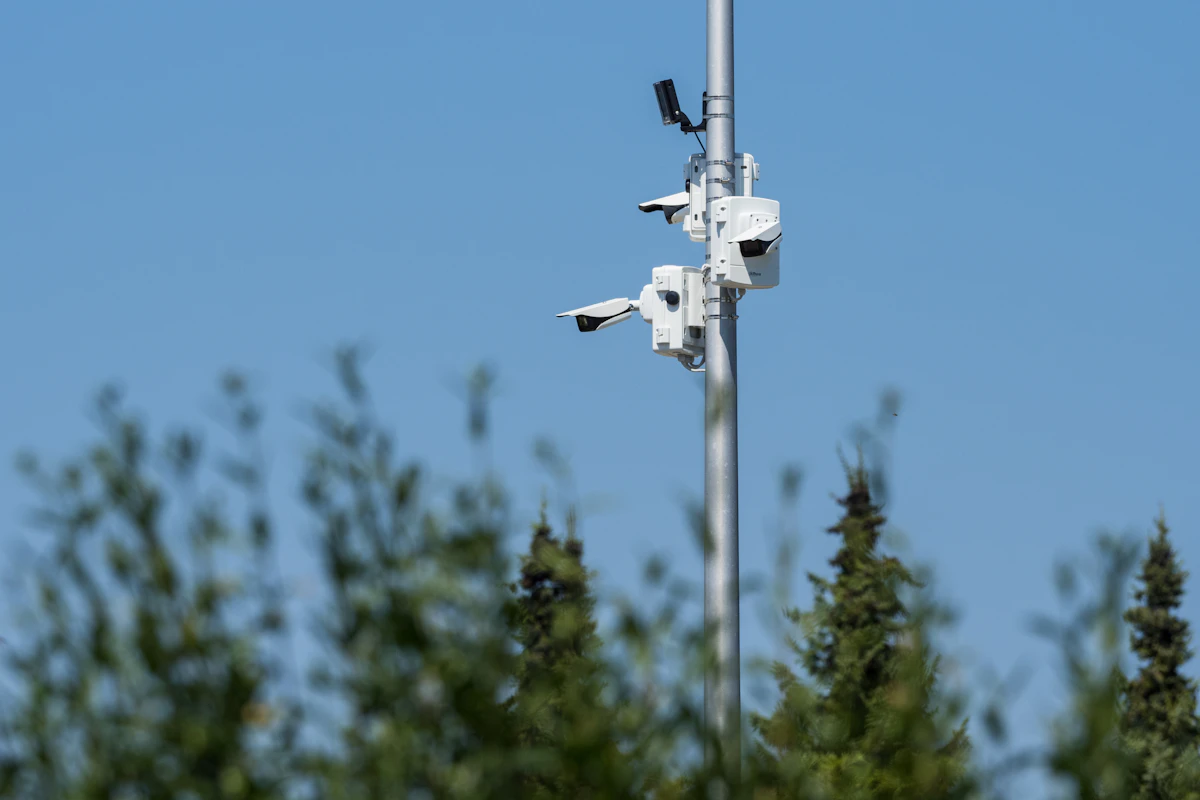
Flock Safety is the company behind the Flock camera network, an automatic license plate reader (ALPR) system that photographs every vehicle passing in front of a camera and logs the plate, color, make, and other visible characteristics. The company doesn’t just sell hardware: it sells a subscription that includes access to a central database where every detected vehicle’s movements are recorded.
That database is the most controversial part of the system. It isn’t exclusively controlled by the agency that installed the camera: through data-sharing agreements, other police agencies in other cities and other states can also query it. It’s a design meant for investigations that cross jurisdictions, like a stolen vehicle moving from one county to another, but it’s also what allows an officer in one state to look up the movements of a vehicle that never passed through their own jurisdiction.
How license plate recognition works under the hood
Technically, a Flock camera runs the same kind of pipeline as any ALPR system: it captures an image, isolates the region containing the plate, runs an optical character recognition (OCR) engine on that region, and compares the resulting text against a hotlist (a list of plates of interest, such as vehicles reported stolen). If there’s a match, the system fires an alert to the relevant agency; if there isn’t, the record (plate, location, date and time, and sometimes a photo of the full vehicle) is still saved to the central database.
The diagram below summarizes that flow:
flowchart TD
    A["Flock camera captures an image"] --> B["OCR engine reads the plate text"]
    B --> C["Comparison against the local hotlist"]
    C --> D{"Is there a match?"}
    D -->|"Yes"| E["Push alert to local police"]
    D -->|"No"| F[("Centralized database")]
    E --> F
    F --> G["Cross-agency lookup from other states"]
That last step, saving every read and not just the ones that trigger an alert, is why an ALPR isn’t just a tool against car theft: it’s a historical log of movements that any agency with access can query later, even when the driver never committed any violation.
To understand the OCR part without access to Flock’s hardware, you can simulate the plate-reading step with an open source library like pytesseract on your own photo:
import pytesseract
from PIL import Image

def read_plate(image_path):
    image = Image.open(image_path)
    text = pytesseract.image_to_string(image, config="--psm 7")
    plate = text.strip().upper().replace(" ", "")
    return plate

detected_plate = read_plate("sample_capture.jpg")
print(f"Detected plate: {detected_plate}")
That script doesn’t reproduce Flock’s full pipeline, it’s missing plate region detection and the hotlist comparison, but it shows the core step: turning pixels into text a database can read.
How to protect yourself from an ALPR: comparing strategies
Not all responses to an ALPR carry the same legal cost. The table below compares the four strategies most discussed by privacy activists and developers building counter-surveillance tools:
| Strategy | Legality | Effectiveness | Risk |
|---|---|---|---|
| Public records request | Legal in the US; equivalent freedom-of-information mechanisms exist in most Latin American countries | Medium: exposes contracts, locations, and data retention policies | Low |
| License plate covers or anti-OCR reflective sprays | Gray area or outright banned in several US states | High against visible OCR, ineffective against recent infrared cameras | Traffic ticket |
| Mapping cameras through collaborative projects like DeFlock | Legal: it’s a public map, similar to OpenStreetMap | High for planning routes or pressuring local authorities | None |
| Physically dismantling or destroying the camera | Vandalism or property damage crime in most jurisdictions | High but temporary: the agency replaces it within days | Criminal charges, as in Morelock’s case |
The row that matches Morelock’s case, dismantling the camera, is the most effective in the short term and also the highest legal risk. That’s exactly why a grand jury refusing to indict is news, not an expected outcome.
Getting started with ALPR technology
If you work in computer vision, or simply want to understand the system Union Township residents are protesting against, you can install OpenALPR, the open source license plate recognition engine most widely used as an industry reference:
# Linux (Debian/Ubuntu)
sudo apt update && sudo apt install -y cmake libopencv-dev libtesseract-dev git
git clone https://github.com/openalpr/openalpr.git
cd openalpr/src && mkdir build && cd build && cmake -DCMAKE_INSTALL_PREFIX:PATH=/usr .. && make -j4 && sudo make install

# macOS (Homebrew)
brew install openalpr

# Windows (with Docker Desktop)
docker run -it --rm -v ${PWD}:/data openalpr/openalpr alpr -c us /data/sample_plate.jpg

# Test the detection (Linux/macOS, once installed)
alpr -c us sample_plate.jpg
The command prints a JSON with the detected plate, confidence level, and bounding box coordinates. If alpr returns no results, check that tesseract is on the PATH with tesseract --version.
💡 Tip: try it first with your own photo, of your own car and with your own consent, before running recognition on photos of other people: processing someone else’s plates without a legal basis can run afoul of local personal data protection laws.
To locate real cameras, collaborative projects like DeFlock map installations reported by the community on top of an OpenStreetMap layer, in the same spirit as other open projects that document urban surveillance infrastructure.
The pattern of police abuse behind the jury’s refusal
The Clermont County grand jury’s refusal to indict doesn’t happen in a vacuum. The Institute for Justice documented more than 100 cases of police abuse of license plate recognition systems as of August 12, many of them officers who used database access to track partners or ex-partners, not to investigate crimes.
⚠️ Heads up: even though this Ohio jury didn’t indict Morelock, dismantling a Flock camera is still vandalism or property damage in most states; other similar cases have ended in formal charges.
In response to public pressure, Flock Safety announced new safeguards to prevent misuse by police officers. The Electronic Frontier Foundation called those measures “cosmetic” and insists the real solution requires a warrant before any agency can query data from the central database, not just internal audits run by the company itself.
Impact and analysis: from Winona to Halloween
The Union Township case adds to a trend that has been building for months. In early August, Winona, Minnesota police reported that someone cut down and stole all 8 Flock cameras installed in the city, leaving it without ALPR coverage overnight. Social media is also circulating a call for “De-Flock America Night,” a loosely organized event inviting people to vandalize or hide Flock cameras on Halloween night, October 31.
For a company whose business model depends on its cameras staying on and connected to the network, every case of vandalism, and every court decision that doesn’t punish it, is a sign that social acceptance of automated vehicle surveillance isn’t guaranteed, not even in jurisdictions where police actively use it.
What’s next
In the short term, it’s unlikely that the outcome in Ohio will slow down criminal prosecutions against people who destroy Flock cameras in other states: a local grand jury’s decision doesn’t set precedent outside its own jurisdiction. What’s more likely is that the debate will move to state legislatures, where the EFF and similar organizations will keep pushing to require a warrant to query ALPR data, while Flock Safety tries to show through internal audits that its own safeguards are enough.
💭 Key point: for the EFF, the problem isn’t the camera itself but warrantless access: as long as any agency can query Flock’s database without a judge’s authorization, the company’s internal safeguards don’t change the risk of abuse.
Meanwhile, the list of incidents, Winona, Union Township, and whatever “De-Flock America Night” adds to it in October, will keep serving as the clearest evidence that, for a segment of the public, the legal cost of resisting automated surveillance is no longer enough to deter it.
📖 Summary on Telegram: View summary.
Try it yourself: install OpenALPR with the command above and run alpr -c us on your own photo to see, in seconds, the same thing a Flock camera sees when you drive past it.
Frequently Asked Questions
Is it legal to destroy a Flock camera?
No. In most US states it counts as vandalism or property damage. Morelock’s case ended without charges because a grand jury refused to indict him, not because the conduct itself is legal.
What is an ALPR?
Automatic License Plate Reader: a camera with optical character recognition that reads plates in real time and compares them against a hotlist of vehicles of interest.
Who can access Flock’s data?
The police agency that installed the camera and, through data-sharing agreements, other local, state, and federal agencies across different jurisdictions.
Are there Flock cameras in Latin America?
Flock Safety operates primarily in the United States. In Latin America, license plate recognition is usually deployed at tollbooths, by municipalities, or by private security companies using different vendors, but the technical architecture (OCR plus hotlist plus centralized database) is the same.
How do I know if there are Flock cameras near my home?
Collaborative projects like DeFlock map locations reported by the community, and some cities publish the public contracts they sign with Flock Safety.
What is Flock doing to prevent abuse?
The company announced new internal audit safeguards, but the EFF considers them cosmetic because they don’t require a warrant to query the data.
References
- Straight Arrow News: original coverage of the Cody Morelock case in Union Township, Ohio.
- Institute for Justice: organization that documented more than 100 cases of police abuse of ALPR data.
- Electronic Frontier Foundation: critical analysis of the safeguards announced by Flock Safety.
- Flock Safety: official site of the company that builds and operates the ALPR camera network.
- OpenALPR (GitHub): open source license plate recognition engine used as a technical reference in this article.
📱 Enjoy this content? Follow @programacion on Telegram for daily tech content in Spanish: quick summaries, fresh content every day. @programacion
Imagen destacada: Foto de Pavel Boltov en Unsplash
Did it work for you? Got a different error? Say so below: questions get answered and help the next reader.
Leave a comment



0 Comments