⏱️ Lectura: 11 min
A Uniqlo warehouse now runs with 90% less staff than before, thanks to the warehouse automation developed with Daifuku, one of Japan’s largest manufacturers of logistics systems.
📑 En este artículo
The case isn’t an isolated experiment: it’s the most visible sign of where global e-commerce logistics is heading, where robots, computer vision, and routing software are replacing tasks that people did for decades.
TL;DR
- Fast Retailing, Uniqlo’s parent company, cut the staff needed at one of its warehouses by 90% after automating it with Daifuku robots.
- The project began in 2018 as part of the Ariake Project, Uniqlo’s supply chain digital transformation.
- The Ariake distribution center in Tokyo was among the first to operate at this level of robotic automation.
- The robots combine articulated arms, automated guided vehicles (AGVs), and computer vision to sort garments.
- Daifuku, Fast Retailing’s technology partner, is one of the world’s largest manufacturers of warehouse automation systems.
- The automation responds to Japan’s logistics labor shortage and sustained e-commerce growth.
- Amazon (with Amazon Robotics) and Ocado follow similar approaches: mobile robots plus routing algorithms instead of manual picking.
- The model raises questions about the future of logistics jobs as e-commerce demand keeps rising.
What happened
Fast Retailing, the parent company of Uniqlo, confirmed that one of its distribution centers now operates with just a fraction of the staff it needed before being automated. The Japanese company worked with Daifuku, a materials handling systems specialist, to install a combination of picking robots, automated guided vehicles (AGVs), and smart conveyor belts that now do the work previously handled by dozens of workers.
The result, according to Fast Retailing itself, is a reduction of around 90% in the number of people needed to run that particular warehouse. This isn’t about closing the center or eliminating it: it’s about completely redesigning the workflow around machines that sort, pack, and dispatch garments 24 hours a day.
Background and history: the Ariake Project
Uniqlo’s warehouse automation didn’t happen overnight. In 2018, Fast Retailing launched what it internally called the Ariake Project, an end-to-end digital transformation plan: from how garments are designed to how they reach the final customer. The name comes from the Ariake neighborhood, on Tokyo Bay, where the company installed its first heavily automated distribution center.
Founder and CEO Tadashi Yanai’s stated goal was to turn Uniqlo into an information company, able to respond to demand in real time instead of producing and distributing based on fixed forecasts made months in advance. Warehouse automation was a central piece of that plan: without accurate, real-time inventory data, no restocking or production decision can be adjusted quickly.
Japan’s context helps explain the urgency. The country faces a structural shortage of logistics labor due to its aging population, and e-commerce demands increasingly fast deliveries. Automating isn’t just a bet on efficiency: in many cases it’s the only way to sustain order volume without relying on a workforce that simply isn’t available.
Technical details of warehouse automation
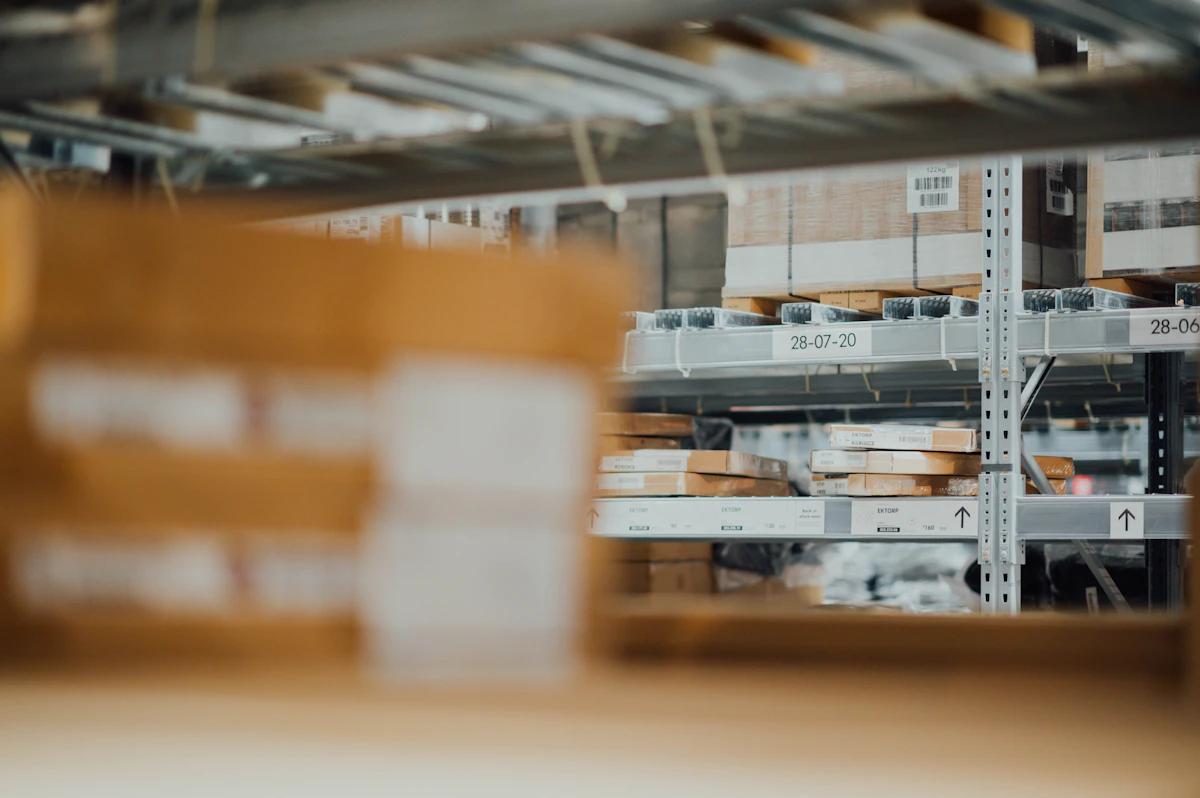
A warehouse like Ariake combines several layers of technology working together. The first is the WMS (Warehouse Management System), the central software that knows which product is in which location, which orders need to be assembled, and in what order. The second layer is automated guided vehicles (AGVs), mobile robots that carry shelving units or containers to picking stations. The third is robotic arms with computer vision, which identify individual garments (a harder task than it sounds, since clothing deforms and doesn’t have a rigid shape like a box) and sort them by size, color, or order.
To move AGVs from one point to another without collisions or bottlenecks, the control software constantly solves a routing problem: finding the shortest path between the robot’s current position and its destination while avoiding congested aisles. It’s the same type of problem solved by shortest-path algorithms on a street map, just applied to a warehouse floor plan. A simplified Python example of how that route is calculated with A* (a Dijkstra variant that prioritizes the most promising paths first):
import heapq

def a_star(warehouse_graph, start, destination):
    queue = [(0, start, [])]
    visited = set()
    while queue:
        cost, node, path = heapq.heappop(queue)
        if node == destination:
            return path + [node]
        if node in visited:
            continue
        visited.add(node)
        for neighbor, weight in warehouse_graph[node]:
            if neighbor not in visited:
                heapq.heappush(queue, (cost + weight, neighbor, path + [node]))
    return None

route = a_star(aisle_map, "agv_station_3", "rack_b12")
print(f"Calculated route: {route}")
This snippet returns the sequence of nodes (aisles, intersections) an AGV must travel to get from point A to point B at the lowest accumulated cost. Commercial systems from Daifuku and competitors like Dematic use proprietary variants of this same algorithm family, tuned to recalculate routes in milliseconds when another robot blocks an aisle.
The full order flow, from creation to leaving the warehouse, follows a fairly standard sequence in this type of facility:
flowchart TD
    A["Online order"] --> B["WMS system"]
    B --> C["AGV receives the order"]
    C --> D["Vision-equipped picking robot"]
    D --> E["Packing station"]
    E --> F[("Shipment to customer")]
    subgraph AutomatedWarehouse
    C
    D
    E
    end
The computer vision layer was the hardest to mature. Recognizing a folded, semi-transparent, or complex-patterned t-shirt is far harder for a vision model than recognizing a rectangular box with a flat barcode. That’s where object detection models come in, trained specifically on thousands of images of garments in different positions, orientations, and lighting conditions.
💭 Key point: the real difficulty in automating a clothing warehouse isn’t moving boxes, it’s getting a robot to correctly grip a soft, deformable object without damaging it. That’s why textile automation arrived years after automation of warehouses for rigid products like electronics or groceries.
How to start evaluating warehouse automation
No mid-sized company is going to install a system like Ariake’s overnight, but any logistics or development team can start understanding these systems by simulating them before investing. The Robot Operating System (ROS) is the most common starting point for simulating AGV fleets without buying a single physical robot.
To install the desktop version on Ubuntu and start experimenting with mobile robot simulation:
sudo apt update
sudo apt install ros-humble-desktop
source /opt/ros/humble/setup.bash
With ROS installed, you can run a simulator like Gazebo to test navigation algorithms and avoid collisions between multiple AGVs on a virtual map of the warehouse, before touching real hardware. For the routing problem itself, you don’t even need a full simulator: a library like networkx in Python is enough to model the warehouse map as a graph and test different shortest-path algorithms:
pip install networkxTo query inventory status on a typical WMS exposed as a REST API, a basic call looks like this:
curl -X GET "https://api.almacen-ejemplo.com/v1/inventario/SKU-4521" \
  -H "Authorization: Bearer YOUR_WMS_TOKEN" \
  -H "Accept: application/json"
The typical response includes the product’s exact location within the warehouse, the available quantity, and the reservation status for pending orders, data that the WMS feeds in real time to AGVs and picking robots to decide the next task.
Impact and analysis: Uniqlo versus Amazon and Ocado
Uniqlo isn’t the only company betting on warehouse automation, though its approach differs in nuance from other retail giants. Amazon Robotics (formerly Kiva Systems) moves entire shelving units to fixed stations where people work, a hybrid human-robot model. Ocado, the British online supermarket, uses a three-dimensional grid of robots that move on rails above the warehouse to fulfill grocery orders. Uniqlo and Daifuku’s model, by contrast, aims to automate the hardest step too: individual picking of soft garments, not just container movement.
| Company | Technology | Approach | Limitation |
|---|---|---|---|
| Uniqlo / Daifuku | AGV + vision-equipped arms | Automates individual garment picking | Irregular or damaged garments still need human intervention |
| Amazon Robotics | Kiva-type mobile robots | Moves shelving units to human workers | Final picking is still done by a person |
| Ocado | 3D grid of robots on rails | Optimized for boxed supermarket products | Requires a fixed, costly rail infrastructure |
The comparison makes one thing clear: there’s still no single winning approach. Each model responds to the type of product it handles. Boxes and cans lend themselves better to full automation than clothing, which for a long time was considered impossible to fully automate due to its variable shape.
The labor impact is real and deserves to be stated plainly: if a warehouse needs 90% less staff, those people stop having that job there. Fast Retailing has publicly said it aims to reassign staff to maintenance, quality supervision, and exception handling tasks, but the net number of operational logistics jobs tends to drop when warehouse automation advances at this scale.
⚠️ Note: 90% less staff doesn’t mean zero people. Automated systems still need human operators for exceptions, robot maintenance, and quality control, tasks that don’t disappear, they just change in nature.
What’s next
Fast Retailing plans to extend this warehouse automation model to more distribution centers as Daifuku’s technology matures and becomes cheaper. The next technical challenge is handling the full variability of Uniqlo’s catalog (from underwear to thick coats) with the same picking system, without needing separate lines for each garment type.
In parallel, improvements in computer vision models (the same advances driving image recognition in other domains) are expected to further reduce picking error rates, one of these systems’ current bottlenecks. The open question for the rest of the retail industry is how many mid-sized companies will be able to afford this investment, given that installing a system like Ariake’s requires far more capital than a traditional warehouse with shelving and forklifts.
📖 Summary on Telegram: View summary
Try it yourself: install networkx with pip install networkx and model a warehouse floor plan as a graph to see firsthand how a shortest-path algorithm decides an AGV’s route.
Frequently Asked Questions
What is Uniqlo’s Ariake Project?
It’s the digital transformation plan Fast Retailing launched in 2018 to modernize its supply chain end to end, from garment design to distribution, with the goal of operating as a real-time data-driven company.
What role does Daifuku play in this project?
Daifuku is the technology partner that designed and installed the physical automation systems: automated guided vehicles, robotic arms, and conveyor belts that now run the warehouse with a fraction of the original staff.
Did Uniqlo completely eliminate human labor at that warehouse?
No. The reported reduction is about 90% of the staff previously needed, but human roles still exist for robot maintenance, quality control, and handling exceptions that automated systems can’t resolve on their own.
How do these robots compare to Amazon’s?
Amazon Robotics moves entire shelving units to people who do the final picking, while Uniqlo and Daifuku’s system automates that last stage too: selecting the individual garment.
What algorithm do AGVs use to move around the warehouse?
Variants of shortest-path algorithms like Dijkstra or A*, which calculate the lowest-cost route between two points on a map while avoiding aisles congested by other robots.
Can a small company adopt this type of automation?
The initial investment is high, but open tools like ROS and Gazebo allow simulating and prototyping AGV fleets before committing capital to physical hardware.
References
- Fast Retailing: corporate site of Uniqlo’s parent company, with information on its digital and supply chain strategy.
- Daifuku: official site of the Japanese manufacturer of warehouse automation and materials handling systems.
- Uniqlo (Wikipedia): history and global scale of the Japanese fashion chain.
- Automated guided vehicle (Wikipedia): technical explanation of the AGVs used in warehouses.
- Amazon Robotics (Wikipedia): context on Amazon’s automation approach.
- Ocado (Wikipedia): context on the online supermarket’s robotic grid model.
📱 Like this content? Follow @programacion on Telegram for daily tech content in Spanish: quick summaries, fresh content every day. @programacion
Imagen destacada: Foto de Homa Appliances en Unsplash


0 Comments