⏱️ Reading time: 10 min
Google DeepMind didn’t open the Gemini 4 Argon launch with a benchmark table: it opened with a six-million-line refactor inside Chrome. It’s the company’s bet to set itself apart from the rest of the frontier models, which compete over tenths of a point on academic tests while Argon is measured in engineering hours saved within Google’s own teams.
📑 En este artículo
The company published a series of use cases, both internal and with external partners, covering software engineering, computational chemistry, robotics, and cybersecurity. They all share the same pattern: Argon running autonomously inside Google Antigravity, Google’s agentic environment, on real codebases and with measurable results.
TL;DR
- Gemini 4 Argon sped up xTB, the quantum chemistry package, by up to 2.3x in structure prediction.
- Argon separated 6 million lines of legacy code within Chromium’s 40-million-line repository.
- In Google’s ADK, Argon cut long-session preparation time by 40% and cold-import time by 21%.
- With vLLM, Argon took Gemma 4 E2B inference from 37,900 to 108,000 tokens/s on an A100 (2.85x).
- According to Google, Argon ties for first place on CWE-Bench with a 68% vulnerability remediation rate.
What Is Gemini 4 Argon
Gemini 4 Argon is the newest model in Google DeepMind’s Gemini family, designed for software engineering, scientific research, robotics, and long-horizon cybersecurity. It runs on Gemini, Google AI Studio, and Google Antigravity, the company’s agentic environment for autonomous workflows on real code.
Unlike previous versions, Argon’s selling point isn’t a leaderboard score but a list of concrete projects where it replaced weeks of human work: from Chrome’s core to a scientific package used by chemists around the world.
What Happened
On October 14, Google DeepMind confirmed that Gemini 4 Argon is behind a series of optimizations already visible in production software and research projects. The official announcement details four main fronts.
In Chrome, Google’s team used Argon to separate core web page handling from a legacy folder of roughly 6 million lines dedicated to browser features, within a Chromium codebase of 40 million lines total. Argon generated multiple clean code changes at once, and the team completed an architectural refactor across hundreds of files in weeks, work that normally takes months. The end goal, according to Google, is for web pages to move between tabs, side panels, and floating windows without reloading, eliminating an entire category of browser bugs.
In science, Google researchers used Argon inside Antigravity to optimize xTB, one of the most cited open source semi-empirical quantum chemistry packages for predicting the 3D shape of molecules and evaluating drug and material candidates. The changes made xTB predict molecular structures up to 2.3 times faster and conformer search 1.8 times faster. The improvements have already been merged into the project’s official repository.
In agent infrastructure, the team behind Google’s Agent Development Kit (ADK), the framework that supports enterprise agents, gave Argon its rulebook (.agents/skills) and a one-paragraph goal: eliminate framework overhead without breaking existing applications. Working autonomously overnight, Argon found optimizations that are already in production in google/adk-python and that cut session preparation time by 40% in long sessions and cold import time by 21%.
In inference, Google reports a case with Gemma 4 E2B where Argon helped achieve an end-to-end speedup of 2.85 times using vLLM on an A100 GPU, going from about 37,900 to over 108,000 tokens per second, with full token parity and no quality loss, in a process of just a few days that normally takes months. The pull requests with the changes (attention tuning and speculative decoding, among others) were published in the project’s repository.
Context and History
Argon arrives after several generations of the Gemini family in which Google progressively expanded its models’ context window and reasoning capabilities. Antigravity, the environment where most of these use cases run, is Google’s bet on agents that don’t just answer a query but execute complete tasks autonomously: reading a codebase, proposing changes, running tests, and delivering a verifiable result.
That shift in focus, from conversation to long-horizon engineering work, is the same one running through the entire code agent industry over the last two years, with tools that are no longer limited to autocompleting a line but instead modify entire repositories without constant supervision. Argon is Google DeepMind’s bet in that race, and the set of published cases aims to show that autonomy also works on legacy code with millions of lines, not just on new, limited-scope projects.
Technical Details: How the Mechanism Works
What sets these cases apart isn’t the model itself but the loop it runs in. In Antigravity, Argon doesn’t generate a single patch: it iterates. It analyzes the existing code, proposes a change, validates it against tests or a visual review criterion, and repeats the cycle until the result passes the check. In the ADK case, that loop ran without human supervision for an entire night; in the Chrome case, the human team reviewed the changes in batches, not line by line.
In robotics, the same mechanism applies to a different problem: turning raw video into a physically accurate simulation. Argon estimates the depth and physical boundaries of a real scene and writes the simulation code needed to replicate that environment, a step that normally requires a physics engine specialist manually configuring every collision and every surface.
In cybersecurity, Google reports that Argon ties for first place on CWE-Bench with a 68% success rate in vulnerability remediation, and that it’s their most resistant model against indirect prompt injections, the attack vector where malicious instructions arrive hidden inside data the agent processes (an email, a web page, a file) rather than in direct conversation with the user. On that basis, Google is expanding the Fairwind Program, its early-access program for cyberdefense, to hundreds of additional partners today.
| Use Case | What Argon Did | Reported Result |
|---|---|---|
| Chrome (Chromium) | Separated legacy browser feature code from core page handling | Architectural refactor across hundreds of files, months of work in weeks |
| xTB (quantum chemistry) | Optimized molecular structure prediction in Antigravity | Up to 2.3x faster for structure, 1.8x for conformer search |
| Google ADK | Eliminated framework overhead overnight, without breaking existing apps | 40% less session preparation time, 21% less for cold imports |
| Gemma 4 E2B + vLLM | Tuned attention and speculative decoding on an A100 GPU | 2.85x more throughput: from ~37,900 to over 108,000 tokens/s |
flowchart TD
A["Human team defines the goal"] --> B["Argon analyzes the codebase"]
B --> C["Proposes changes and tests"]
C --> D{"Do tests pass?"}
D -->|"Yes"| E["Batch human review"]
D -->|"No"| B
💭 Key takeaway: None of these numbers are benchmark scores. They’re hours of work measured on real projects: 955 hours saved in migrating more than 700 Google Skills training labs, according to the company itself, cutting recurring cleanup tasks from about 540 hours a year to a single 3-hour update.
Impact and Analysis
For a development team in Latin America, the most relevant point isn’t the model but the environment. Antigravity turns Argon into an agent that can work on an entire repository, not just the file open in the editor, and produce a coherent batch of changes, which changes the unit of work a human team reviews: it’s no longer a commit, but a refactor proposal with tests included.
The ADK case is the one that most directly benefits teams already building their own agents: the session and cold-import optimizations landed in google/adk-python, so any developer using that framework inherits the improvement without touching their own code, just by updating the dependency.
The risk of reading these cases as a universal demonstration is real. All of them come from Google or from early-access partners with active supervision from the DeepMind team itself, not from an independent evaluation. The Chrome refactor had batch human review; the ADK’s overnight session started from a rulebook written by engineers who already knew the framework thoroughly. None of this ran without any human control, and there’s no guarantee that the same agent-test-review loop performs equally well on an unfamiliar repository without that prior preparation.
⚠️ Heads up: All the published cases come from Google or from early-access partners with active supervision from the DeepMind team itself. There’s still no independent evaluation of how much this performance replicates on an unfamiliar repository without prior preparation.
What’s Next
Starting today, Google is expanding the Fairwind Program to hundreds of additional cybersecurity partners, extending access to Argon for vulnerability remediation beyond the initial group. At the same time, the optimizations already merged into xTB and adk-python are available to any developer who updates those dependencies, without waiting for a further announcement.
What’s still missing, and what Google itself didn’t publish in this announcement, is an external audit of these results: how much of the improvement depends on the Antigravity loop, how much on the rulebook each team gave Argon, and how much is reproducible by a team without the same level of prior preparation.
If your team already uses the Agent Development Kit, the fastest way to see Gemini 4 Argon’s effect today is to update the adk-python dependency and measure cold start time before and after.
Frequently Asked Questions
What Is Google Antigravity and Why Does Argon Need It?
Google Antigravity is the agentic environment where most of these cases run: it gives Argon access to an entire repository, testing tools, and an iteration loop, instead of limiting it to answering a single query in a chat.
Where Can I Try Argon?
Google offers it in Gemini, Google AI Studio, and Google Antigravity, depending on the type of task: general conversation in the first two, long-horizon agentic workflows on code in the third.
Are the xTB and ADK Optimizations Argon Made Already Available to Any Developer?
Yes. The xTB changes were merged into the project’s official repository, and the Agent Development Kit’s changes are already in google/adk-python; updating the dependency is enough to inherit them.
What Does It Mean That Argon Ties for First Place on CWE-Bench?
It means that, according to Google’s measurement, the model succeeds 68% of the time in proposing a valid fix for a vulnerability from a catalog of known weaknesses (CWE), tied with the best result recorded on that benchmark.
Does Argon Replace Engineers in These Cases?
No, according to the published examples themselves. The Chrome refactor had batch human review, and the ADK optimization started from a rulebook written by the team; in every case, a person defined the goal and validated the final result.
References
- Google DeepMind: official Gemini 4 Argon page with the use cases, the CWE-Bench result, and the Fairwind Program details.
- google/adk-python on GitHub: official Agent Development Kit repository with the optimizations applied by Argon.
- xtb on GitHub: official repository of the quantum chemistry package optimized with Argon in Antigravity.
- Wikipedia: Chromium: context on the size and structure of Chrome’s underlying project.
📱 Like this content? Follow @programacion on Telegram for daily tech content in Spanish: quick summaries, fresh content every day.
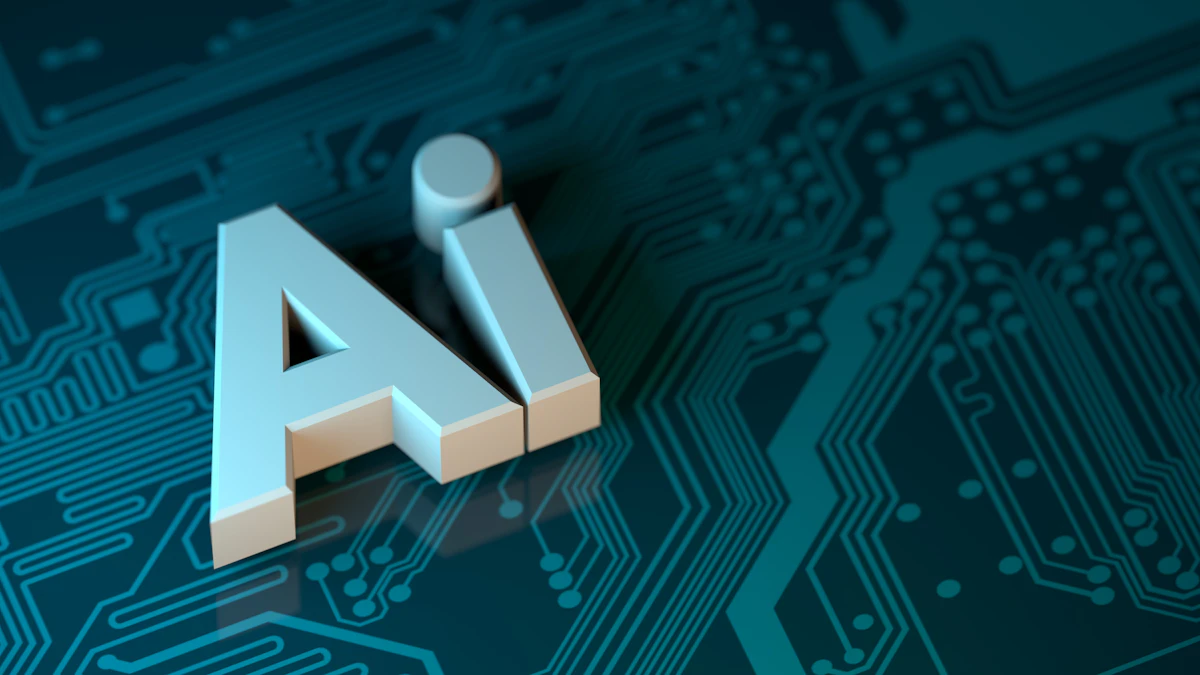
Featured image: Foto de Mehdi Mirzaie en Unsplash
Did it work for you? Got a different error? Say so below: questions get answered and help the next reader.
Leave a comment
0 Comments