⏱️ Reading time: 9 min
Transfyr just closed a $25 million seed round to launch a physical AI platform dedicated exclusively to scientific research, the company confirmed this week.
📑 En este artículo
The news comes as chemistry, biology, and materials science labs look to replace weeks of manual work with systems that combine sensors, robots, and artificial intelligence models capable of deciding the next experiment on their own.
TL;DR
- Transfyr launched a physical AI platform dedicated to scientific research.
- The company closed a $25 million seed round.
- The announcement was reported this week by Rutland Herald and news agencies.
- Physical AI combines robotics, sensors, and AI models to act on the real world, not just generate text.
- The category draws inspiration from self-driving labs already automating experiments in chemistry and materials science.
- Open tools like ROS 2 and Isaac Sim let anyone experiment with physical AI today without depending on Transfyr.
- The funding arrives amid strong venture capital interest in deep tech and automated science.
- Transfyr has not yet published technical benchmarks or open-source code for its platform.
Introduction
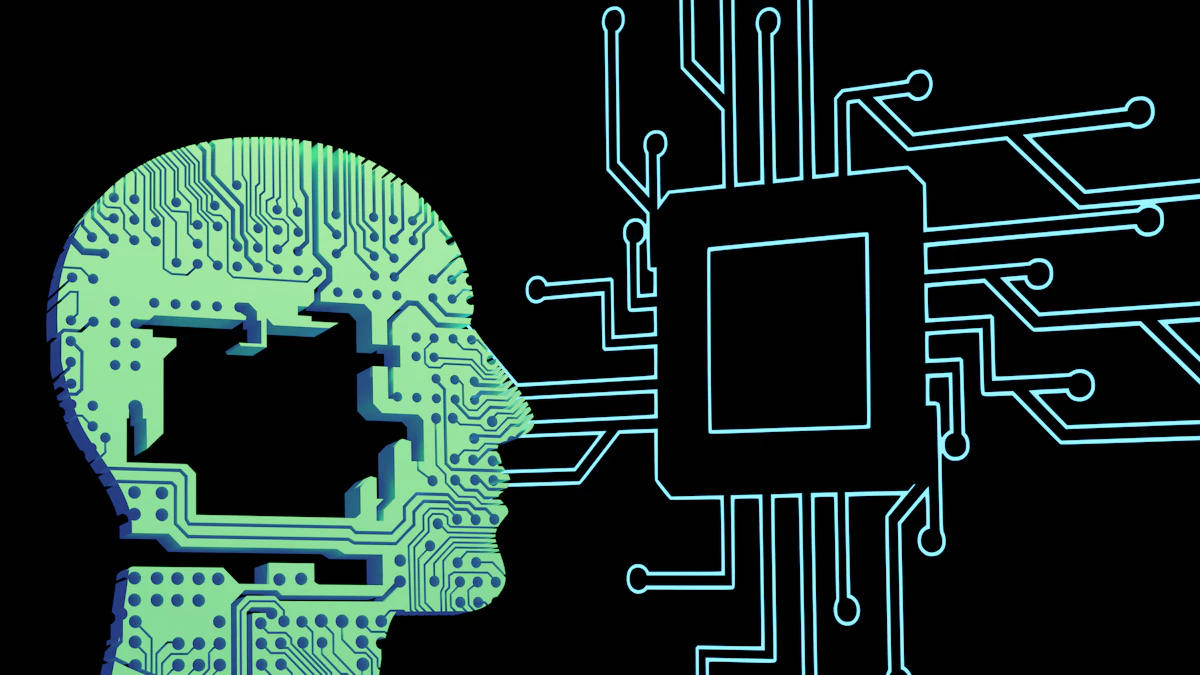
The physical AI category has stopped being a keynote buzzword and become a concrete investment line. Nvidia popularized the concept in its recent presentations to describe systems that don’t just generate text or images, but perceive their environment with sensors and act on it with actuators: robotic arms, drones, vehicles, or laboratory instruments.
Transfyr joins that wave with a specific focus: experimental science. The company didn’t reveal deep details of its architecture, but the size of the round and its stated focus (a physical AI platform for science) already place it in a niche where academic and corporate initiatives have been competing for several years.
For developers, the interest isn’t purely scientific. The same components (perception, planning, control) that power a lab robot also underpin self-driving vehicles, industrial inspection drones, and robotic arms in manufacturing. Understanding the pattern behind a system like the one Transfyr promises is useful well beyond experimental science.
What happened
Rutland Herald reported that Transfyr formally launched its physical AI platform and closed a $25 million seed round.
The funding was classified as a seed round, the earliest stage of institutional venture capital, indicating that Transfyr is still validating its product before pursuing a Series A round.
The available information doesn’t include performance figures, model benchmarks, or an open-source repository. This is a common pattern for deep tech startups at the seed stage: the capital funds hardware construction and validation with pilot customers before exposing technical details to the public.

Context and history: where physical AI comes from
The concept of the self-driving lab isn’t new. Projects like the A-Lab at Lawrence Berkeley National Laboratory or IBM Research’s RoboRXN have spent years combining liquid-handling robots with machine learning models to propose and run chemical syntheses without continuous human intervention.
The term “physical AI” itself gained public traction when Jensen Huang, Nvidia’s CEO, used it repeatedly in his talks to distinguish the next stage of AI (systems that act in the physical world) from the previous stage, dominated by chatbots and text and image generators.
What changes with the arrival of players like Transfyr is the layer of private funding. Until recently, this type of infrastructure lived almost exclusively in universities and national labs with public budgets. Now venture capital is betting there’s a commercial market for selling experimental science as a service, powered by physical AI.
That shift isn’t exclusive to science: the same logic already moved billions of dollars toward industrial robotics, self-driving vehicles, and manufacturing, categories that for years depended almost entirely on corporate or government budgets before attracting pure venture capital.
Technical details and performance
Although Transfyr hasn’t publicly detailed its stack, any physical AI platform for a lab shares a closed-loop architecture with four layers: perception (temperature sensors, cameras, spectrometers), an AI model that interprets those readings, a planner that decides the next action, and a robotic actuator that executes that action on the physical world.
flowchart TD
    A["Lab sensors"] --> B["AI model"]
    B --> C["Action planner"]
    C --> D["Robotic arm"]
    D --> E["Physical environment"]
    E --> A
That cycle repeats continuously, which is why these systems are compared to a tireless researcher: they don’t need to pause between one measurement and the next.
Most of these systems today are built on ROS 2 (Robot Operating System), the de facto standard middleware for communicating between sensors and actuators via topics and messages. A typical perception node looks like this:
import rclpy
from rclpy.node import Node
from std_msgs.msg import Float32

class TemperatureSensorNode(Node):
    def __init__(self):
        super().__init__('temperature_sensor_node')
        self.publisher_ = self.create_publisher(Float32, 'lab/temperature', 10)
        self.timer = self.create_timer(1.0, self.publish_reading)

    def publish_reading(self):
        msg = Float32()
        msg.data = 23.4
        self.publisher_.publish(msg)
        self.get_logger().info(f'Publishing temperature: {msg.data} C')

def main():
    rclpy.init()
    node = TemperatureSensorNode()
    rclpy.spin(node)

if __name__ == '__main__':
    main()
This node publishes a simulated temperature reading every second on the lab/temperature topic. On a real platform, that value would come from a physical sensor, and another node (the AI brain) would subscribe to the same topic to decide the next action.
| Approach | Example | Advantage | Limitation |
|---|---|---|---|
| Classic lab automation | Pipetting arms with fixed sequences | Reliable and cheap to maintain | Doesn’t decide anything, just repeats programmed steps |
| Physical AI (Transfyr’s category) | Robot plus AI model in a closed loop | Adjusts the next experiment based on previous results | Expensive to scale, requires hardware at each site |
| Pure simulation (digital twin) | Isaac Sim, Gazebo | No hardware cost, iterates fast | Results don’t replace a real experiment |
How to try physical AI today, without waiting for Transfyr
Transfyr hasn’t yet opened public access to its platform, which is expected for a seed-stage startup. But the physical AI logic it promises doesn’t require waiting for a private company to release its product: the same building blocks (ROS 2, simulation, and AI models) are free and run today on a laptop.
sudo apt install ros-humble-desktop
source /opt/ros/humble/setup.bash
ros2 run lab_ia_fisica sensor_publisher
ros2 topic echo /lab/temperature
The last command, ros2 topic echo, works like tail -f on a ROS 2 topic: if it returns a new reading every second, the sensor node was correctly integrated into the node graph and any other node can subscribe to that data.
💡 Tip: If you don’t have an Ubuntu machine handy, NVIDIA Isaac Sim offers a free simulation environment to test perception and robotic control without buying hardware.
Impact and analysis
Global venture capital has been rotating toward deep tech: hardware, robotics, and applied science, categories that compete with purely conversational AI for funds’ attention. A $25 million seed round for a physical AI platform is a signal of that rotation, not an isolated case.
The obvious limitation is that physical AI is far more expensive to scale than pure software. A language model gets replicated by copying weights to another server; a robotic arm has to be manufactured, calibrated, and physically maintained at each lab where it’s installed. That friction explains why a round of this size mainly funds hardware and customer pilots, not mass marketing.
There’s also a trust limit: an AI model that decides unsupervised which reagent to mix or which experiment to repeat needs stricter safety mechanisms than a chatbot that simply drafts text. A software error in the latter case produces an incorrect response; in the former, it can damage equipment or produce a false scientific result that other researchers accept as valid.
For a software developer, joining this kind of project means learning tools that rarely show up in a traditional web stack: real-time control, sensor calibration, and physical simulation. It’s not a trivial shift, but it doesn’t start from zero either: much of the perception and planning logic reuses the same machine learning frameworks already used in pure software.
What’s next
Transfyr hasn’t publicly announced upcoming milestones or a general availability date for its platform. At startups of this stage, the usual steps are: closing pilot contracts with academic or pharmaceutical labs, publishing experiment reproducibility results, and using that data to raise a Series A round.
There are two concrete signals to watch to know if the project is moving forward seriously: whether Transfyr publishes a paper or preprint with results from an experiment run end-to-end by its platform, and whether it releases technical documentation or an SDK for external developers.
📌 Note: A seed round doesn’t imply a finished product. In standard venture capital practice, that money usually funds one to two years of development before pursuing the next round.
Try it yourself: install ROS 2 Humble today and run your first sensor node with the commands above before the next physical AI funding round redefines what’s considered basic in this field.
Frequently Asked Questions
What is physical AI?
It’s the category of artificial intelligence systems that perceive their environment with sensors and act on the real world with actuators (robots, drones, mechanical arms), in contrast to models that only generate text or images.
What exactly does Transfyr do?
According to the announcement covered by Rutland Herald, it launched a physical AI platform aimed specifically at scientific research, though it didn’t publicly detail its technical architecture.
How much money did Transfyr raise and in what round?
It raised $25 million in a seed round, the earliest stage of institutional venture capital funding.
How is it different from a traditional self-driving lab?
Self-driving labs like Berkeley’s A-Lab or IBM’s RoboRXN were born inside academic or corporate institutions with their own budgets; Transfyr represents the pure-venture-capital-funded version of that same idea.
Can I experiment with physical AI without being a startup funded with millions?
Yes. ROS 2 is free and open source, and NVIDIA Isaac Sim lets you simulate perception and robotic control without buying physical hardware.
Where can you follow Transfyr’s progress?
For now, the only available public source is the press coverage of the funding announcement; the company hasn’t published technical documentation or its own repository.
References
- Rutland Herald: original coverage of Transfyr’s launch and its $25 million seed round.
- ROS 2 Documentation: official documentation for the middleware used by most robotics and physical AI systems.
- Wikipedia: Robot Operating System: historical and technical context on ROS.
- NVIDIA: the company that popularized the term “physical AI” in its recent robotics and AI presentations.
📱 Enjoying this content? Follow @programacion on Telegram for daily tech content in Spanish: quick summaries, fresh content every day.
Imagen destacada: Foto de Hermeus en Unsplash
Did it work for you? Got a different error? Say so below: questions get answered and help the next reader.
Leave a comment


0 Comments