⏱️ Reading time: 10 min
For about $70 on eBay you can buy a board that just a few years ago was scrap from a mining farm and that runs Cyberpunk 2077 at playable framerates: it’s the AMD BC-250, a PlayStation 5 APU that Sony discarded for not meeting console standards and that ended up recycled first for cryptocurrency mining and now for building extremely cheap gaming PCs.
📑 En este artículo
The real price ranges between $70 and $100 depending on availability in the secondhand market (as of November 2025), far from the “$60” headline that the community popularized, but just as disruptive: it’s current-generation console silicon at electronic scrap prices.
TL;DR
- The AMD BC-250 is a PS5 APU discarded for console use, originally sold as a crypto mining board between 2021 and 2022.
- Today it’s available on eBay for between $70 and $100 (November 2025) and runs Cyberpunk 2077, GTA V, CS2, and Hitman 3.
- It packs 6 Zen 2 cores (12 threads), an RDNA 2 GPU with 24 compute units, and 16 GB of unified GDDR6 memory.
- It requires flashing a custom 3.00 BIOS to reallocate 512 MB of that unified memory as dedicated VRAM.
- Most of the community installs Manjaro Linux because Windows has no native graphics drivers for this APU.
- Csaba Kecskemeti’s repository documents the full mod process, BIOS flashing, and 3D-printed case.
- ASRock originally sold 4U rack servers with 12 BC-250 boards for high-density cryptocurrency mining.
What happened with the AMD BC-250
The AMD BC-250 was born as part of a mining rig, not as a gaming product. When a PlayStation 5 APU came off the factory line with defects that didn’t meet console standards (“binned” or rejected for console use), instead of being discarded, it was repurposed into higher-density hardware aimed at mining.
ASRock built the original deployment: a “barebone” 4U rack server with 12 BC-250 boards mounted in parallel, aimed directly at miners looking for compute density per rack. When GPU mining stopped being profitable, thousands of these boards started circulating on the secondhand market.
That’s where the maker community stepped in: they understood that underneath the “mining card” disguise there was, in the words of those who documented the hardware, basically a PlayStation 5 chip that failed quality control and was sold as a crypto mining board.
Context and history
The PS5 APU combines CPU and GPU on a single silicon chip, a design meant for consoles where space and power efficiency matter more than the modularity of a desktop PC. Manufacturing millions of these APUs inevitably leaves a percentage that doesn’t meet the binning requirements for console sale: fewer functional compute units or partially defective memory.
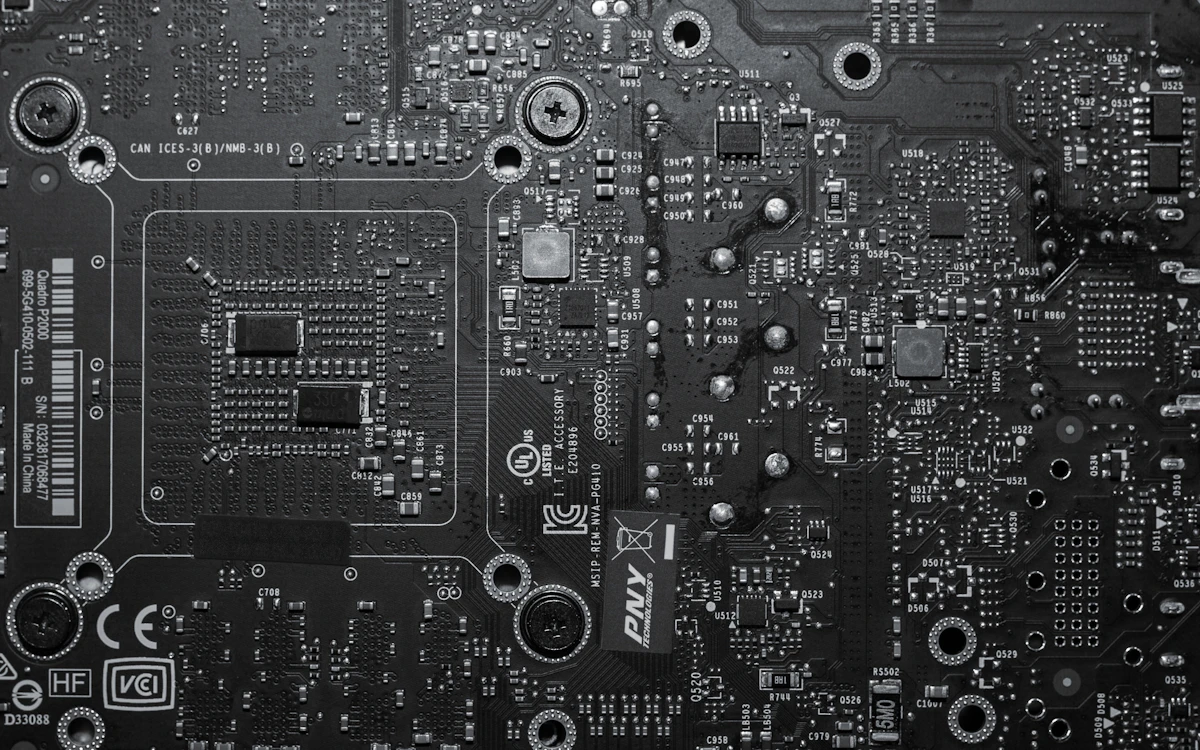
Instead of scrapping that silicon, during the 2021-2022 crypto mining boom it was redesigned as a standalone board, removing the console casing and adding server connectivity: DisplayPort, USB, Ethernet, an M.2 NVMe slot, and an 8-pin PCIe power header. The result no longer looks like a console chip: it looks like a server expansion card.
When GPU mining profitability collapsed, that board inventory got stranded. The hardware hacker community saw the opportunity: if it’s the same APU that runs PS5 games, why not run those same games, or other PC titles, directly on the board?
Technical details and performance
The BC-250 specs, reconstructed by the community from teardowns and their own testing, clearly show its trimmed-down console origin:
| Specification | AMD BC-250 (standalone) | Full PS5 APU |
|---|---|---|
| CPU | 6 Zen 2 cores (12 threads) | 8 Zen 2 cores (16 threads) |
| GPU | RDNA 2, 24 compute units | RDNA 2, 36 compute units |
| Memory | 16 GB unified GDDR6, no DDR4/DDR5 slots | 16 GB unified GDDR6 |
| Connectivity | DisplayPort, USB 2.0/3.0, Ethernet, M.2 NVMe, 8-pin PCIe header | Proprietary console ports |
Memory is the most peculiar part: the 16 GB of GDDR6 are shared between CPU and GPU, typical of a console but unusual in a board sold on its own. Out of the box, the mining firmware splits that memory into blocks like 8 GB/8 GB or even 4 GB/12 GB, none of them meant for gaming.
As for real games, the community reports that with enough cooling, adequate power, and the correct BIOS adjustment, the BC-250 runs Cyberpunk 2077, GTA V, Counter-Strike 2, and Hitman 3 at playable framerates, not high-end but enough for a low-cost build. Early reports mentioned driver instability; more recent patches and community drivers improved that support.
💭 Key point: the BC-250 isn’t a discrete GPU: it’s a complete PC on a single board, with integrated CPU, GPU, and memory, closer to a high-performance embedded computing board than a traditional graphics card.
How to try it
Turning a BC-250 into a gaming PC isn’t a “take it out of the box and play” process: it requires hardware and firmware modifications. These are the steps documented by the community, mainly in Csaba Kecskemeti’s how-to repository.
flowchart TD
    A["BC-250 APU: Zen 2 + RDNA2"] --> B["16 GB unified GDDR6"]
    B --> C["CPU partition (8 GB factory default)"]
    B --> D["GPU partition (8 GB factory default)"]
    E["Custom 3.00 BIOS"] --> F["Reserves 512 MB as VRAM"]
    F --> D
    D --> G["Manjaro Linux + Steam"]
    G --> H["Cyberpunk 2077, GTA V, CS2, Hitman 3"]
Cooling
The BC-250 comes with an enclosed server-style heatsink. It’s possible to cool it without modifying anything by using a blower fan, and there are 3D-printed case designs that respect the original heatsink. But for serious cooling you have to open the finstack and mount one or two 120 mm fans, a destructive and irreversible modification that also requires replacing the thermal paste and pads.
⚠️ Heads up: opening the original heatsink is a destructive modification: once cut, there’s no going back and no possible warranty on the board.
Reallocating unified memory
To use the BC-250 as a gaming PC you have to force an allocation of 512 MB of that shared memory as dedicated VRAM, something counterintuitive if you’re used to a PC with separate CPU and GPU: here it’s a single APU, not a CPU socket plus a separate graphics card.
That change requires flashing a custom 3.00 BIOS that unlocks the chipset configuration menu. Just a year ago this required an external EEPROM programmer; today there’s a bootable BIOS Flasher image that automates the process.
# Linux: write the BIOS flasher image to a USB drive
sudo dd if=bc250-bios-flasher.img of=/dev/sdX bs=4M status=progress oflag=sync

# Windows and macOS: use balenaEtcher (GUI) with the same .img image
# https://www.balena.io/etcher/
With the USB drive booted, the flasher rewrites the BIOS and exposes the chipset menu where the VRAM memory partition is set to 512 MB.
Operating system
Windows boots on the BC-250, but without its own graphics drivers performance is unusable. The community installs Arch Linux-based distributions; Manjaro Linux is the most tested option and runs smoothly according to those who documented the process. The Linux version of Steam works out of the box.
# confirm that Linux detects the BC-250's RDNA2 GPU
lspci -nn | grep -i "AMD/ATI"

# confirm how much VRAM was exposed after the BIOS flash
rocm-smi --showmeminfo vram

# launch Steam in Big Picture mode over gamescope
gamescope -W 1920 -H 1080 -r 60 -- steam -tenfoot
If rocm-smi reports the 512 MB reserved as VRAM, the BIOS mod worked. If it still shows the original factory partition, check the flashing before installing games.
Case
Multiple case designs are in circulation. The most sought-after ones are compact and also enclose the power supply; there are ultra-portable versions and others closer to a desktop mini PC format. All of them require 3D printing and some manual work with the power supply.
Impact and analysis
The BC-250 case is, above all, a story of a second life for console silicon. A chip Sony was never going to sell now reaches developers and makers who build low-cost PCs, reducing electronic waste and giving access to modern GPU hardware in markets where a new discrete GPU costs far more.
For the LATAM community this is particularly relevant: buying a used board for $70-100 on the import market is much more accessible than building a new PC with a discrete GPU, even adding the cost of 3D printing the case and the modding hours.
It’s also a case study in informal repair: nobody designed the BC-250 for this, but the community’s open documentation (GitHub repositories, custom BIOS images, step-by-step guides) turned an industrial reject into a functional product without the original manufacturer’s involvement.
What’s next
The supply of BC-250 boards depends entirely on the remaining inventory from the 2021-2022 crypto mining era: no new boards are being manufactured, so the eBay stock will run out over time, likely pushing prices up.
The community keeps refining drivers and custom BIOS, and Kecskemeti’s how-to repository continues to be updated with new case designs and performance tweaks. It’s reasonable to expect similar variants if other console makers let “binned” APUs from future generations circulate through mining or high-density server channels.
It’s worth being honest about this project’s limits: there’s no warranty, no official support from AMD or Sony, the BIOS mod can leave the board unusable if something goes wrong, and opening the heatsink is irreversible. This isn’t a project for someone looking for a plug-and-play gaming PC; it’s a project for someone who enjoys the process as much as the result.
Try it yourself: clone the amd_bc-250_how-to repository and check whether you can find a BC-250 board available near you before the mining-era stock runs out.
Frequently Asked Questions
How much does a BC-250 really cost?
Between $70 and $100 on eBay as of November 2025, depending on availability; the “$60” headline is the exception, not the norm.
Can I use Windows on the BC-250?
It boots, but without native graphics drivers performance is unusable for gaming; the community recommends Manjaro Linux.
Is it safe to modify the BIOS?
It’s an unofficial mod with no backing from AMD or Sony; the user assumes the risk of bricking the board if the flash fails.
Which games run well?
The community reports playable framerates in Cyberpunk 2077, GTA V, Counter-Strike 2, and Hitman 3, not high-end performance.
Do I need to modify the heatsink?
It’s not mandatory: there are 3D designs that respect the original heatsink, but for better cooling you have to open it, which is destructive.
Where can I find the complete guide?
In Csaba Kecskemeti’s GitHub repository, with all the hardware, firmware, and case steps.
References
- DevQuasar: original article documenting the project and its Cyberpunk 2077 benchmark.
- GitHub: amd_bc-250_how-to: complete hardware, BIOS, and case modding guide for the BC-250.
- Wikipedia: PlayStation 5: specifications of the full APU (Zen 2 CPU, RDNA 2 GPU) on which the BC-250 is based.
- Wikipedia: RDNA 2: graphics architecture that powers the BC-250’s GPU.
📱 Enjoying this content? Follow @programacion on Telegram for daily tech content in Spanish: quick summaries, fresh content every day. @programacion
Imagen destacada: Foto de Vladimir Malyutin en Unsplash
Did it work for you? Got a different error? Say so below: questions get answered and help the next reader.
Leave a comment



0 Comments